Cordon Transformers Missing Link C-06 In-Hand Review
Affiliate links in post. See Disclosure Policy.
First off, massive thanks to Big Bad Toy Store for sending us this Cordon Transformers Missing Link C-06 so we can do a deep dive and share images with you! If you are tempted by this review, head over to BBTS to order the figure! Following up on our Arcee review, I finally got some time with Transformers Missing Link C-06 Cordon, and this one really caught me off guard in the best way. Cordon has always been an interesting footnote from the early Diaclone line, making this release feel long overdue but very welcomed. It’s the first time the vintage Cordon concept has been fully realized as a Transformers figure, with articulation added to joints that were once static, plus a newly introduced human police officer form that can mount inside the mobile cockpit. Continuing that tribute to the original toy line, Cordon draws directly from the black-and-white police car version of the Diaclone mold that later became Sunstreaker. While Hasbro never used this color scheme during the original run, the character eventually found an official place in Transformers history through repaints of later Sunstreaker releases, including the version that carried his French name. The speed trap gun returns in plated form, the classic punch gimmick can still be recreated thanks to a large attachable punch, and the updated fists now transform and store cleanly inside the arms. You also get the classic heat-activated secret emblem, relief-molded and painted details where stickers once lived, optional foil stickers, and packaging that goes all-in on the nostalgia with a styrofoam tray that genuinely feels like opening a Transformer in the 1980s.

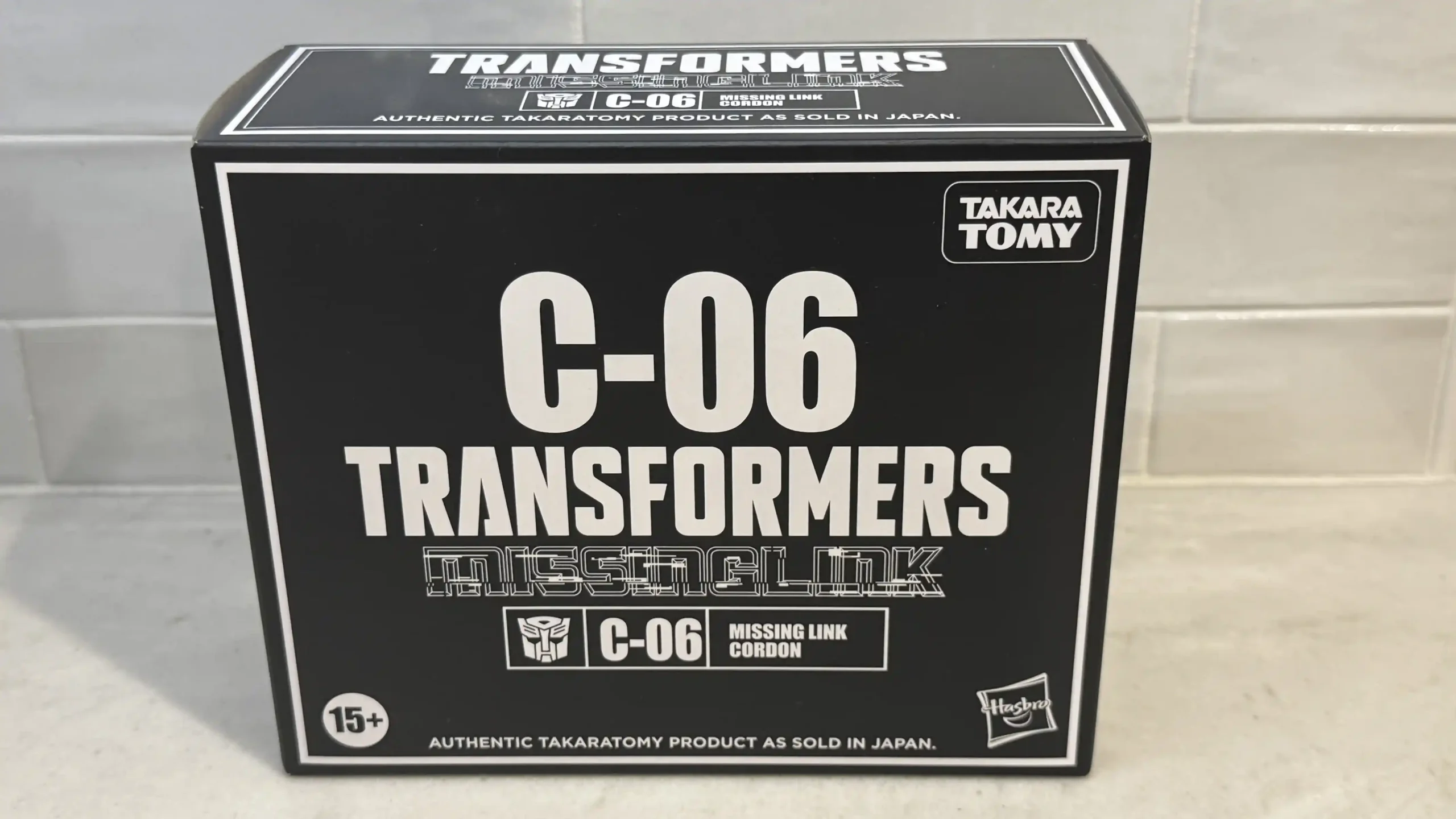
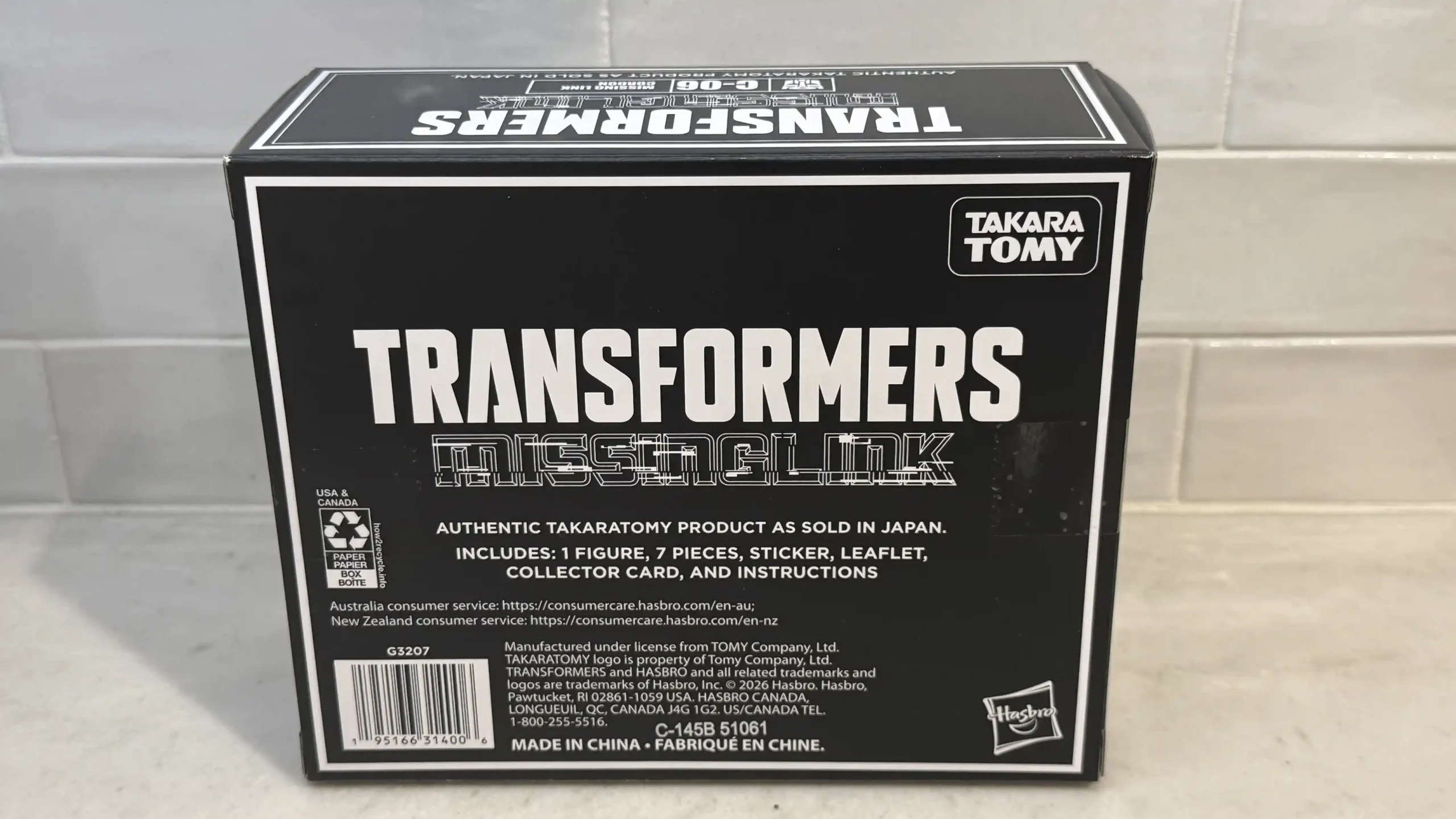
Jumping right into the outer packaging., the box keeps things stark and deliberate with a matte black finish and bold white type calling out C-06 and Transformers Missing Link, and I like how flipping it around keeps that same no nonsense layout while laying out the contents and production details in clean blocks of text.
Sliding the outer box off reveals the inner packaging and this is where the nostalgia really hits me, with the red grid background, bold Japanese text, and classic layout that immediately takes me back to opening Transformers in the early 80s. I love how Cordon is visible in vehicle mode through the window while the artwork stands tall beside it, and top of the box shows transformation diagrams laid out in instructional style. Flipping it around keeps the vintage energy going with character art, stats, and dense blocks of text, and it all feels like a time capsule from Takara’s original releases rather than something produced decades later.
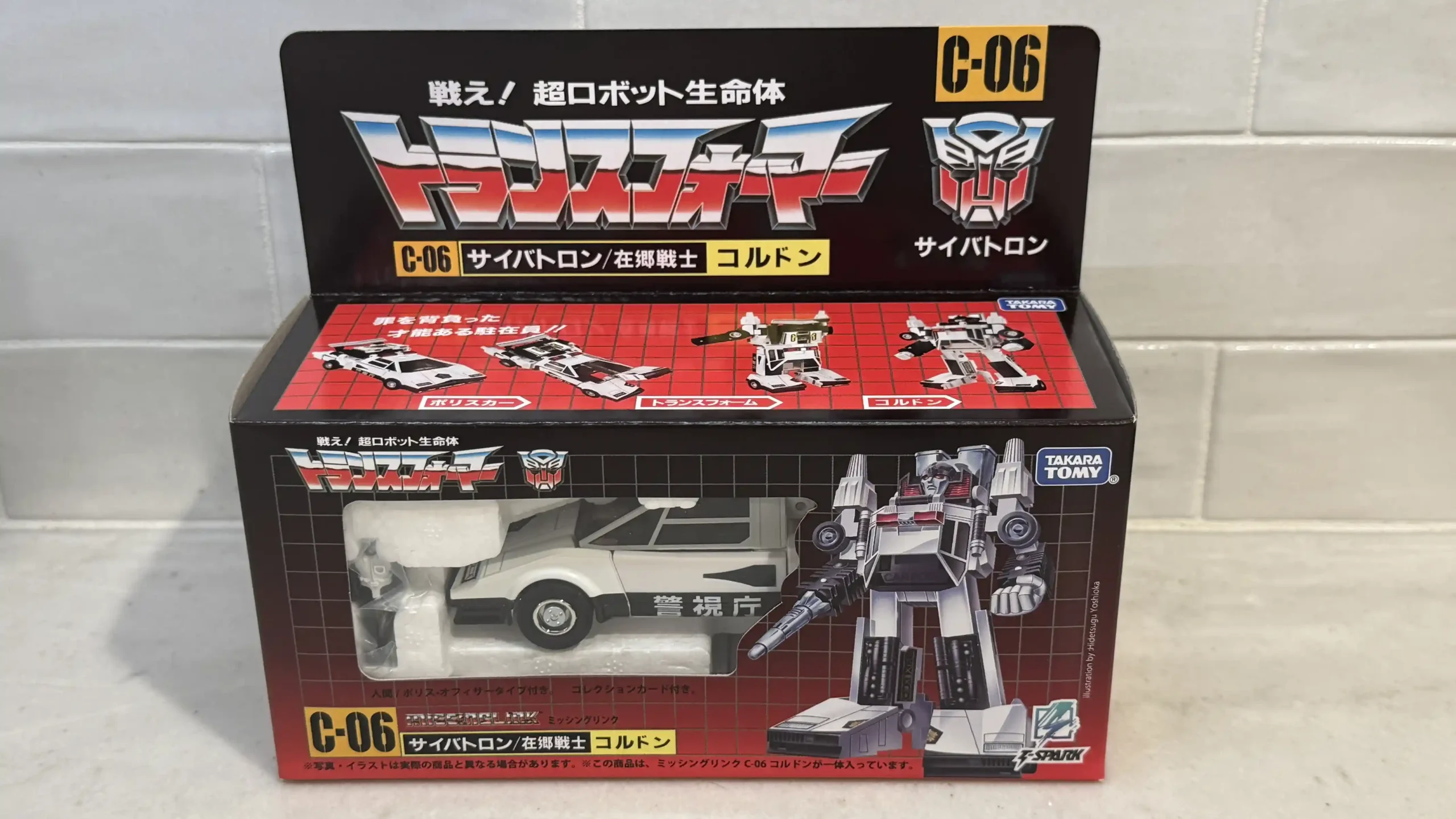
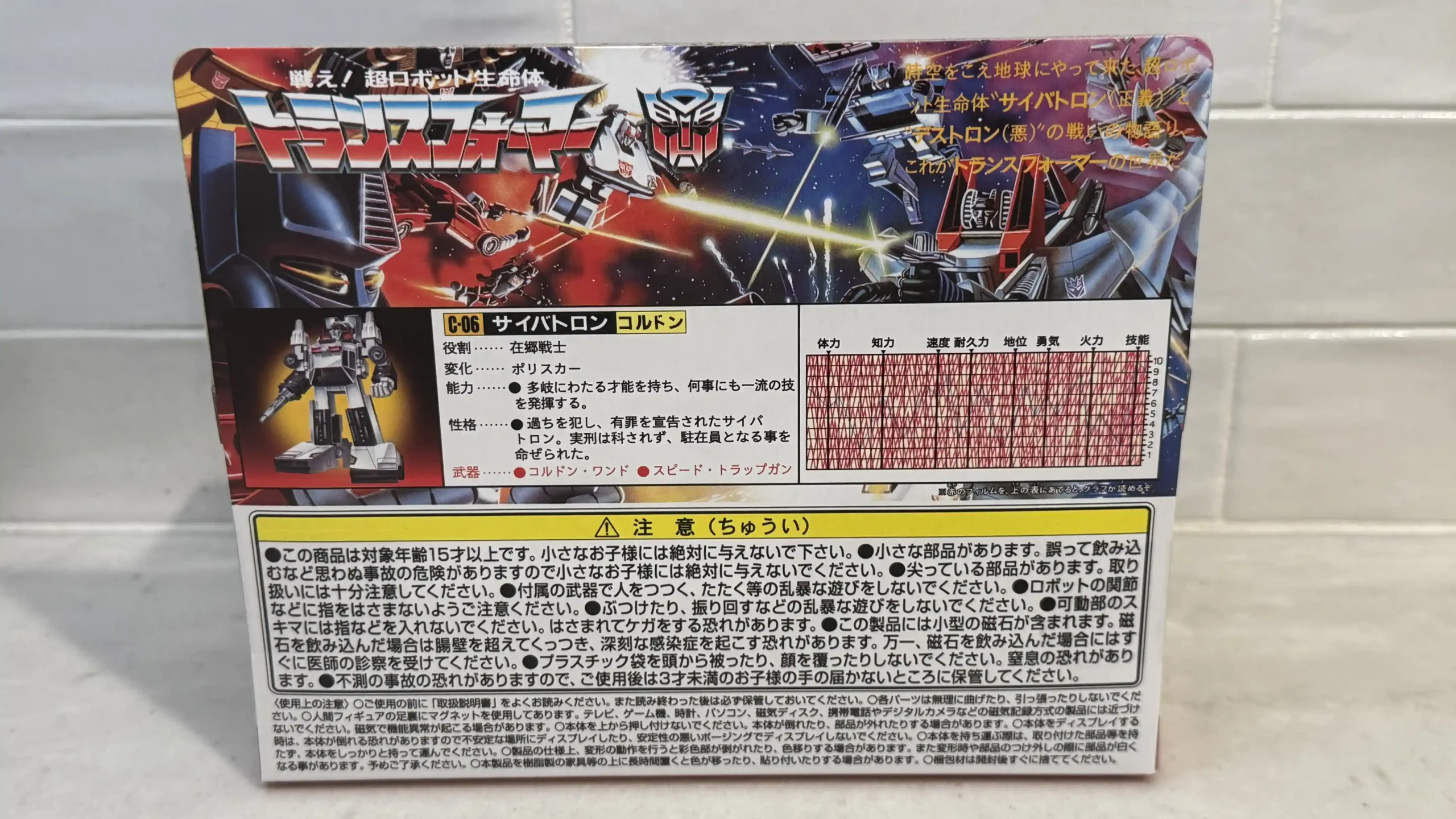
Seeing the inner box opened up like this really locks me into that classic presentation, with the flap standing tall and the red grid panels wrapping all the way around the sides and top. I’m drawn to how the transformation steps run across the lid in simple diagram form while the side panels show both modes against the grid.


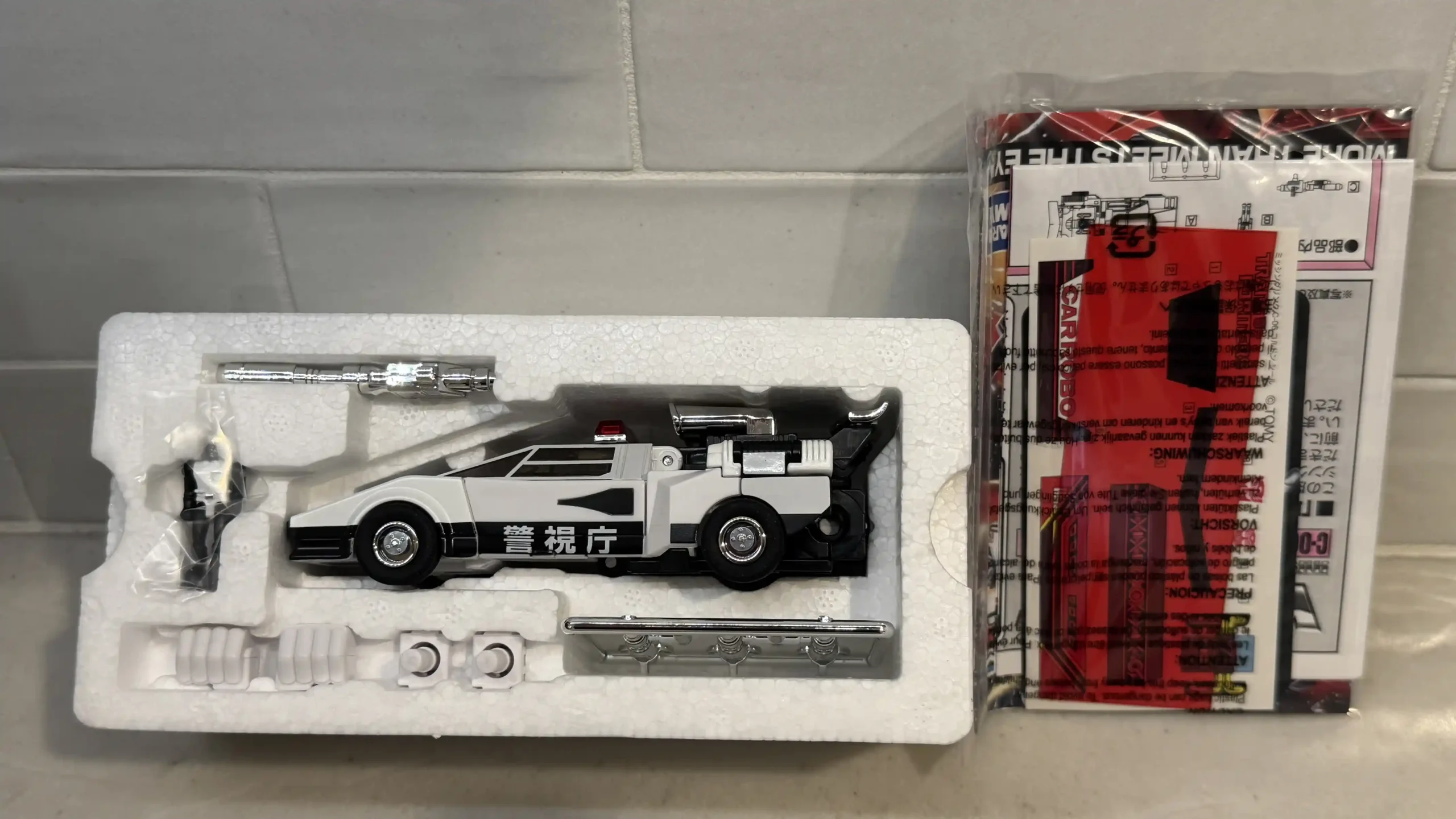
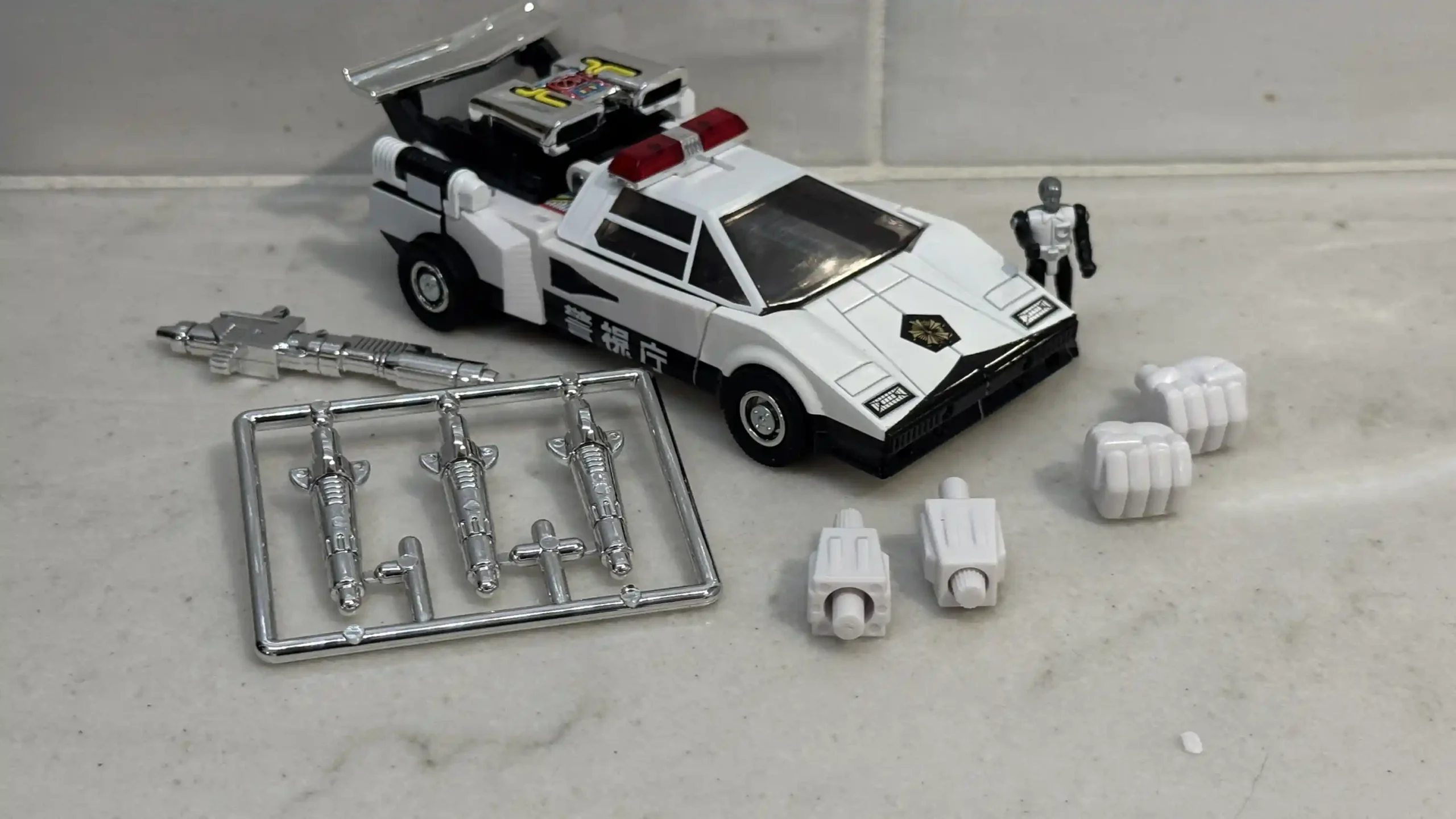
Lifting everything out, I’m greeted by a full styrofoam insert that immediately takes me back, with each piece snug in its own cutout just like the larger Transformers used to be. Cordon sits in vehicle mode alongside the blaster, a pair of alternate hands, three missiles, a pair of shoulder parts, a mini figure, and a sticker sheet, all laid out cleanly and easy to inventory at a glance. I really appreciate how the foam slows the experience down a bit, making me handle each accessory one by one instead of tearing through plastic trays.
The collector card shows one side illustrated in robot art posed with the blaster over a red grid, while the reverse flips to clean line art callouts that feel straight out of an early Takara catalog. The text identifies him as C-06 Cybertron Warrior Cordon, with his role listed as a ground combat soldier, transformation listed as police car, and abilities described as possessing a wide range of skills with no single weakness. The profile text notes his calm and serious nature, stating that although he is a Cybertronian, he operates undercover on Earth and blends into human society, and it closes by calling out Cordon’s main equipment as his hand blaster and speed focused transformation.


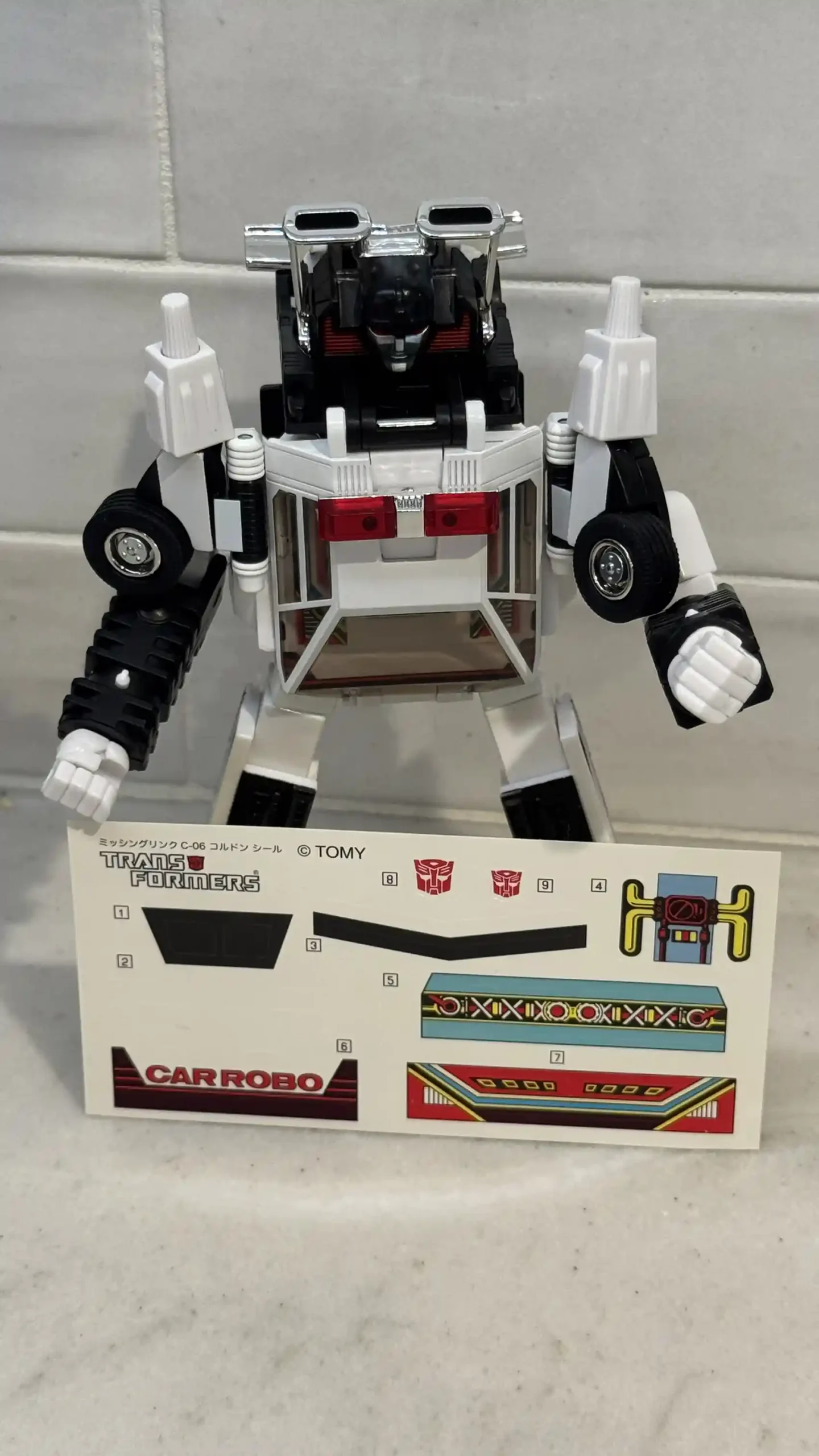
Just like Arcee, Cordon includes a full sticker sheet, laid out with numbered decals for the vehicle panels, chest details, striping, and small accent markings that mirror the vintage application style. Everything is clearly mapped and color matched to the figure, but I’m leaving these unapplied because childhood sticker trauma is real and my hands have never been precise enough to trust myself with alignment. It still feels right having the sheet here, even if it’s staying safely off to the side.
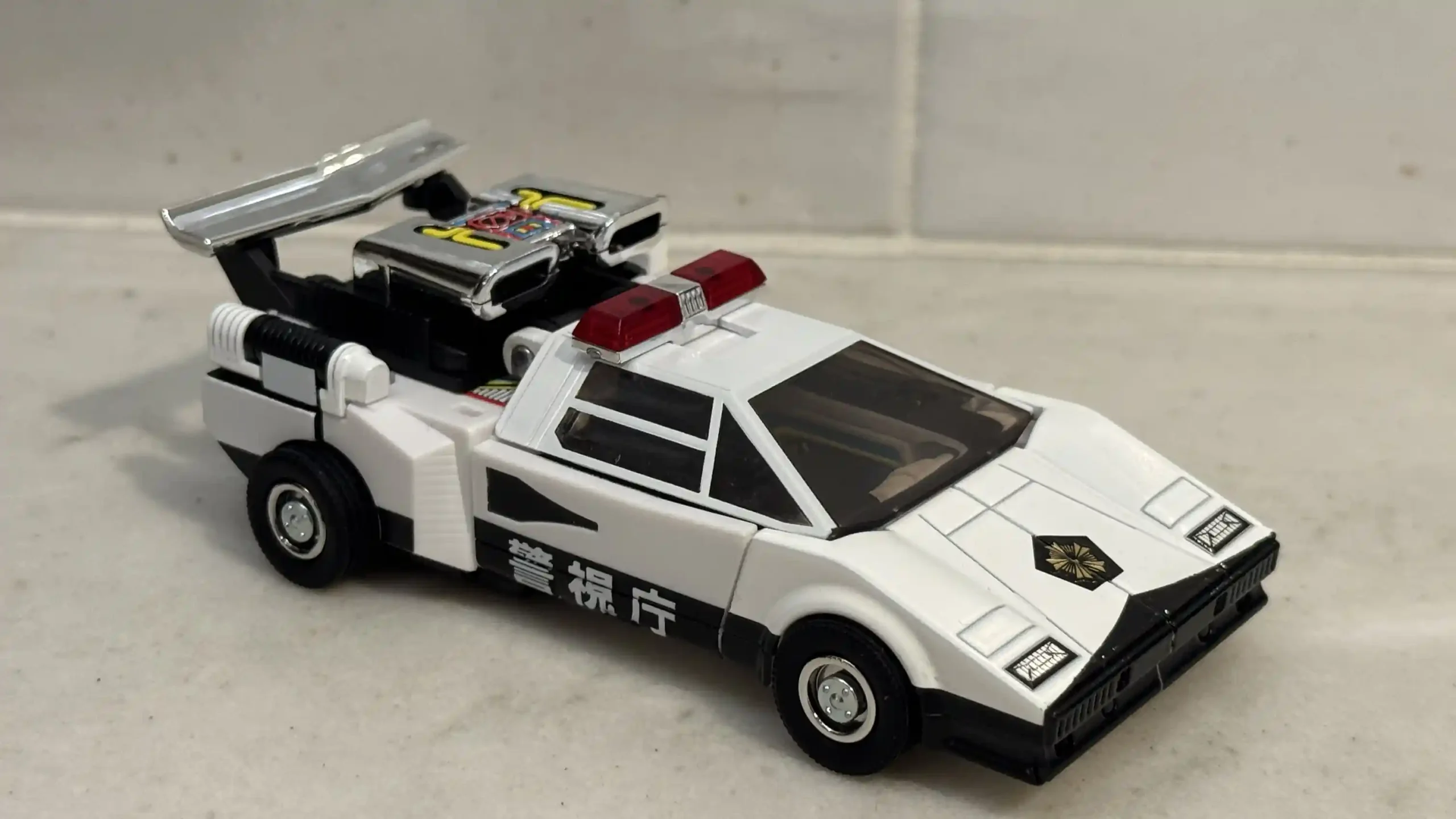
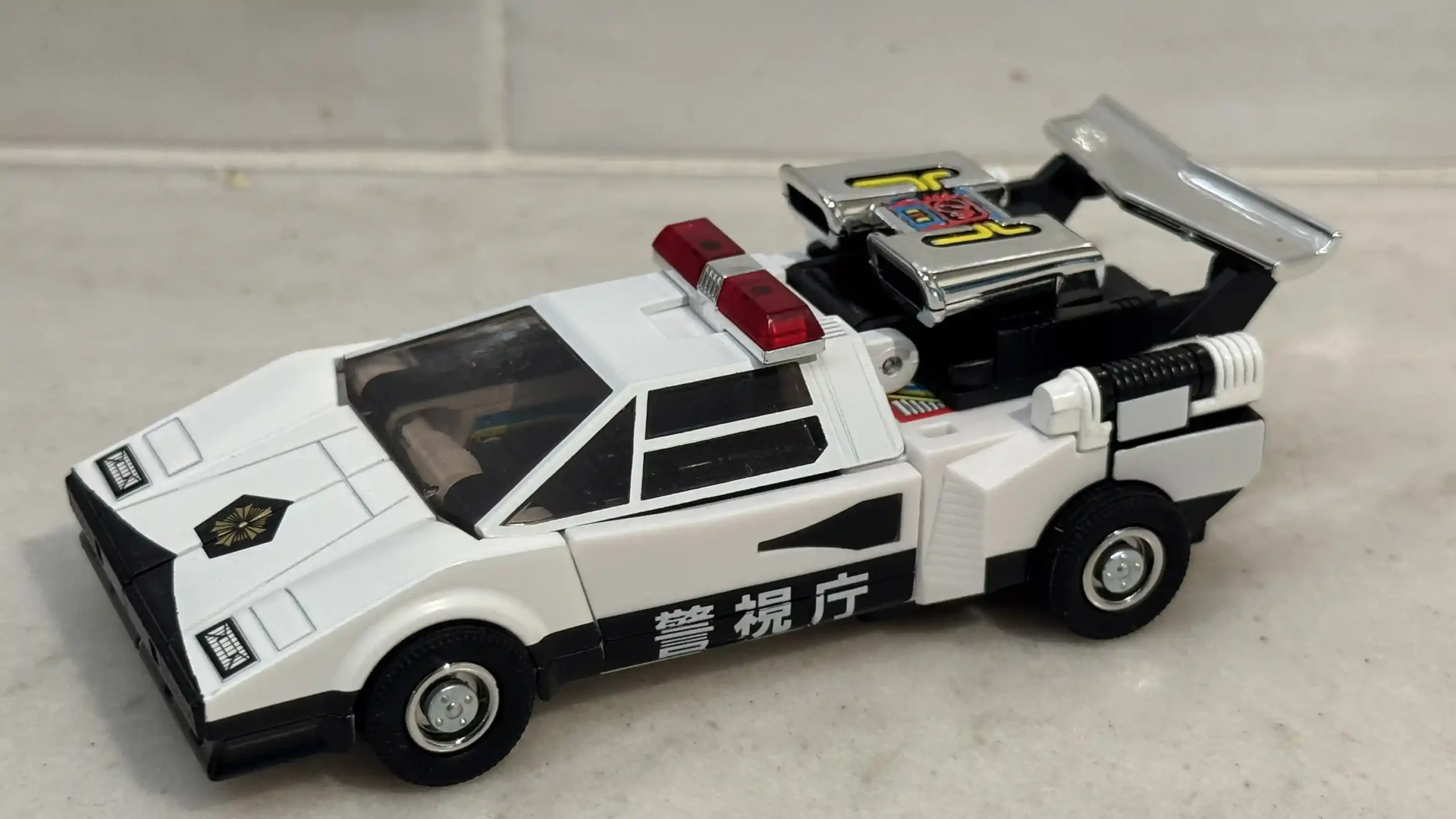
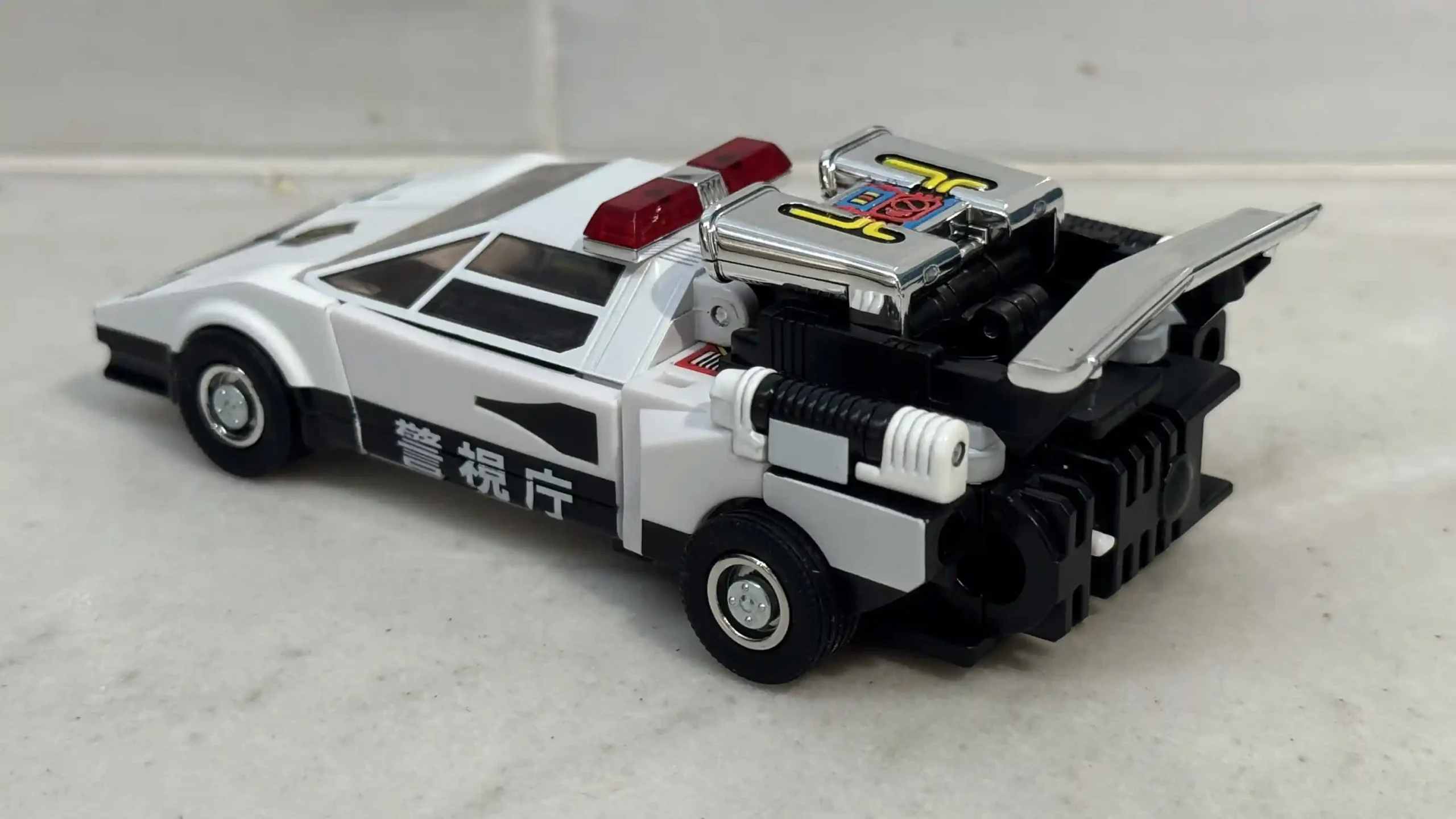
Cordon looks sharp in alternate mode as a clean white and black police car, with crisp panel lines, compact proportions, and that classic wedge shaped profile sitting low to the ground. The red light bar and roof mounted hardware add just enough visual break without cluttering the silhouette, and I like how the black striping runs straight through the doors to keep everything cohesive. The Japanese text on the sides reads “Keishichō,” which translates to Metropolitan Police Department, grounding the vehicle firmly in its real world police inspiration.
Flipping the figure over, the underside shows a clean, compact layout with visible screws, rolling wheels, and the fold lines that lock the vehicle mode together. I like spotting the classic Autobot rub sign tucked underneath, ready to reveal with a bit of pressure just like it did back in the day.

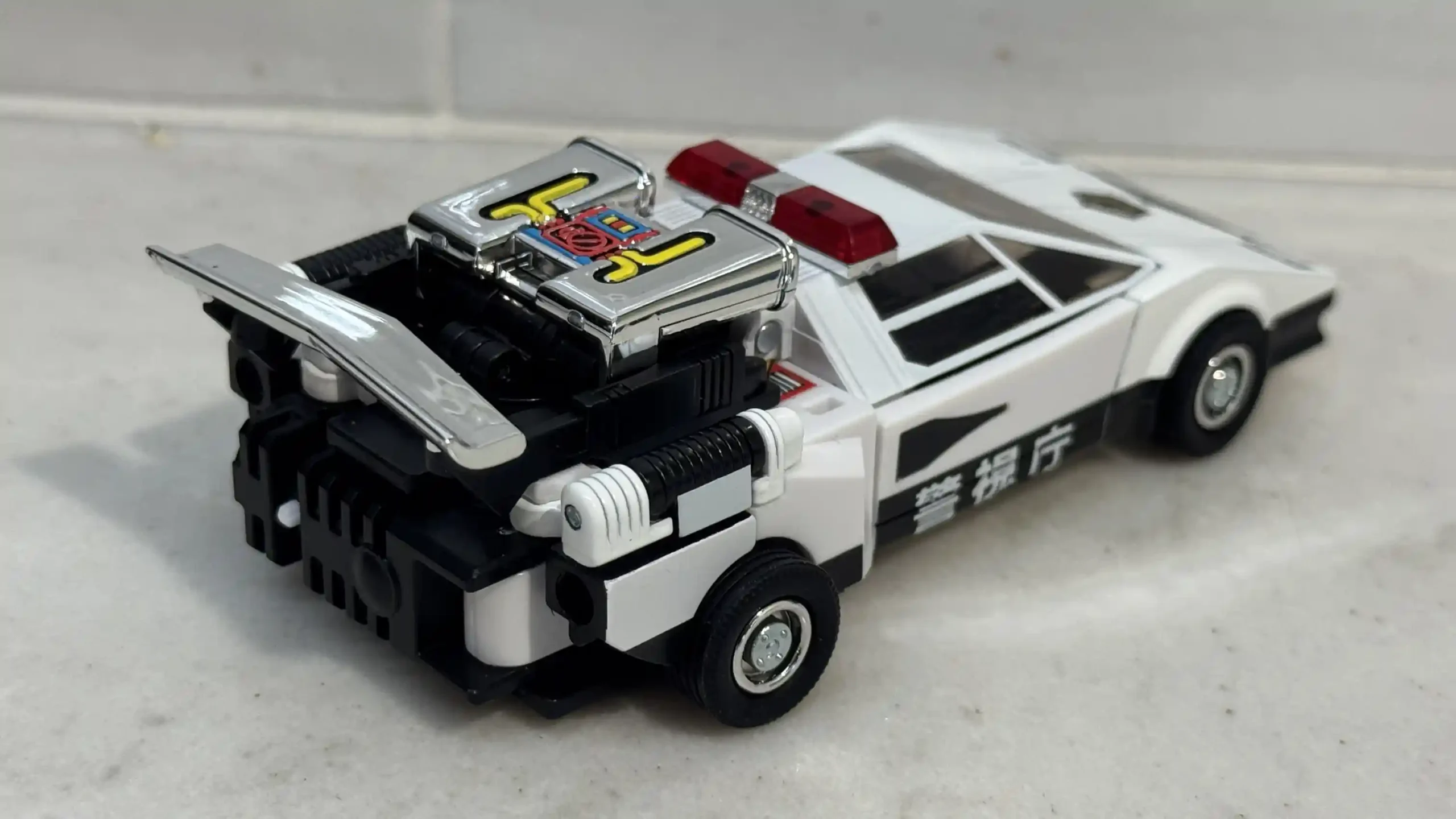
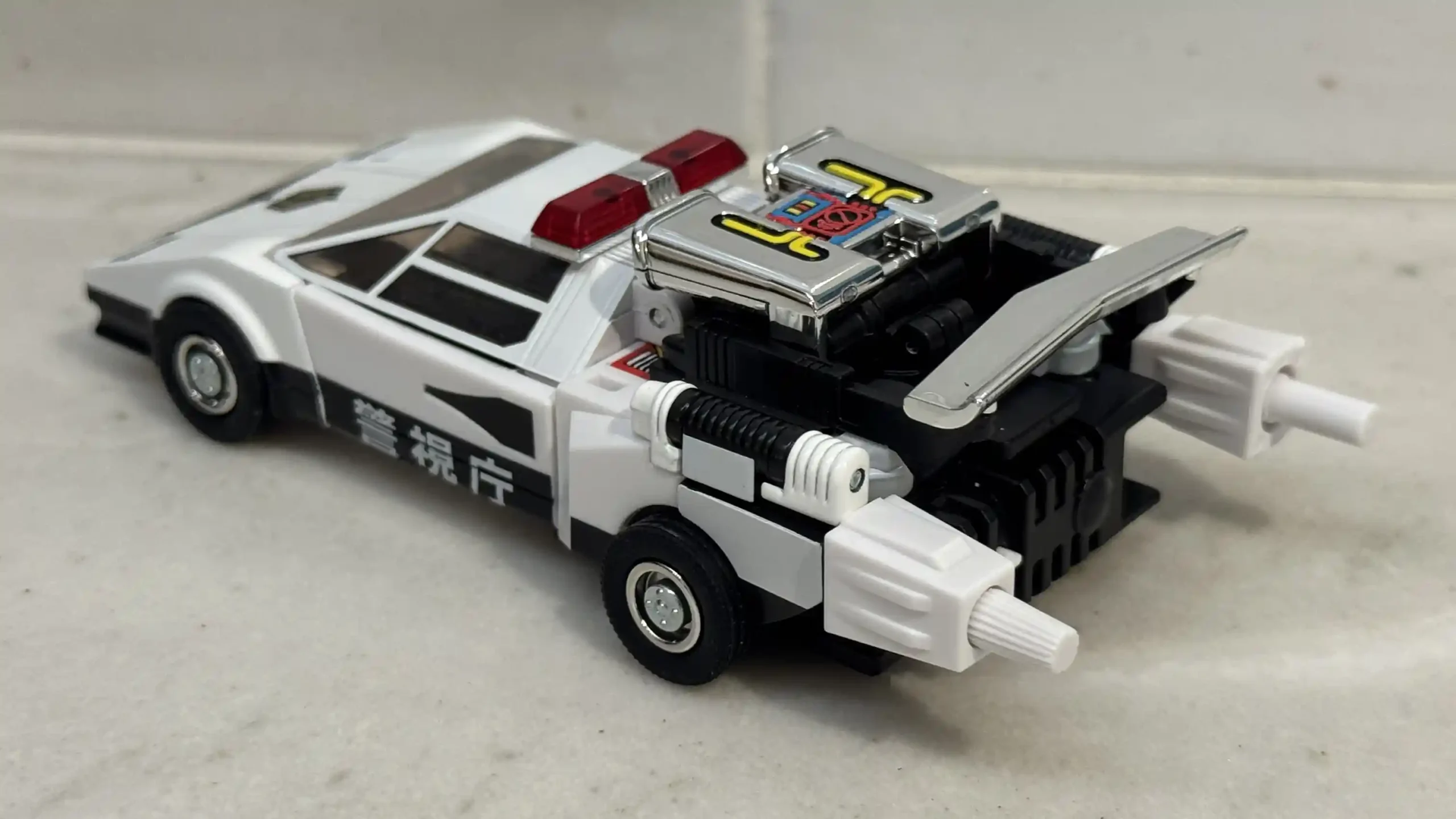
From the rear angles, I really notice how much visual weight is packed into the back half of the vehicle, with the chrome engine block sitting high and framed by silver tail fin. The exposed mechanical textures, ribbed tubing, and stacked black components give the alternate mode a very deliberate, almost modular look, while the rear wheels and bumper area feel dense and purposeful. I like how this view shows where so much of the robot mass is stored without breaking the clean police car profile from the sides.
All of the parts laid out really show how much is packed in here and I like seeing everything at once because it makes it easy to appreciate how clean and purposeful each accessory is.
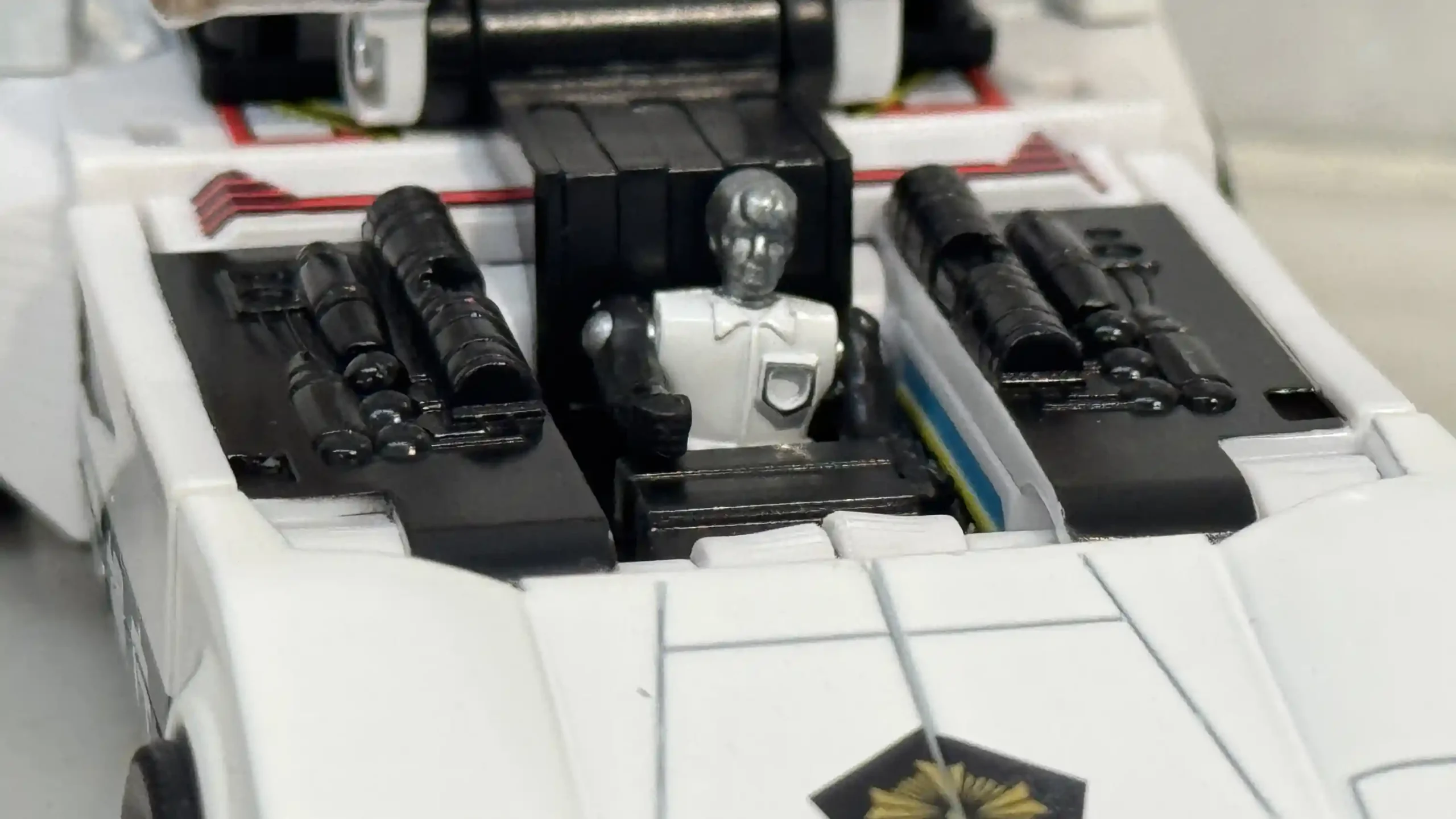
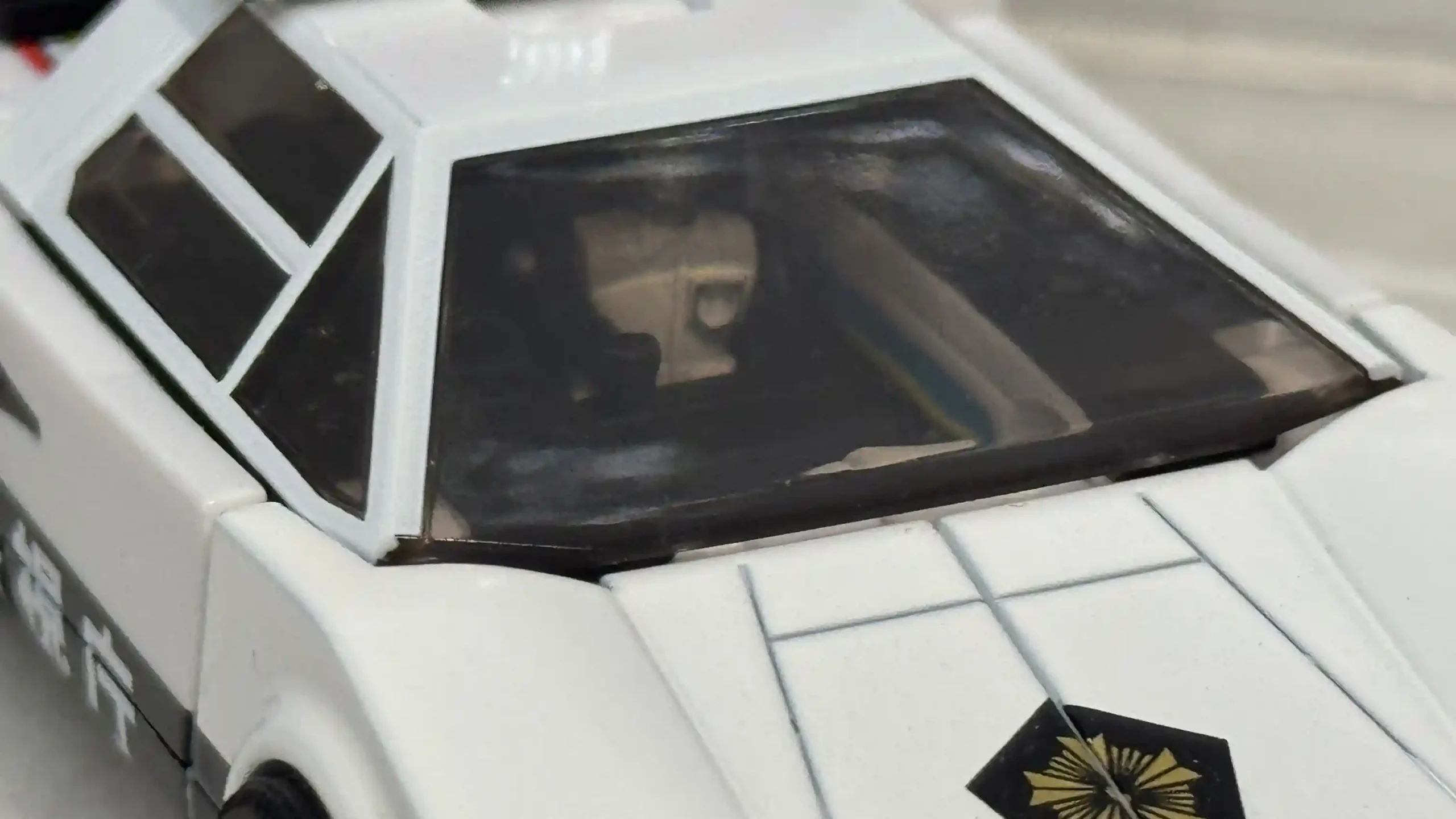
Getting in close, I really like how the mini figure sits inside the vehicle, flanked by molded details that keeps everything tight. Up front, the tinted windshield and side windows let you peek into the cockpit, and I enjoy how the interior details are just visible enough to suggest a full cabin without overcomplicating the build.
With the shoulder parts attached in vehicle mode, they plug into the rear section and extend outward as white cylindrical units that frame the black engine block. I like how they add extra bulk and a more aggressive silhouette to the back end while still keeping everything compact and symmetrical. They sit securely in place and visually tie into the exposed mechanical detailing without overwhelming the car profile.
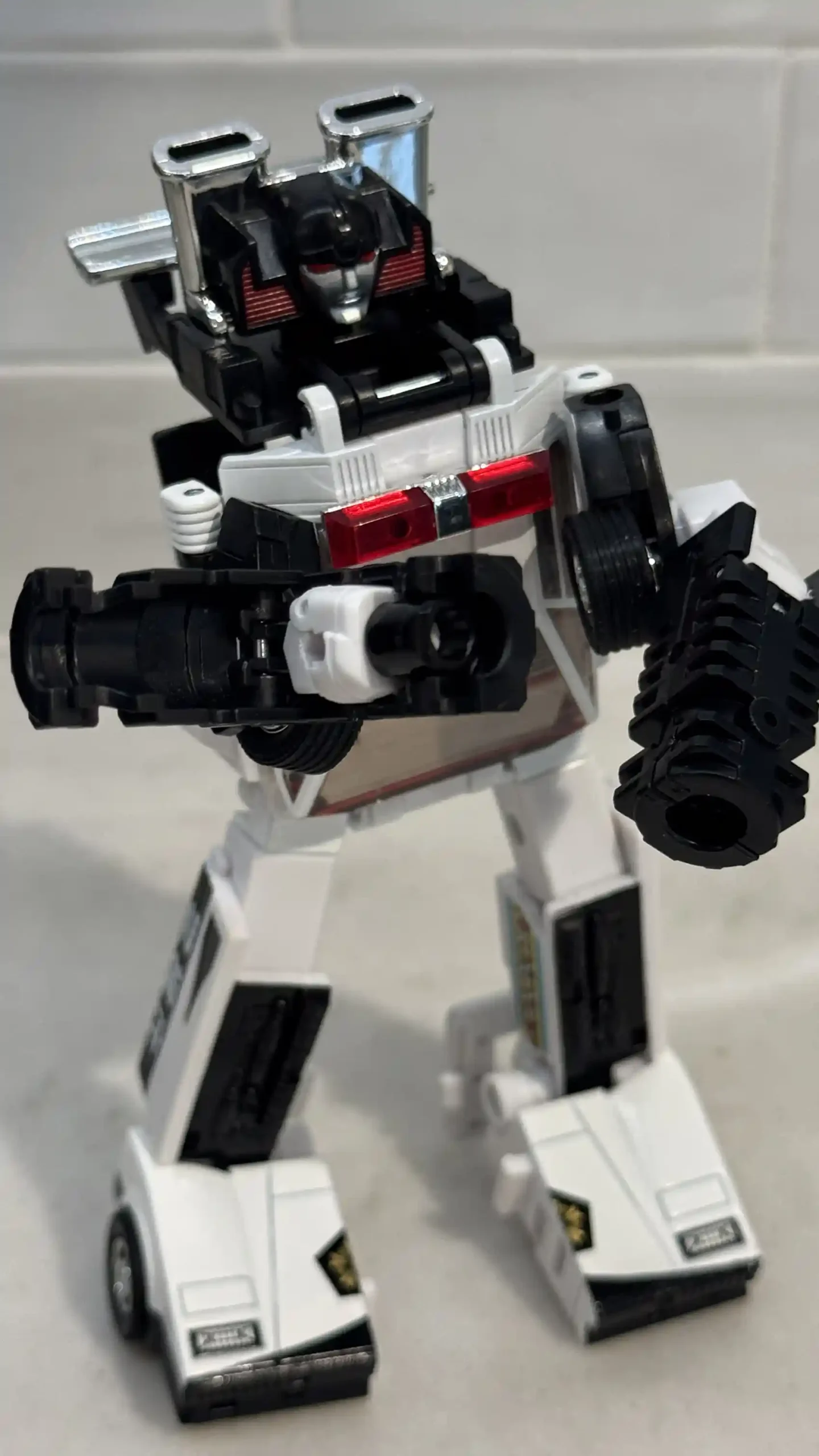
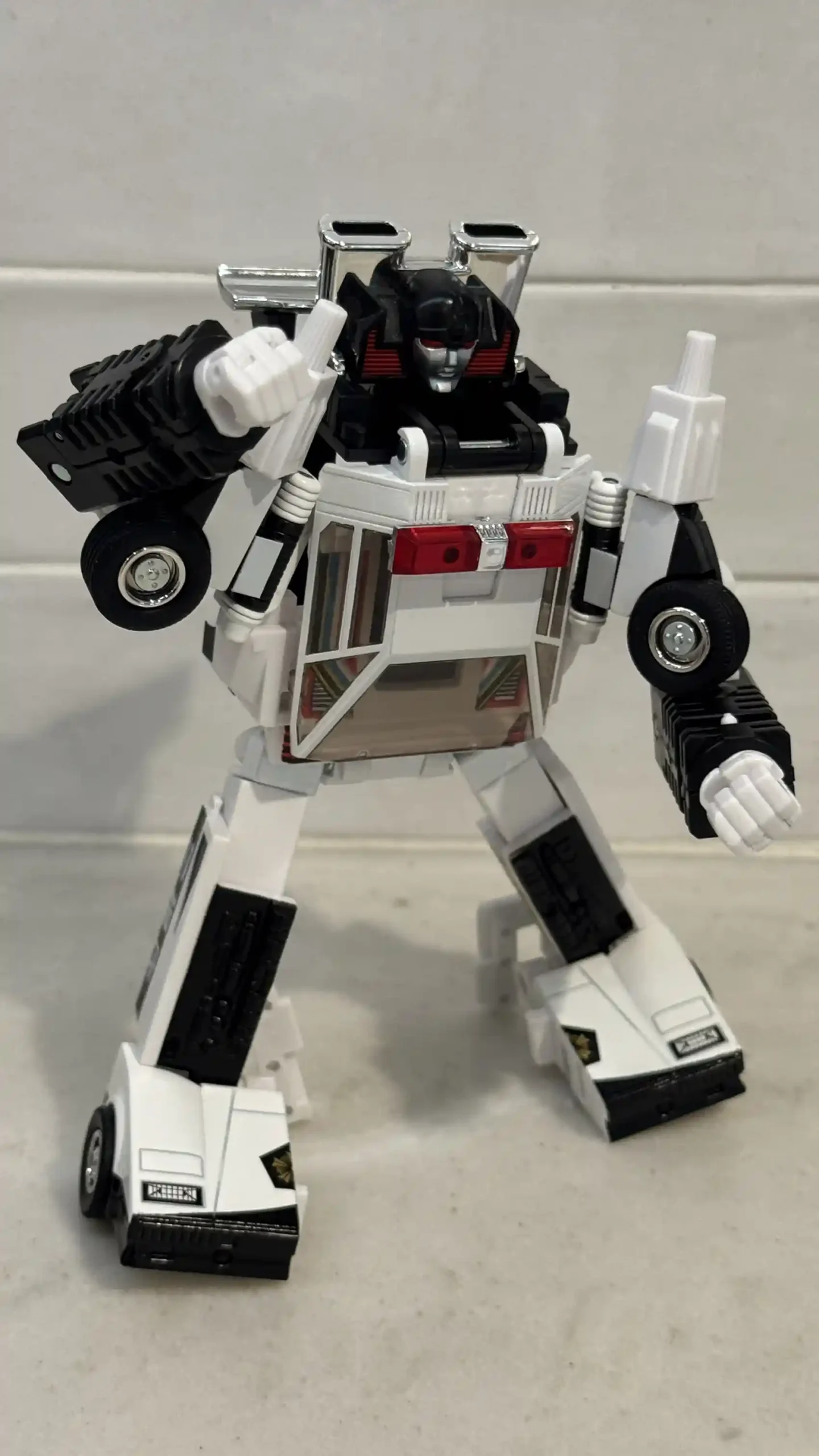
In robot mode, I can really feel how much more poseable Cordon is compared to vintage releases, with articulated shoulders, elbows, hips, knees, and ankles letting him lean, step forward, and bring the blaster up naturally. The shoulder parts sit high without restricting arm movement, and the wheels tucked into the arms rotate cleanly as the elbows bend. I like how the ankle joints let him plant his feet flat while shifting weight, which makes these wider stances and aiming poses possible without fighting the figure.
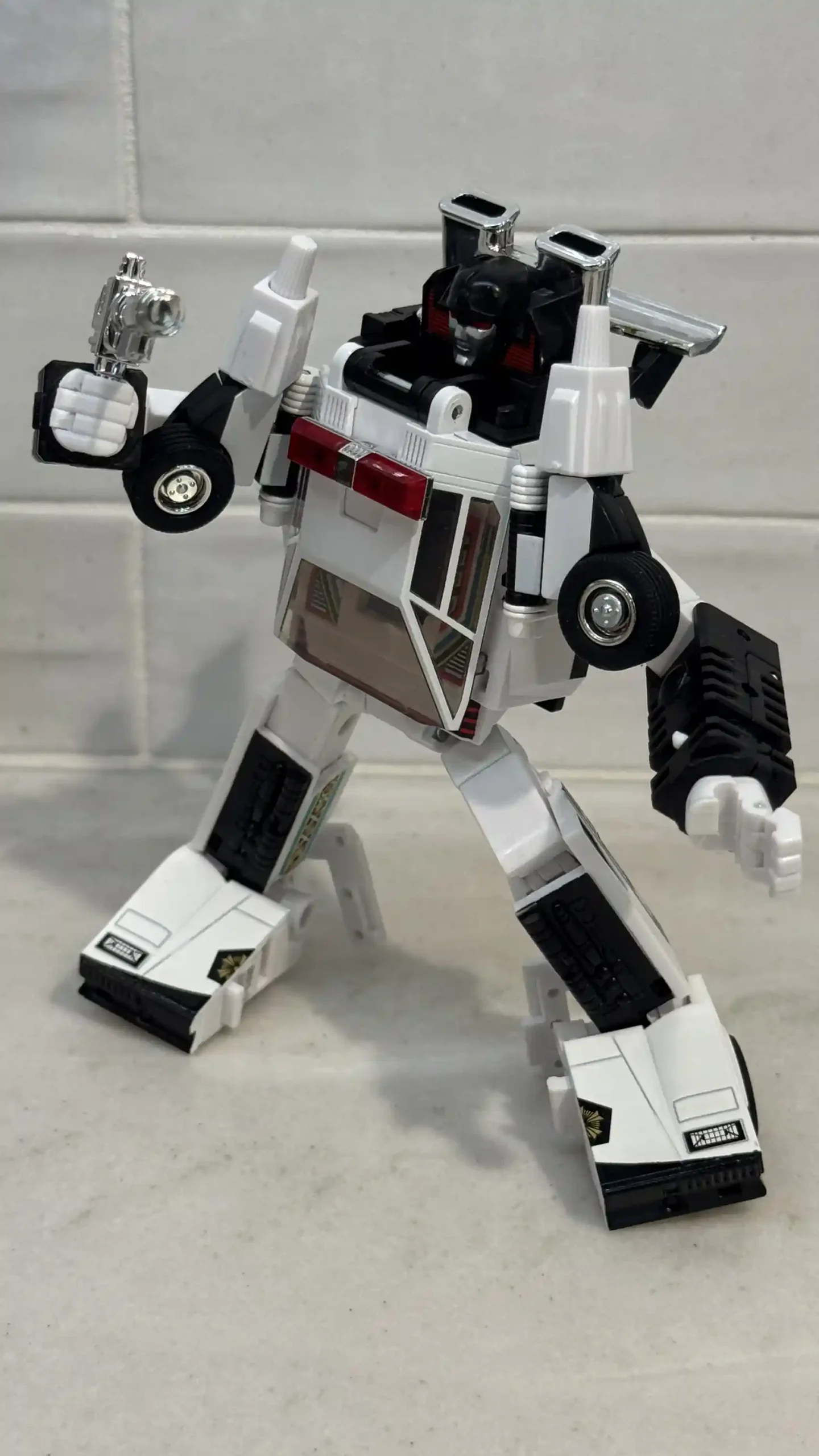
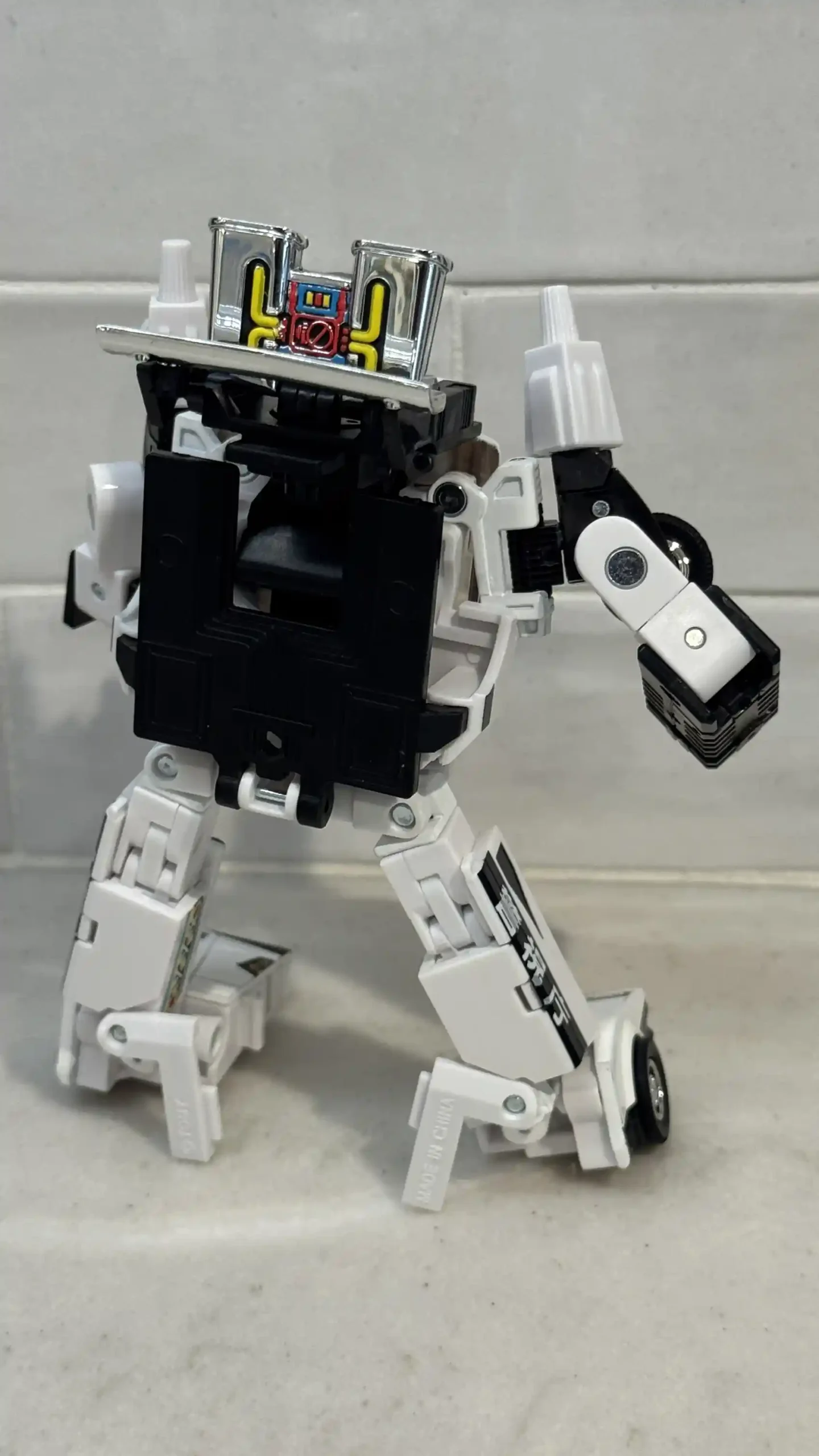
From the back, the robot mode shows how the vehicle shell compacts inward, with the black rear panel sitting flush against the torso and the chrome engine block riding high behind the head. I like seeing how the arm joints, knee hinges, and ankle mechanisms are fully exposed here, making it easy to understand how the poseability works, and there are extra plastic heel pieces on the feet that flip out to add stability when he’s leaning or taking wider stances.
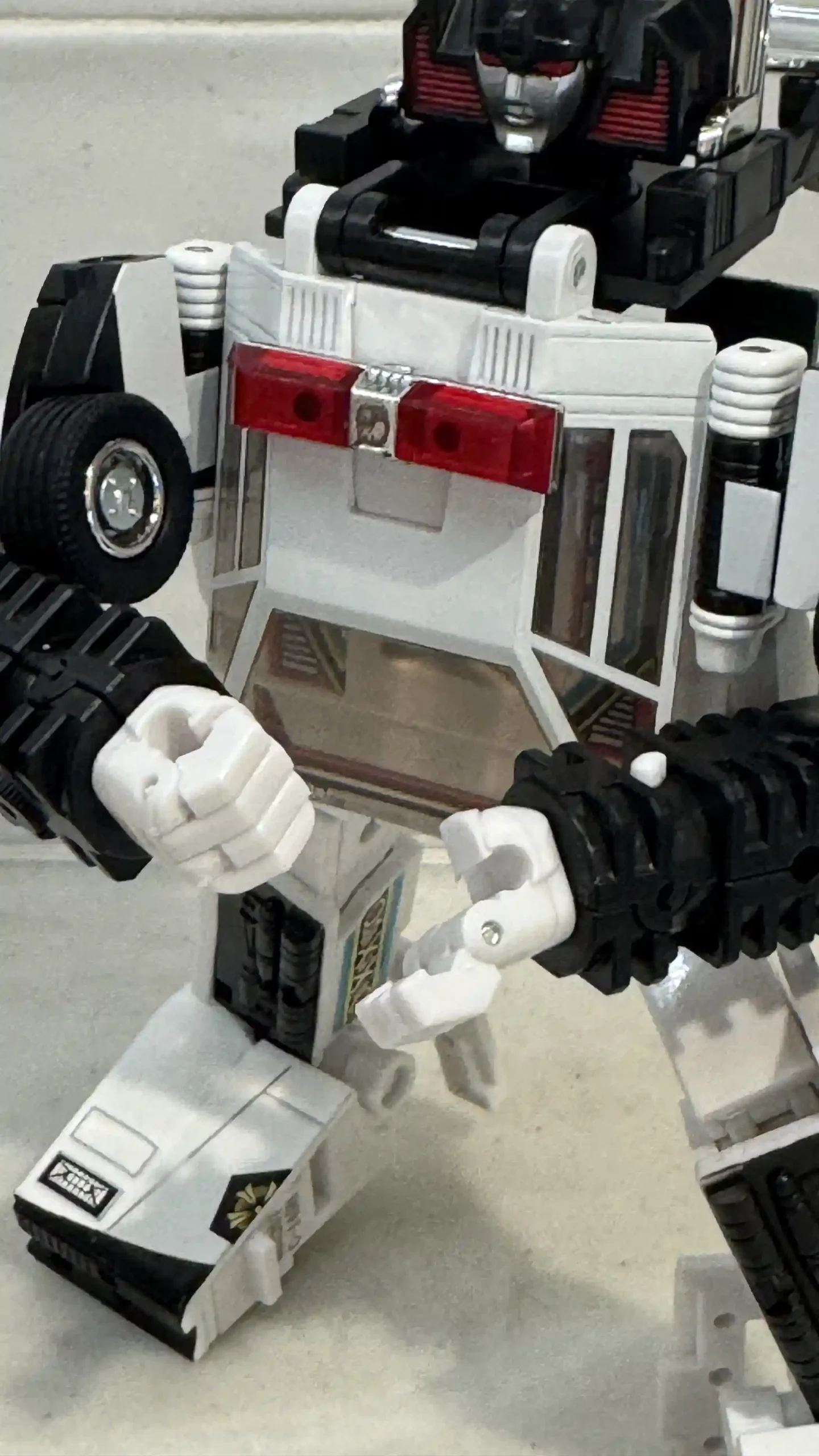
One last detail I really like is how Cordon’s articulated fists store directly inside the forearms when they’re not in use. You can see the alternate hands tucked cleanly into the black forearm sections, keeping everything self contained without needing a separate storage spot. It’s a smart bit of engineering that feels very considered and adds to the overall playability.