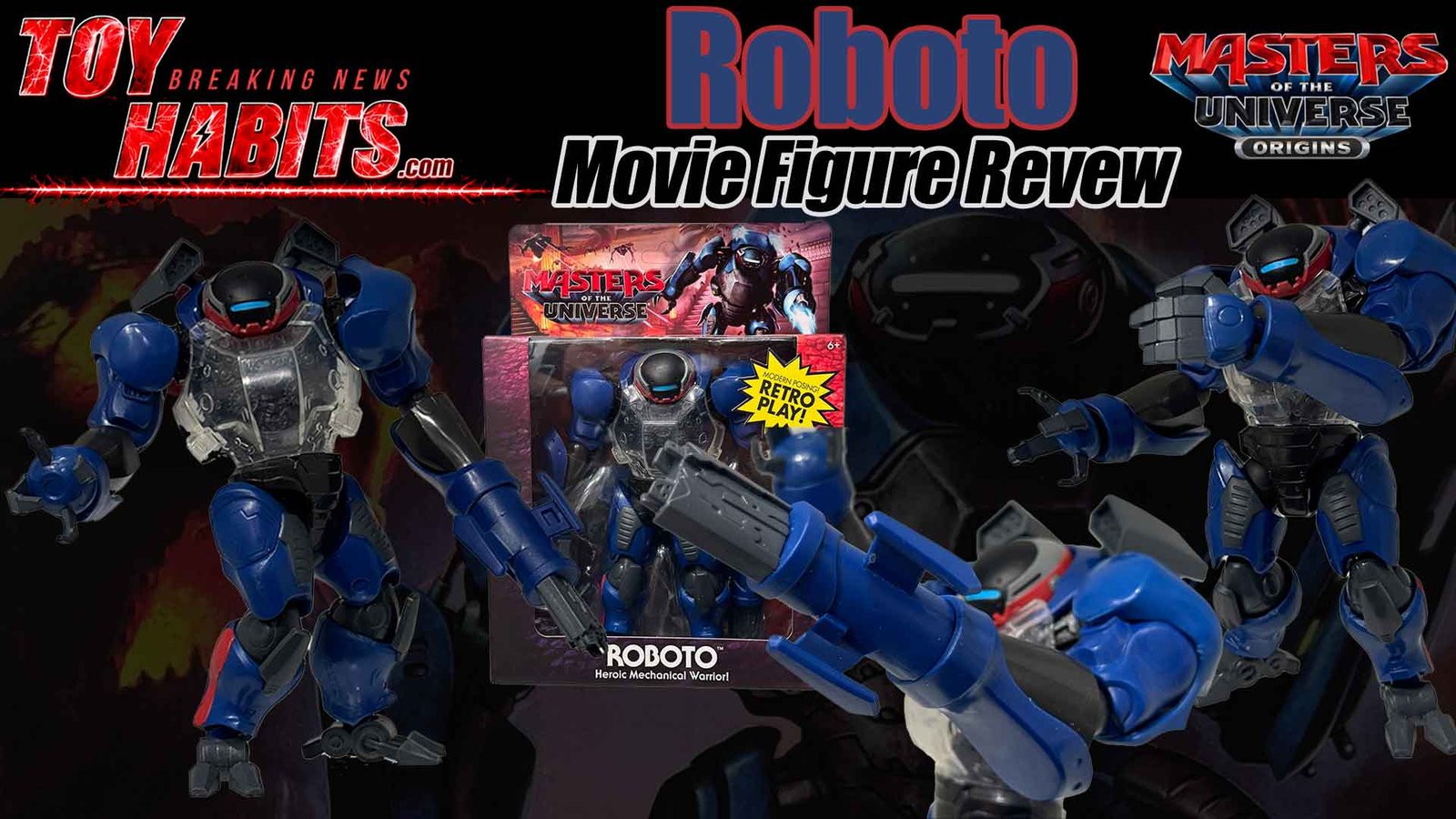
Roboto MOTU Origins 2026 Movie Figure Review
I picked up this MOTU Origins Movie Roboto a little while back after he surfaced on eBay with zero announcement I couldn’t pass him up. The figure showed up completely unannounced, no solicitation, no press images, nothing, so when listings started popping up, I jumped on one even knowing the markup was steep. Getting him in hand, the first thing I noticed is how the sculpt balances the classic Roboto design cues with what appears to be a movie-influenced aesthetic. The chest cavity still has that signature transparent torso element that’s been a hallmark of the character since the vintage line, but the overall proportions and surface detailing lean into something more cinematic. He comes with removable hands and a swappable blaster attachment for the arm, which is a nice nod to his original action feature without overcomplicating things at this scale. For a figure that technically doesn’t officially exist yet in Mattel’s marketing, the paint apps and plastic quality feel consistent with what we’ve been seeing from the Origins Movie line so far. Roboto has always been one of those characters who gets overlooked in roster discussions, but he’s had a solid presence across Classics and Origins already, so seeing him get a movie treatment is a welcome surprise. If you’re hunting for him, listings are still floating around on eBay if you want to grab one before any official release details surface.
Packaging
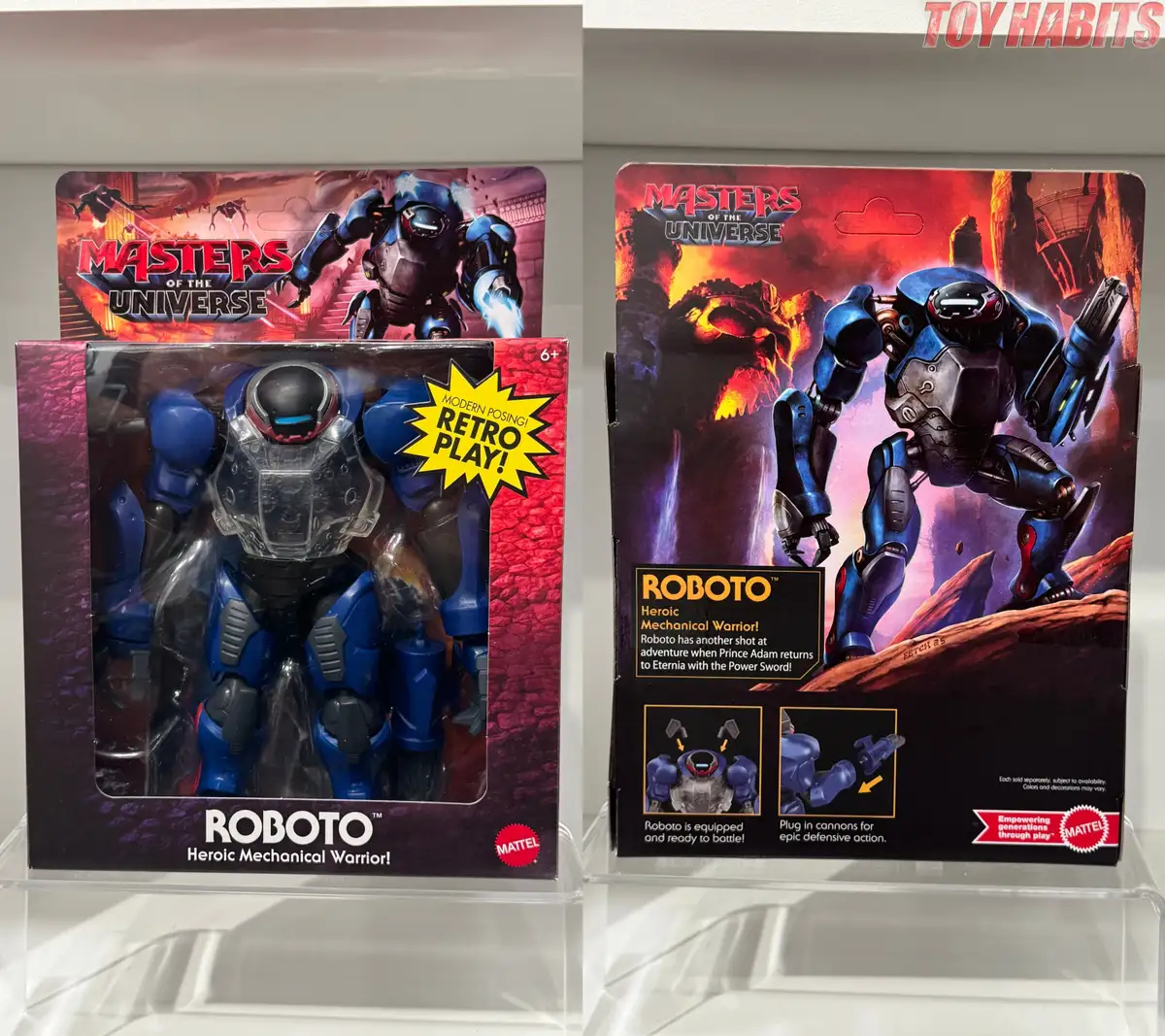
The front of the packaging shows just how massive Roboto is, filling the entire blister window from edge to edge with barely any room to spare. On the back, the artwork by Francisco Etchart is absolutely stellar, depicting Roboto in a dramatic battle scene with rich reds and deep blues that really sell the sci-fi tone of the 2026 movie design.
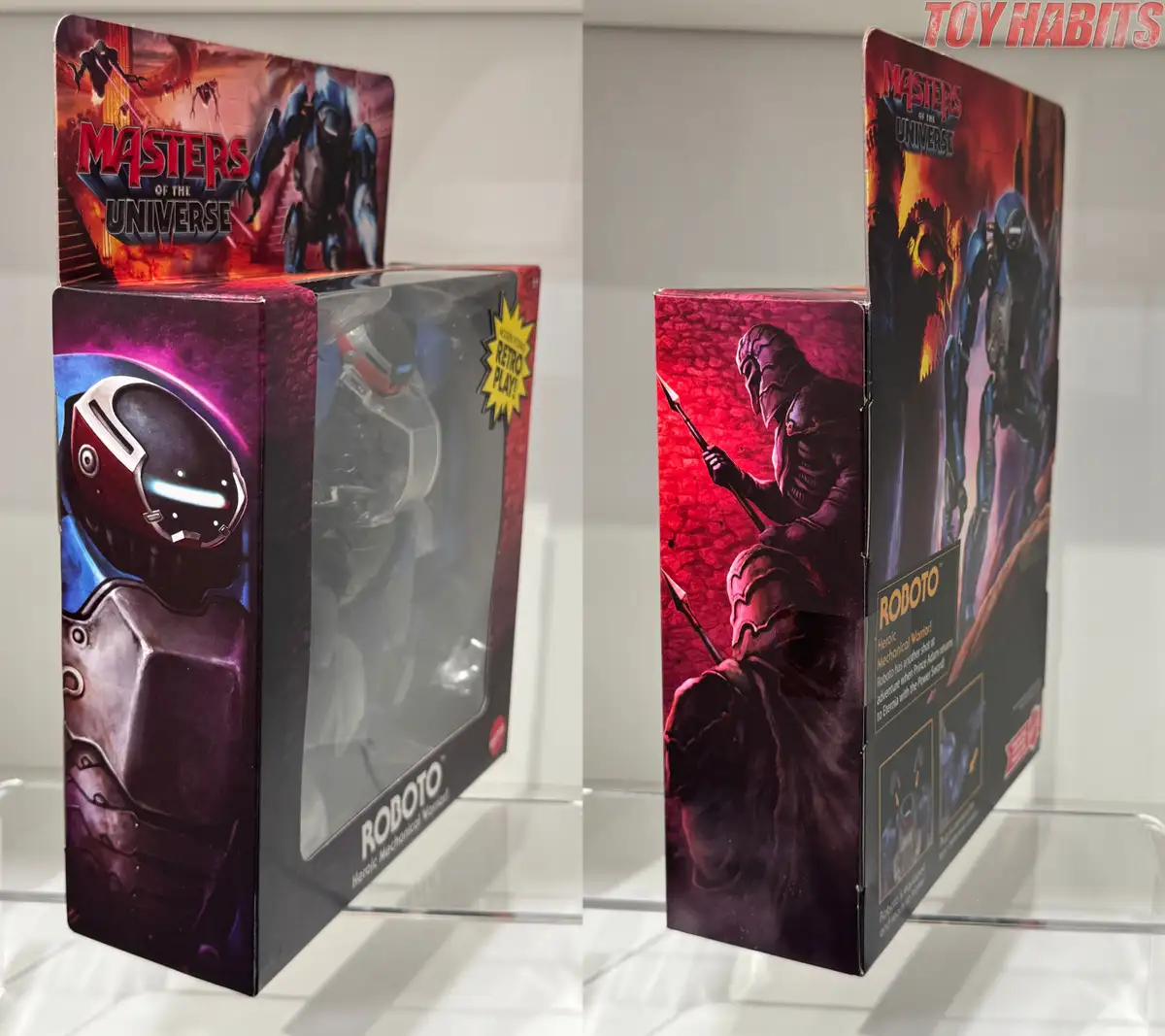
The side panel artwork is what really gets me excited here, because it features the Skel-Knights, these armored skeletal warriors that look absolutely menacing and would make incredible MOTU Origins movie figures if they ever get produced. The front card art carries that same dark, moody sci-fi aesthetic with a close-up of Roboto’s helmet and torso rendered in deep purples and cool blues.
The bottom of the box gives you the UPC barcode so you can scan it in stores if you’re hunting this one down, since Roboto showed up without any official announcement and has only been spotted through secondary market sellers so far. You can also see it lists the contents as one figure and one accessory, which lines up with that swappable blaster attachment.

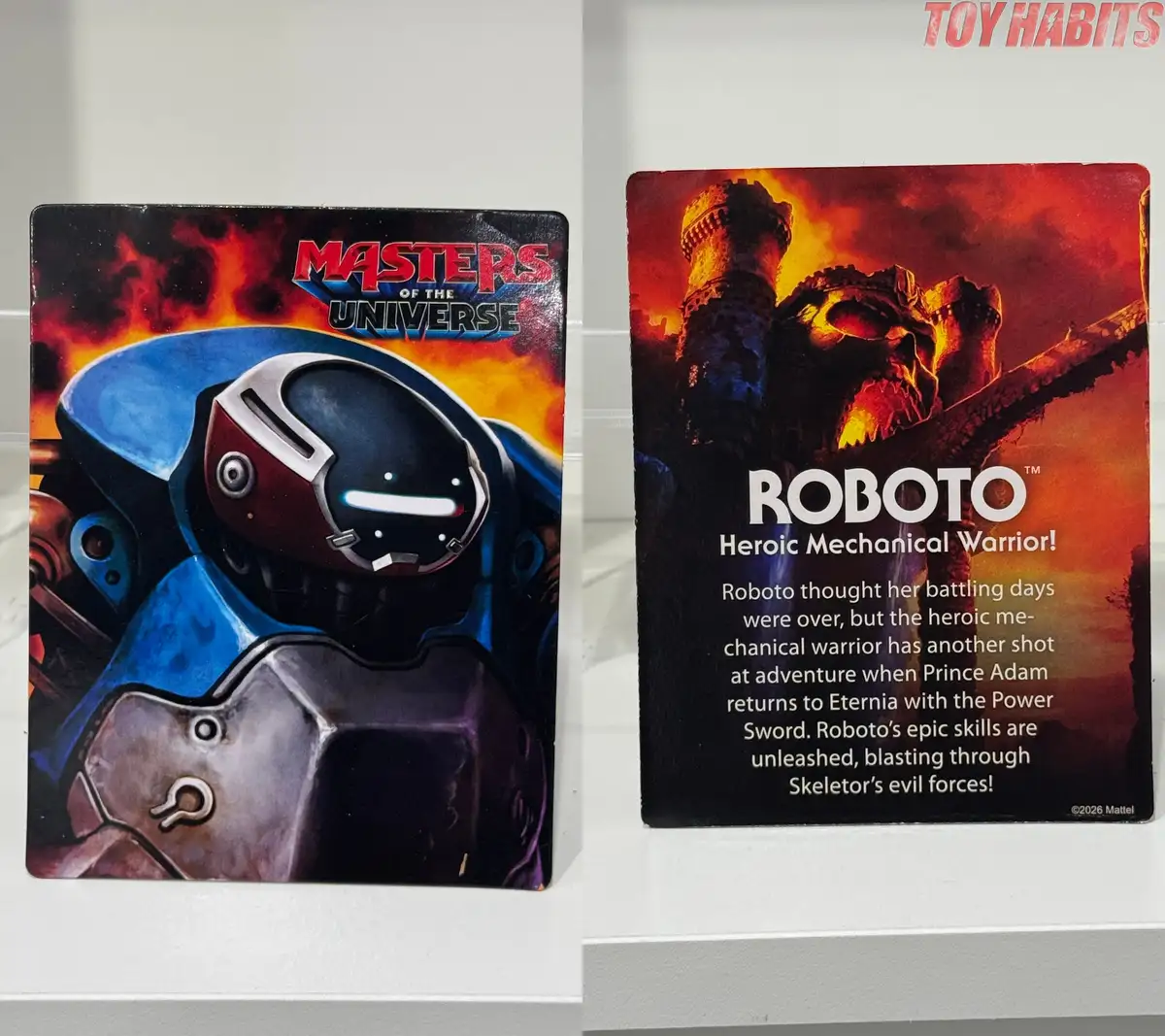
The collectible card front features a gorgeous close-up of Roboto’s helmet and blue shoulder armor set against a fiery orange and purple backdrop, while the back shows a towering mechanical figure amid castle ruins with the bio reading: “Roboto thought her battling days were over, but the heroic mechanical warrior has another shot at adventure when Prince Adam returns to Eternia with the Power Sword. Roboto’s epic skills are unleashed, blasting through Skeletor’s evil forces!” It’s a nice inclusion, but honestly, this is yet another missed opportunity to include a mini comic with the figure, for shame Mattel!
Here’s the included instruction sheet showing exactly which parts on Roboto are removable and swappable, with each one clearly called out by a dot indicator pointing to the shoulders, forearms, hands, and that blaster attachment. I love that they went this detailed with the diagram, because you can see just how many pieces are designed to pop off and interchange, giving you a lot of options to customize the look.
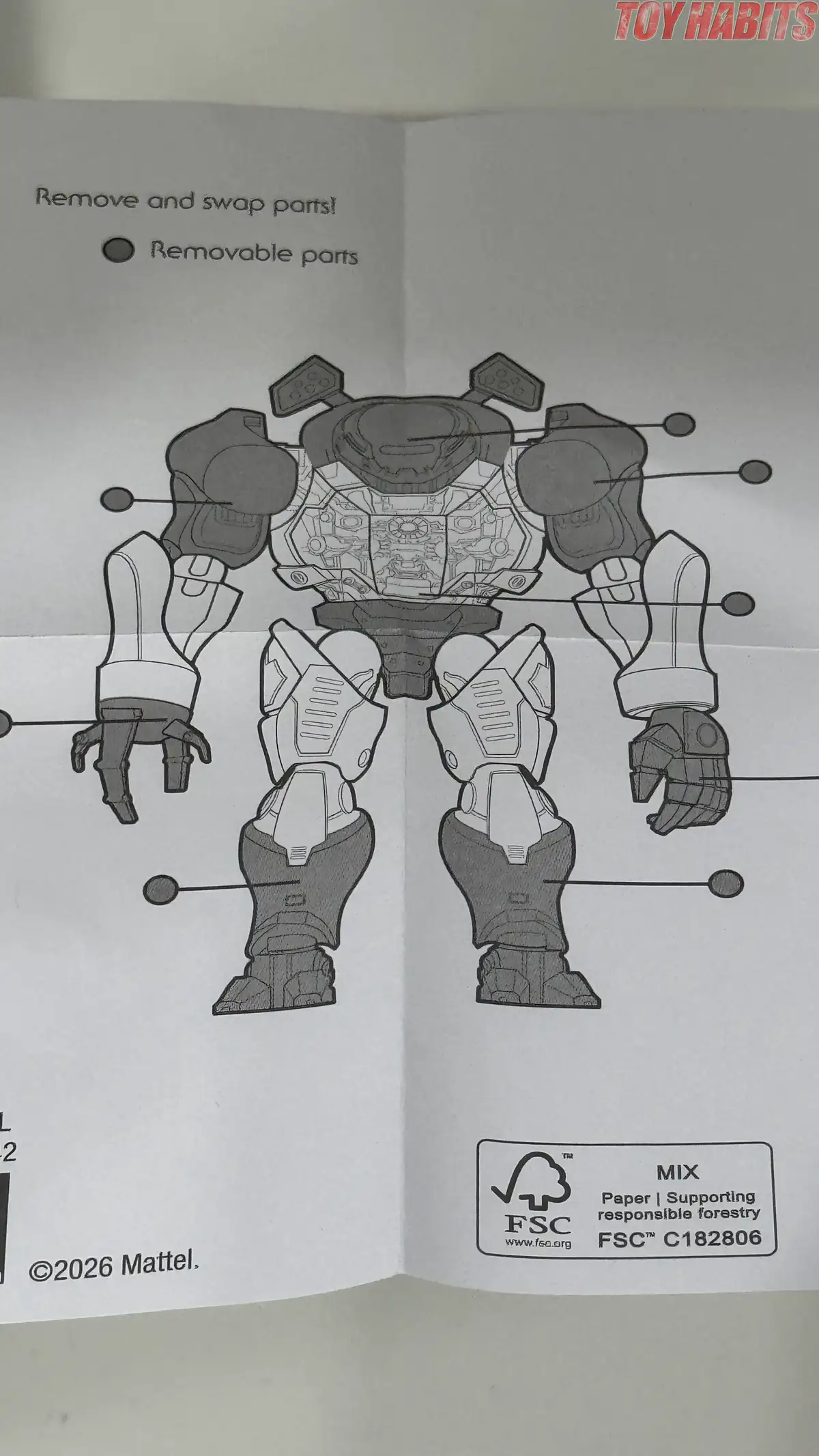
Figure Details
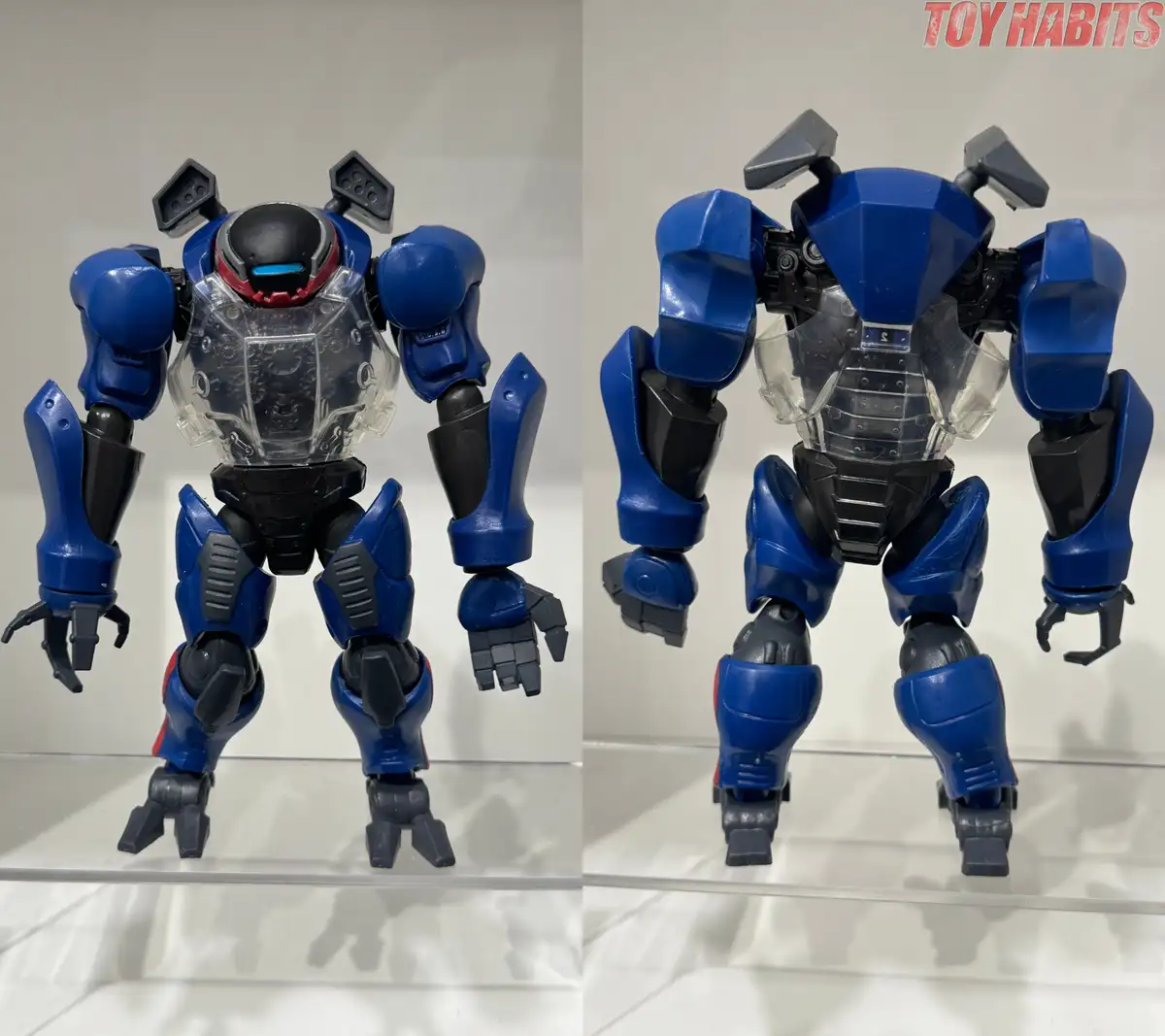
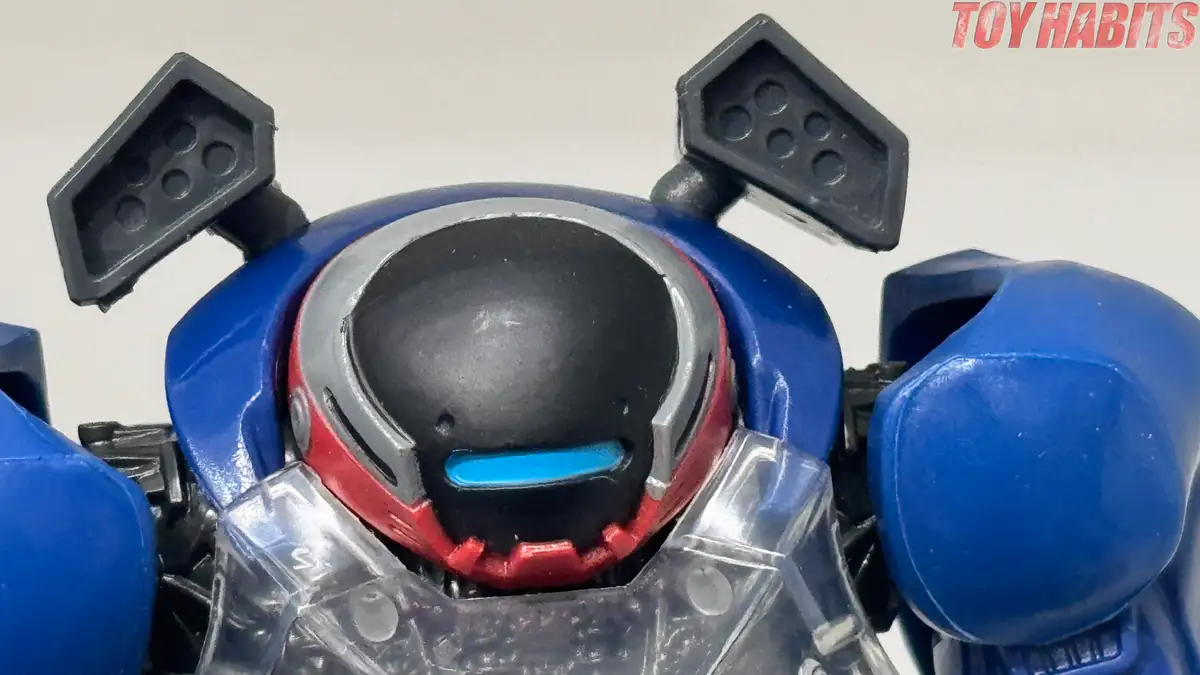
Here’s a full front and back look at Roboto, and I love how the red mouthguard on the helmet pays homage to the vintage Roboto design, sitting just below that narrow blue visor and giving the head sculpt a familiar nod that longtime fans will immediately recognize. From the back, you can see the large, angular armor plating on the upper back with those faceted, geometric shapes that flow into the shoulder joints, plus the clear chest panel revealing the mechanical internals from the rear as well.
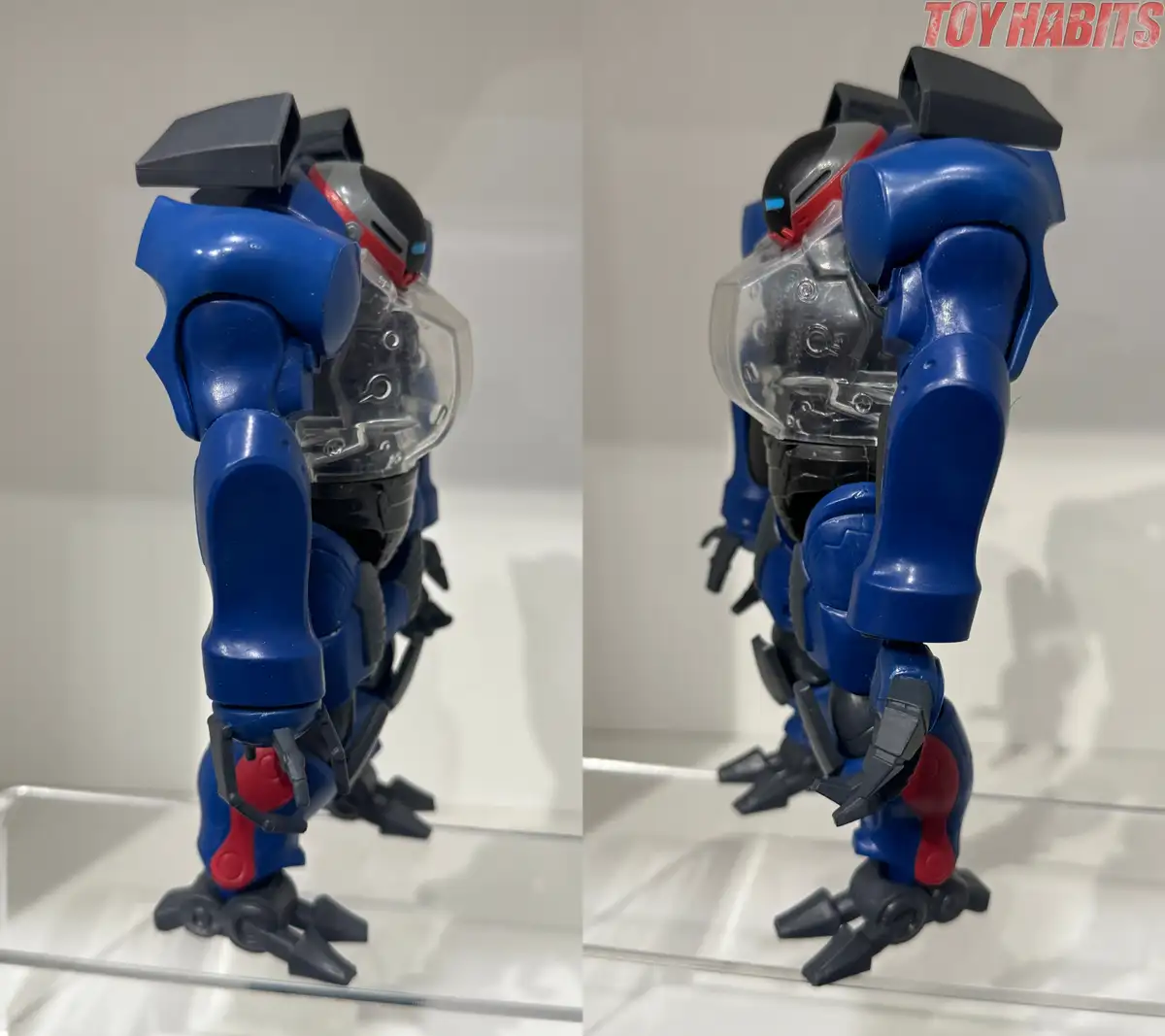
From the side, you can really appreciate how the blue forearm armor has a smooth, rounded profile that tapers down toward the wrist, contrasting with the angular, faceted shapes on the upper shoulder pads. The knee area shows off those segmented gray guard plates wrapping around the joint, and you can see how the dark inner framework of the legs is visible between the armored sections, giving the whole build a layered, mechanical depth.
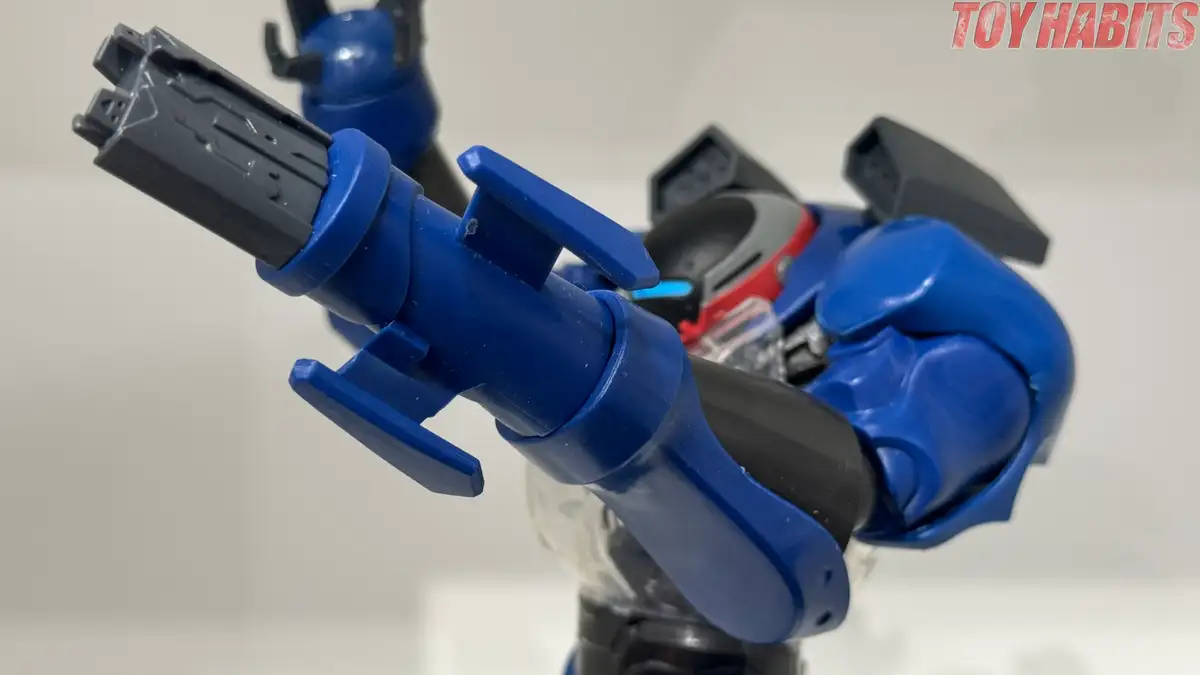
Here is the blaster arm attachment that comes packed with Roboto, and you can really appreciate the compact, stocky proportions of the weapon with its squared-off barrel section and the wraparound blue housing that locks it into the forearm socket. The sculpted panel lines and recessed geometric shapes running along the barrel give it a utilitarian, no-nonsense military feel that fits right in with the rest of the armored design.
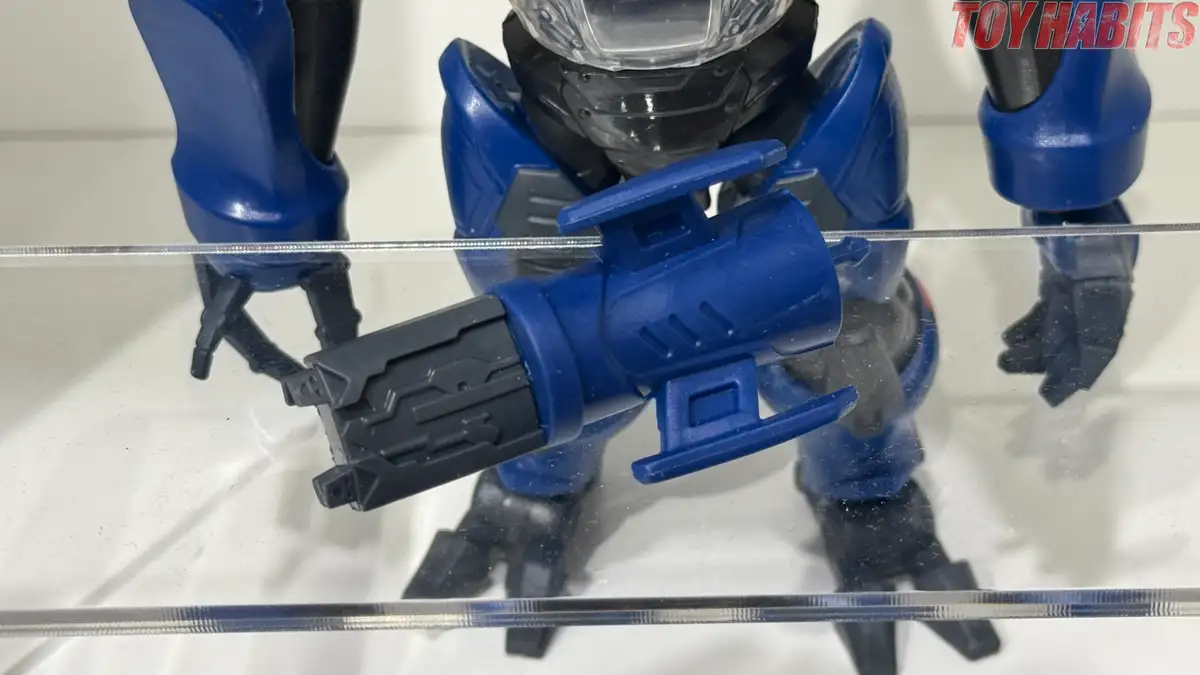
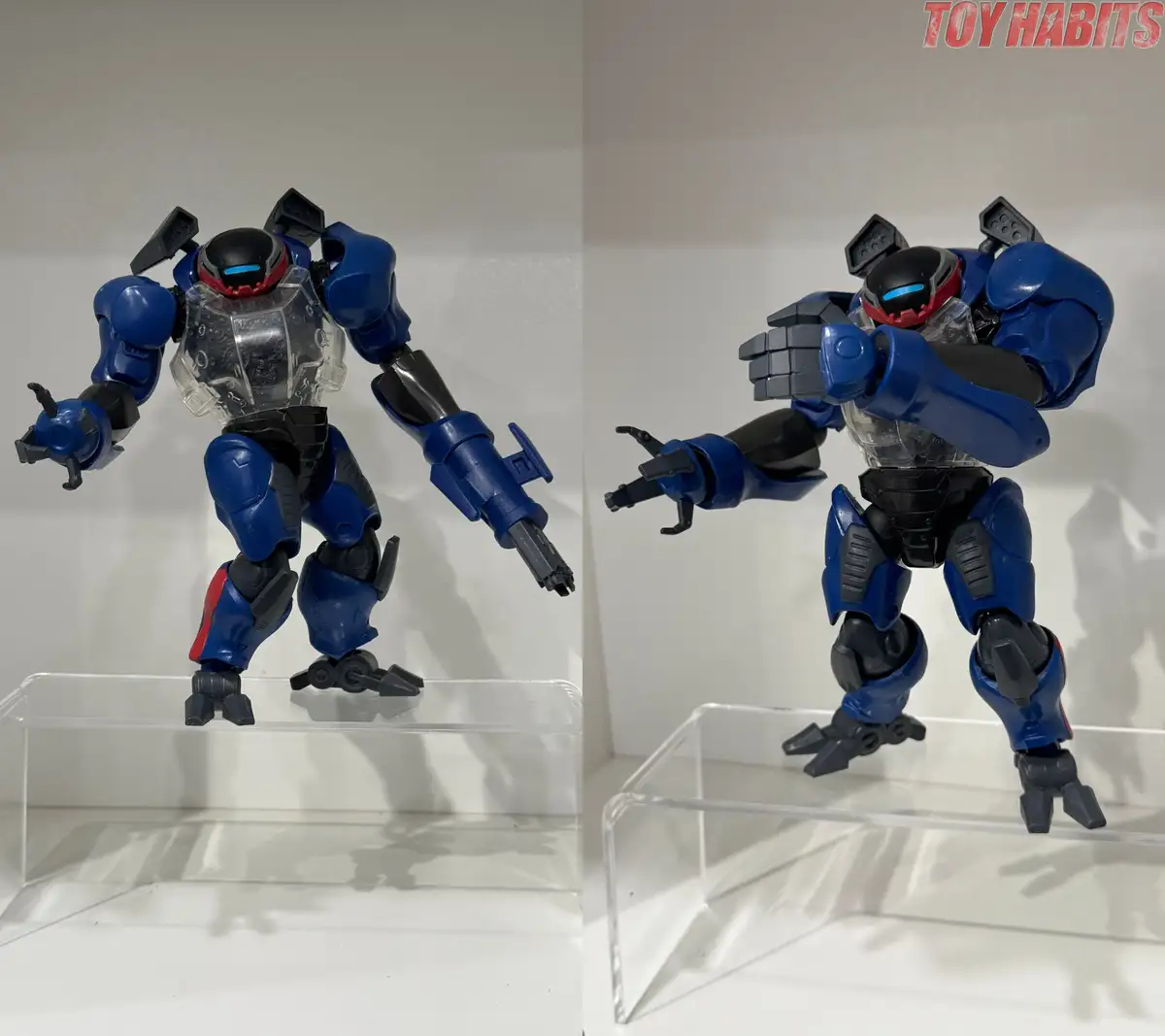
You can see how swapping between the standard hand and the blaster attachment completely changes Roboto’s proportions, with the bare hand giving a more balanced, symmetrical look while the blaster adds serious asymmetrical bulk to one side. I like that both configurations work equally well, because the forearm sockets accept either piece cleanly, so you’re free to mix things up depending on whether you want a stripped-down or heavily armed display.
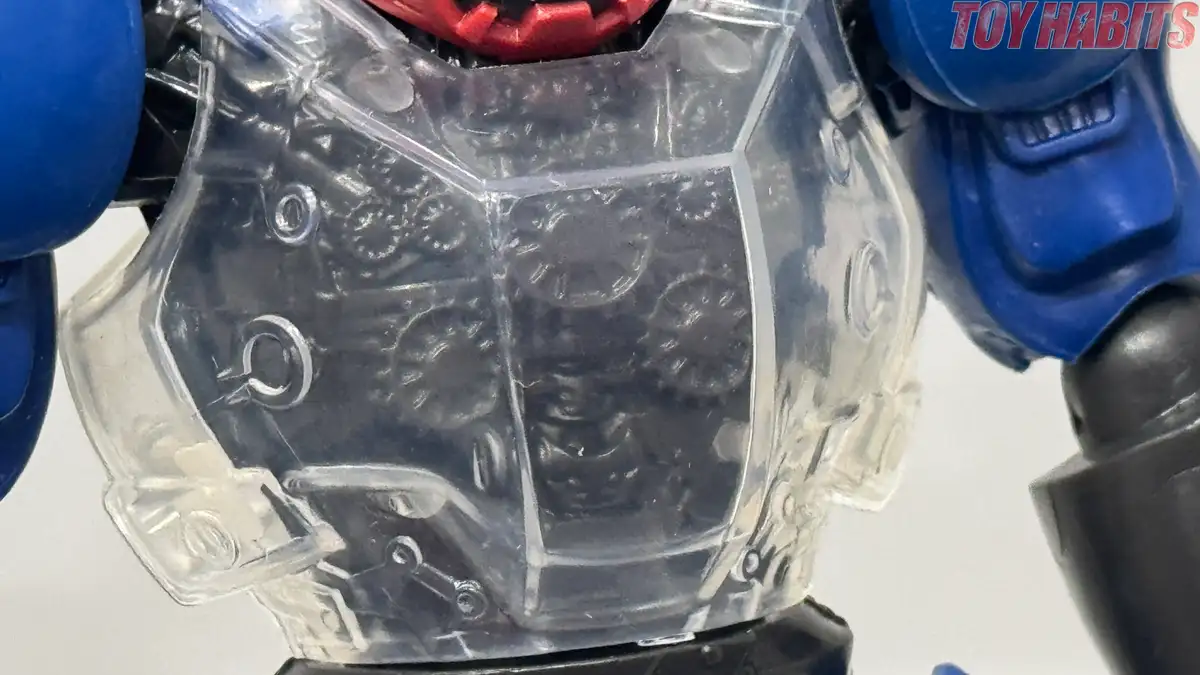
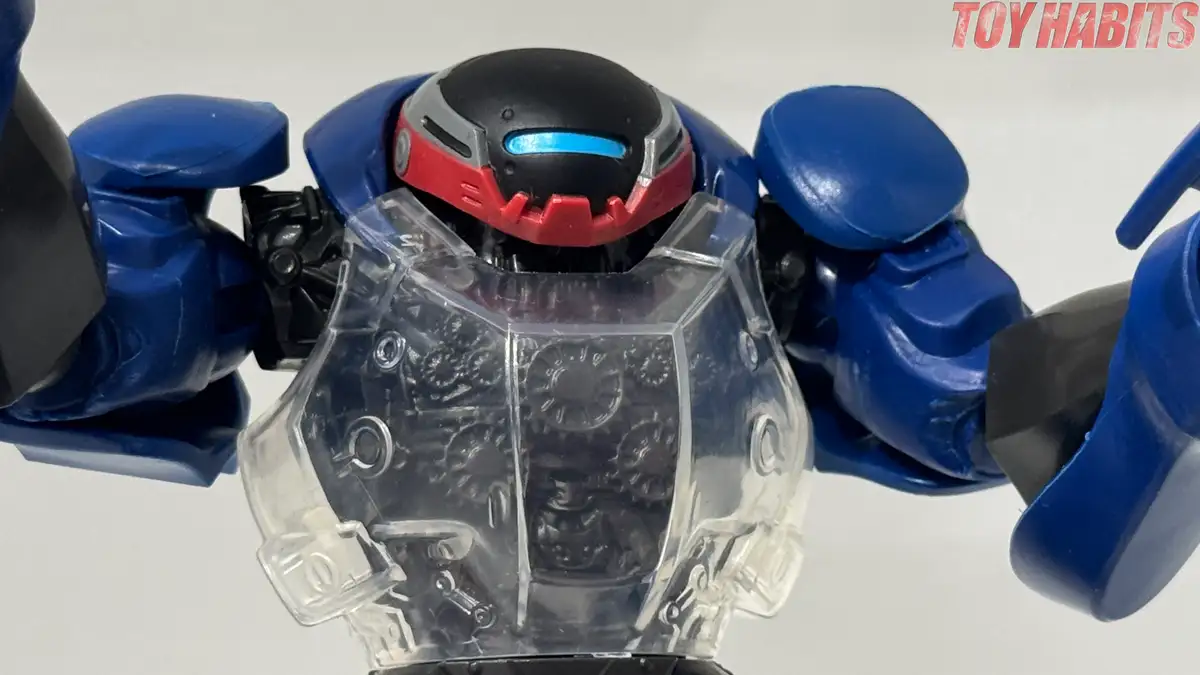
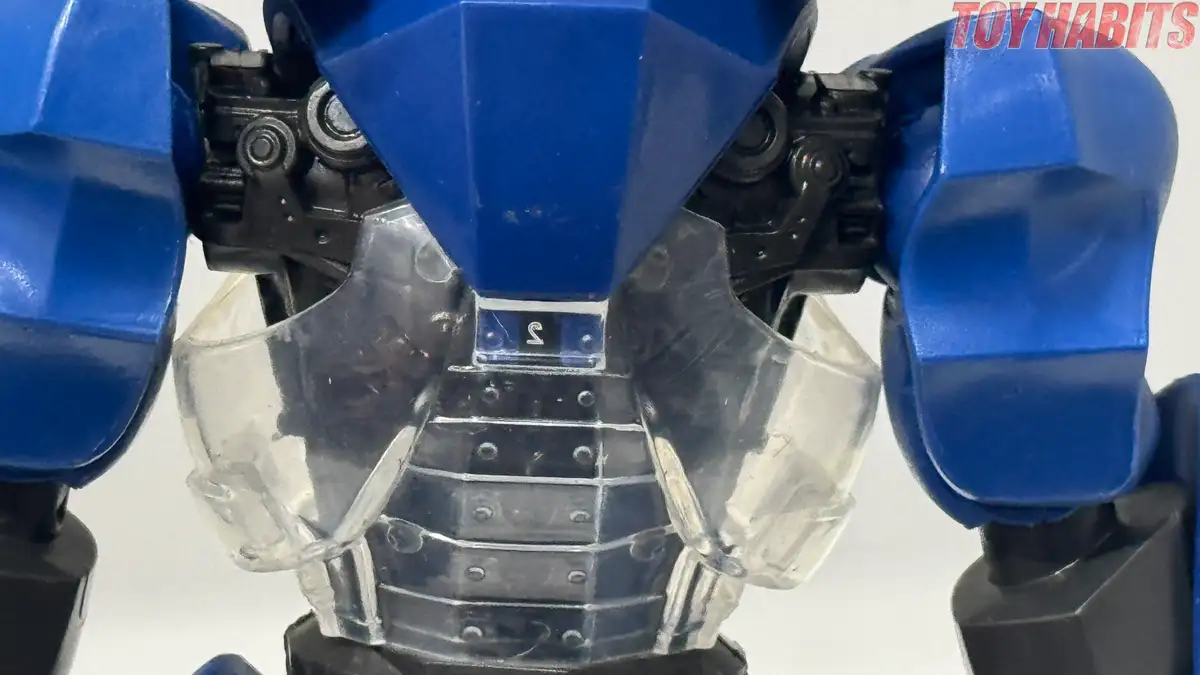
Here’s an up close look at the inner workings of Roboto, and you can really appreciate the intricate sculpted gears, pistons, and mechanical details packed inside the torso beneath that clear chest armor. The blue shoulder armor and upper arms frame the whole assembly nicely, with rivets and panel lines molded into the surrounding pieces to keep everything feeling cohesive.
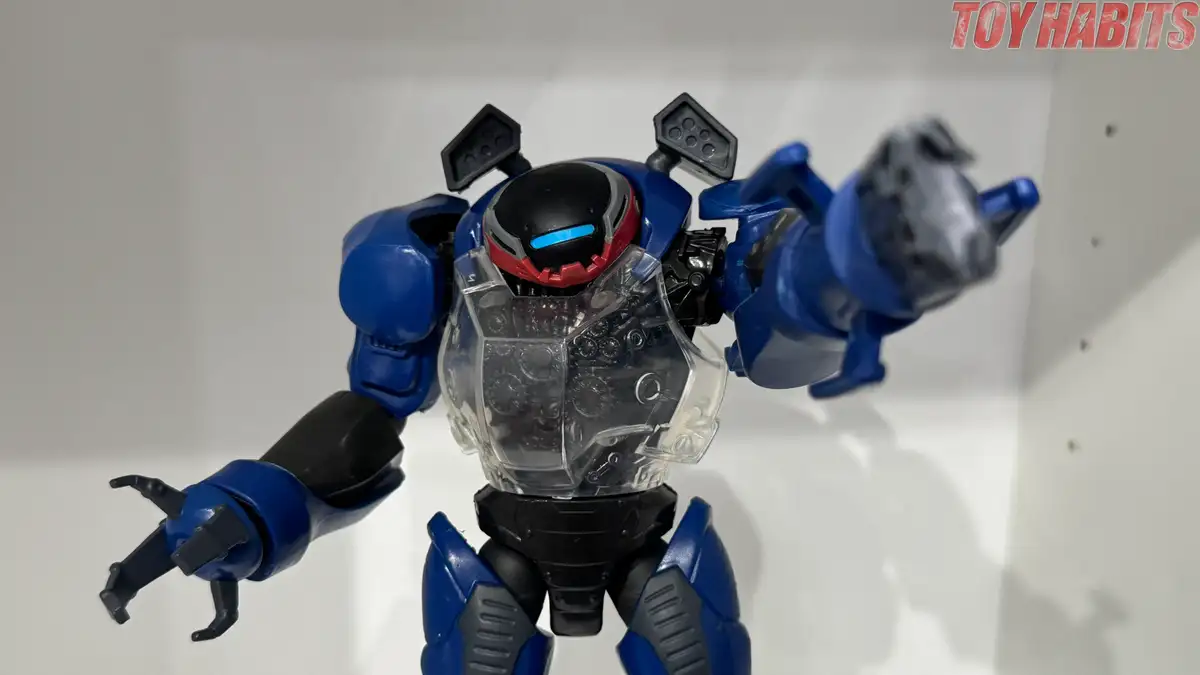
The blaster attachment has a great chunky, multi-barreled design with deep sculpted recesses that give it real mechanical weight, and it integrates seamlessly into the forearm socket. I love how the narrow blue visor on the helmet pops against all that black and red framing, giving Roboto such a rad, intimidating look up close.
You can see the open sockets on the shoulders where the rocket launchers normally plug in, and those connection points are clean and well-integrated into the surrounding blue armor. The chest panel reveals all those sculpted gears and mechanical innards underneath, with tiny pistons, circular housings, and layered machinery filling every square inch of the torso cavity.
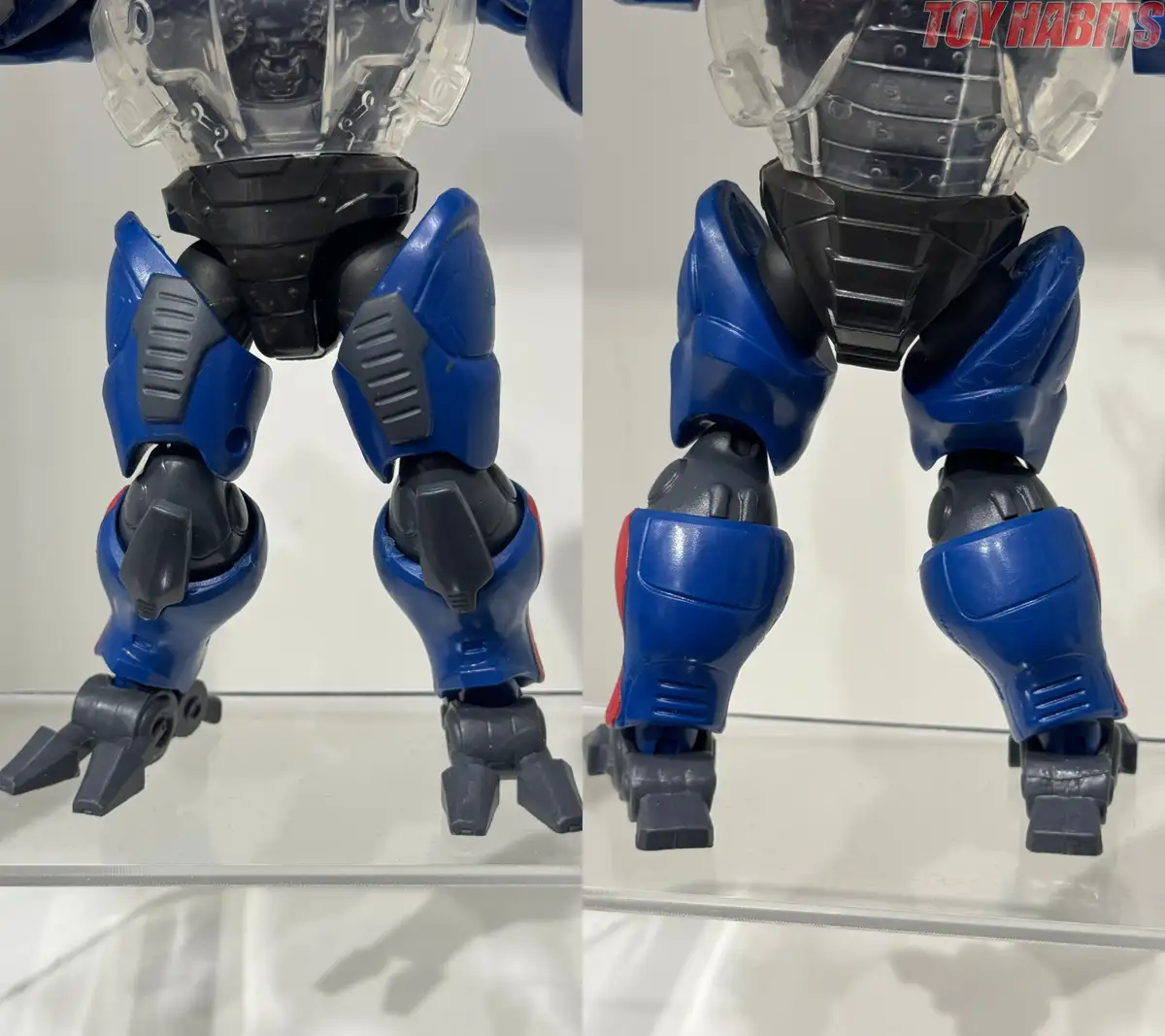
Here’s a great front and back comparison of Roboto’s legs, and you can see how the thigh armor has these layered, segmented panels with horizontal vent-like grooves sculpted into the kneecaps. The feet have a really cool split-toe, almost claw-like design in dark gray, and I love how the red accents peek through at the knee joints from the back view, breaking up that deep blue and black color scheme just enough to add visual interest.
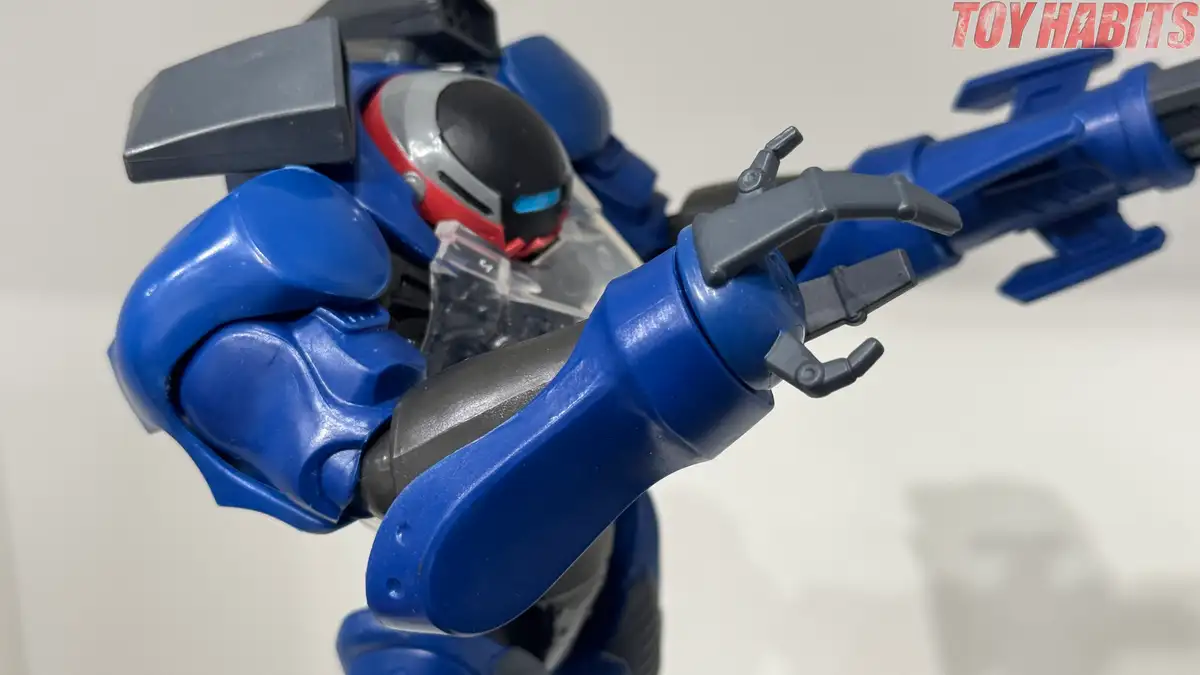
The claw arm attachment has a really cool pincer design with two curved prongs that taper to sharp points, and the sculpted at the base gives it a believable, functional look. You can see how the gray tone on the claw contrasts nicely against all that blue armor, making it feel like a distinct tool rather than just another piece of the suit.
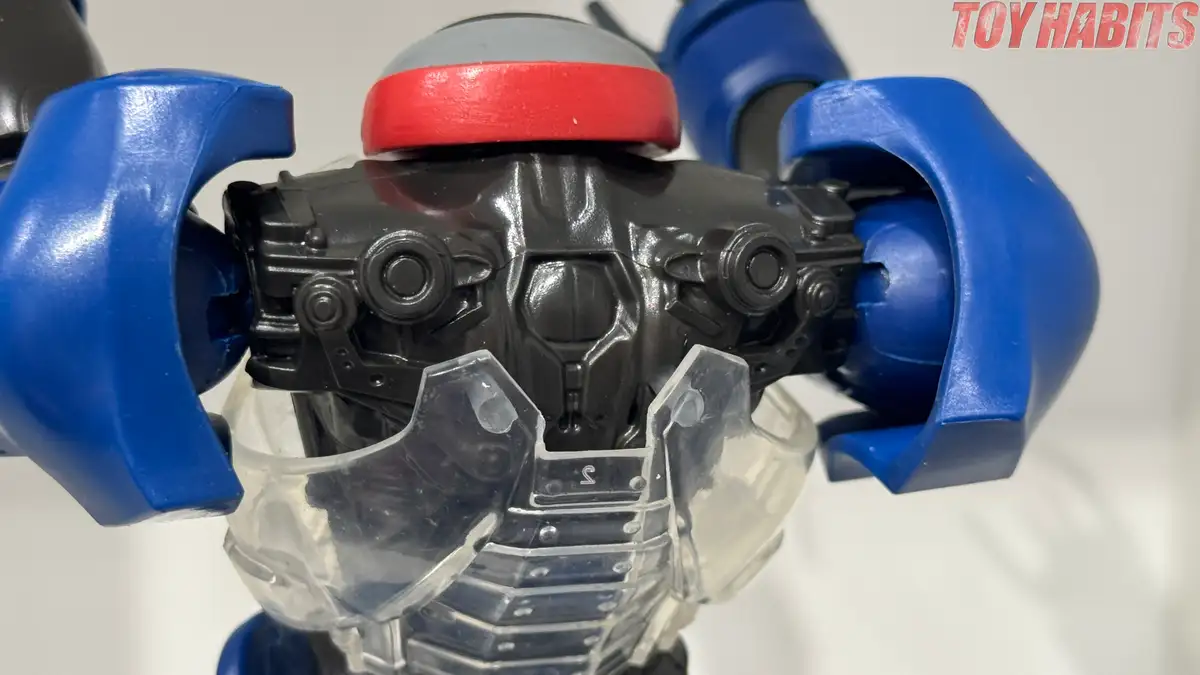
Here’s a closer look at what’s underneath once you remove that back blue armor piece where the rocket launchers attach, and the mechanical detailing on the inner torso is seriously impressive, with sculpted circular housings, recessed panel lines, and layered machinery covering the entire back section. The contrast between the matte black mechanical internals and the clear lower chest panel really lets you appreciate how much work went into engineering parts of Roboto you’d normally never even see.
Here’s a great up close shot of the shoulder-mounted rocket launchers, and I love how each one has a rectangular, multi-port face with four sculpted barrel openings that give them a serious industrial look. The lower jaw section on the helmet is such a nice homage to the vintage Roboto design, with that jagged, segmented edge along the red chin guard that echoes the original toy’s open-jaw aesthetic.
You can see how the clear armor wraps all the way from the front around to the back of the torso, forming one continuous shell that encases the entire midsection and lets those sculpted mechanical internals stay visible from every angle. The segmented ribbing molded into the lower section adds a nice structural texture, and I love how the blue chest plate sits right on top, locking the whole assembly together where it meets the shoulder joints.
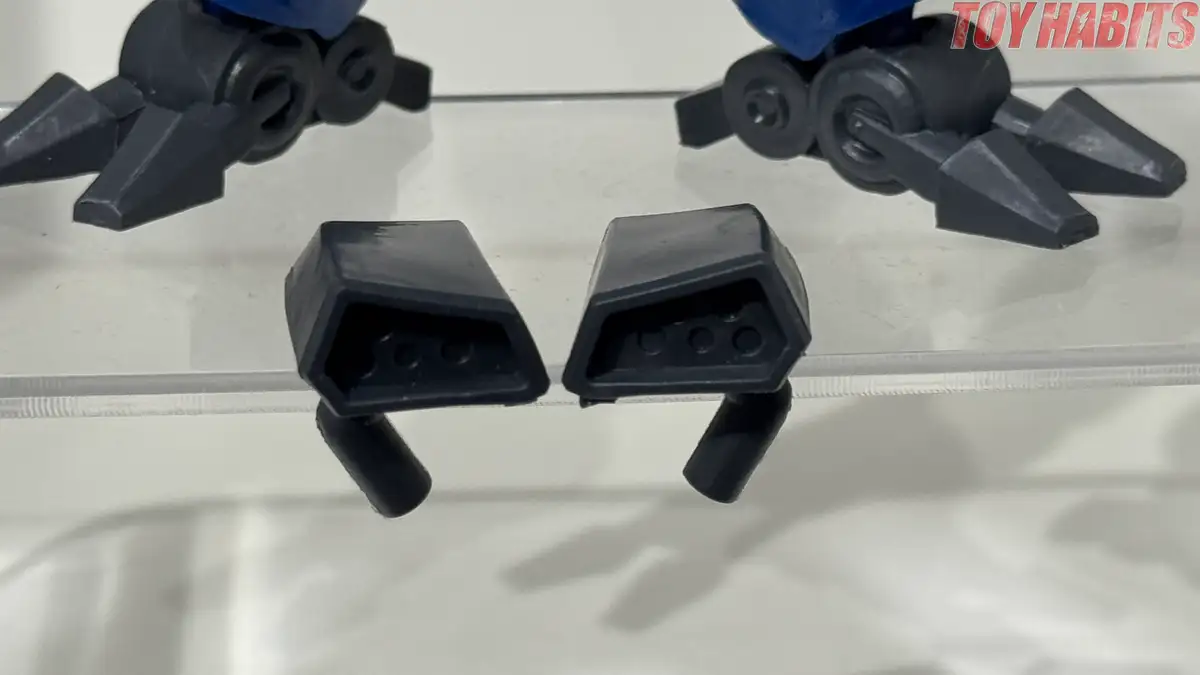
Here’s a close look at the removable rocket launchers from underneath, and you can see the hollow, recessed interiors with small peg ports sculpted inside each housing that lock them into those open shoulder sockets we saw earlier. The angled, wedge-shaped profile of each launcher is much more apparent once they’re off the figure, with flat faceted surfaces and sharp geometric edges that give them a real industrial, modular feel.
The blaster arm attachment has a real heft to it when you look at it from this angle, with that cylindrical mid-section feeding into the squared-off barrel housing up top.
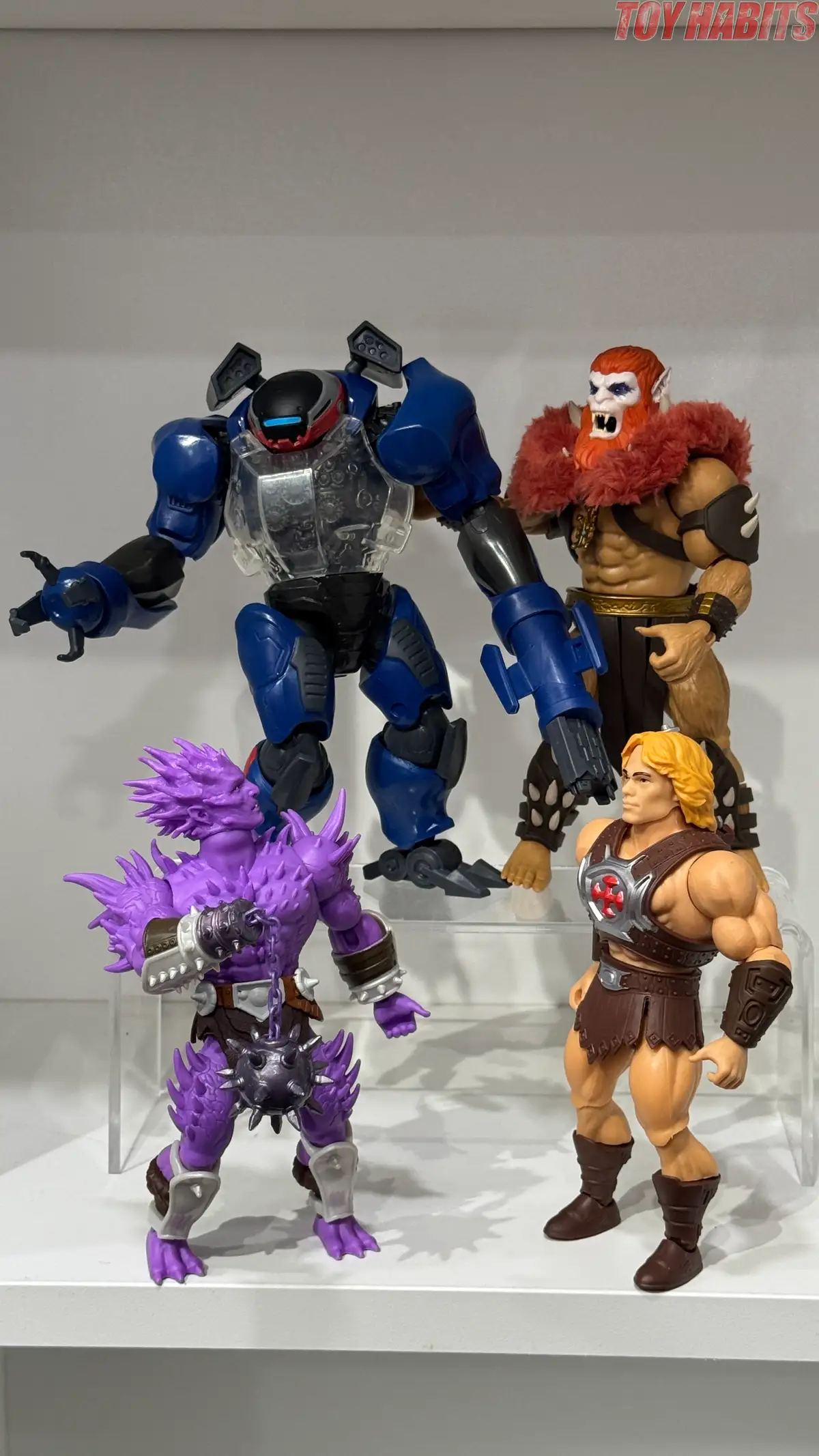
I love how all of the MOTU Origins Movie figures look together, and you can really see how each one has its own distinct visual identity, from Roboto’s massive blue and silver armored frame to the wild purple spikes on Spikor and the furry red collar on Beast Man. He-Man’s classic tan and brown look grounds the whole group, and the sheer size difference between Roboto and the rest of the crew is something you don’t fully appreciate until you see them side by side like this.
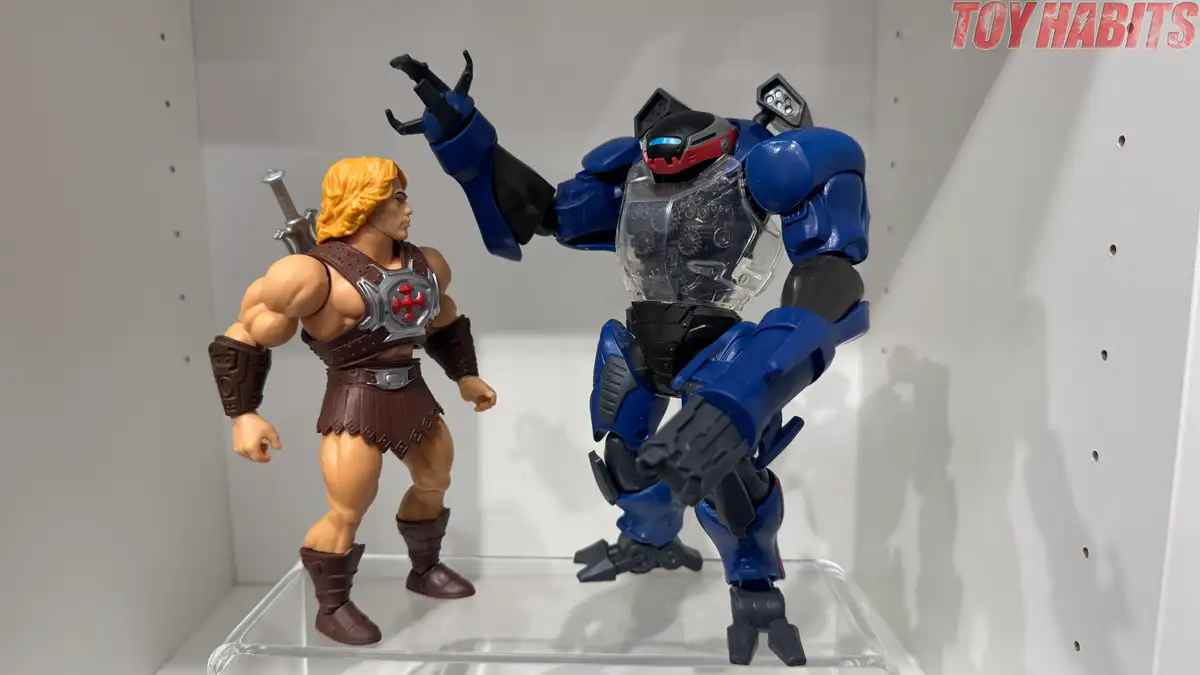
Here’s a great size comparison between Roboto and He-Man that really shows off just how much larger that movie design is, towering over him with those thick, heavily armored legs and massive shoulder pads. The blaster arm attachment that comes packed with the figure has a broad, angular shape with multiple sculpted barrel openings, and you can see how it replaces the standard forearm to give a completely different silhouette on that side.
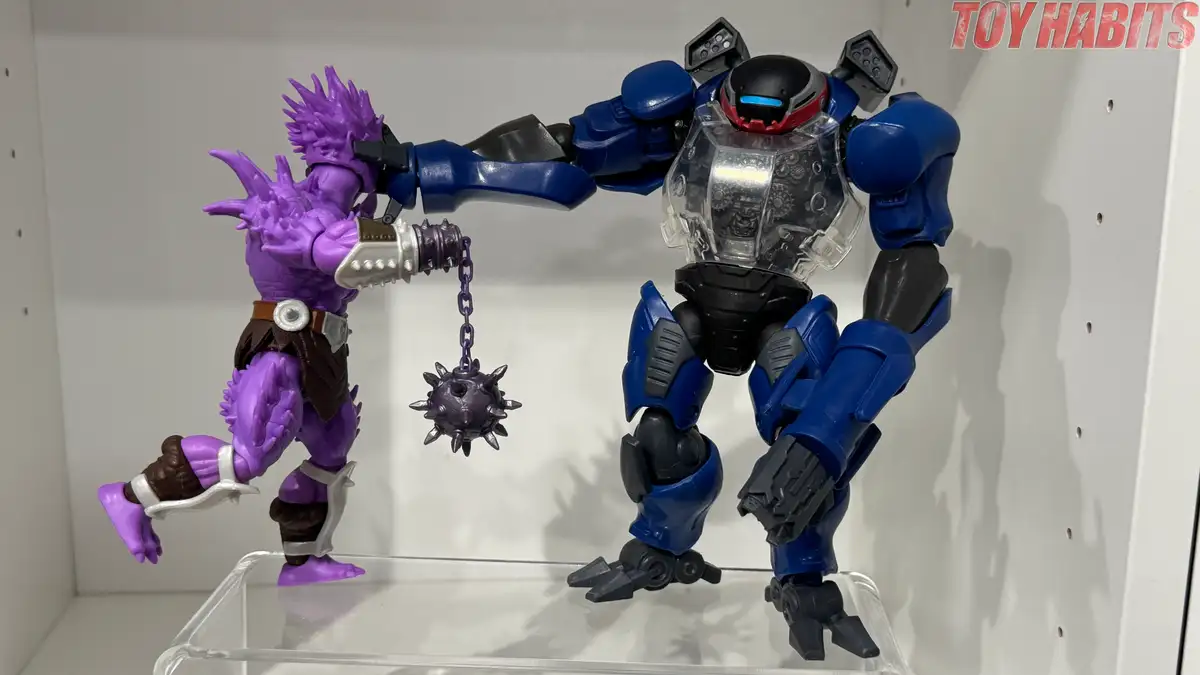
The size difference between Roboto and Spikor is wild when you see them next to each other, and with the shoulder-mounted rocket launchers removed, you get a much cleaner look at those open shoulder sockets and how the blue armor panels sit on the upper body without the extra bulk. That spiked flail accessory on Spikor is a nasty piece of work, with a chain linking the handle to a heavily textured wrecking ball covered in sharp, tapered spikes.
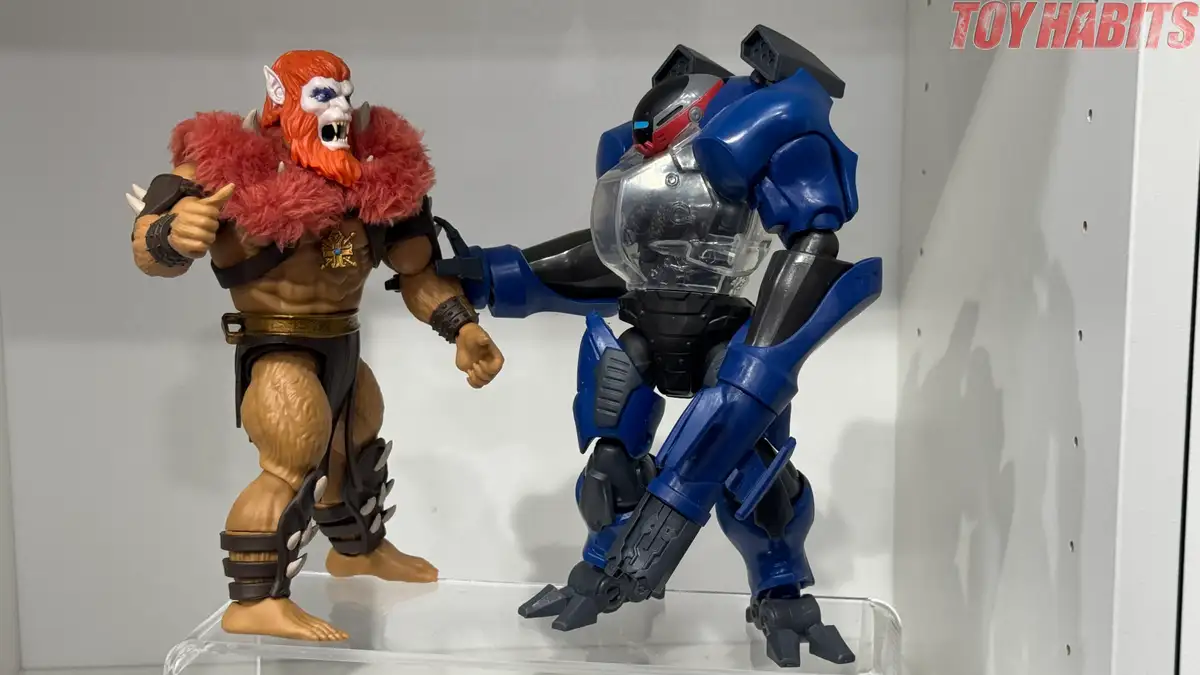
Here’s how Roboto compares to Beast Man, and I love how flexible the claw attachment is, because you can manipulate it around his arm easily, bending and repositioning those curved prongs without any resistance. The contrast between Beast Man’s organic, muscular sculpt with that furry red collar and Roboto’s full mechanical armor really highlights how much variety Mattel packed into this movie line.
MOTU Core Comparison
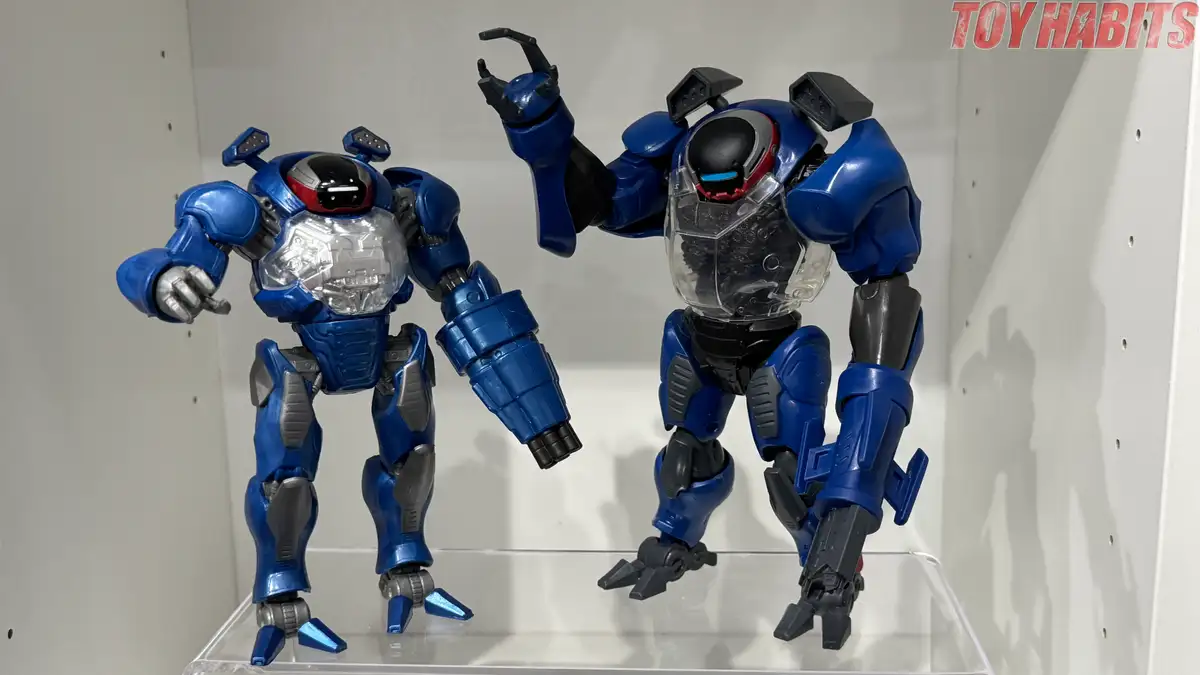
Roboto’s size difference really jumps out here, with the MOTU Origins movie version towering over the MOTU Core Combat Ready Roboto while carrying a much bulkier frame through the shoulders, forearms, and lower legs. The Core figure on the left keeps a more compact build and shows off the action feature gimmick with the oversized cannon arm and clear chest panel, while the larger Origins release expands on that same design language with wider armor plating, clawed hands, larger feet, and a more detailed transparent torso section exposing the internal mechanical sculpt. I like seeing both styles side by side because it really highlights how the movie-inspired line is scaling these characters up while still keeping recognizable design elements between the two versions.
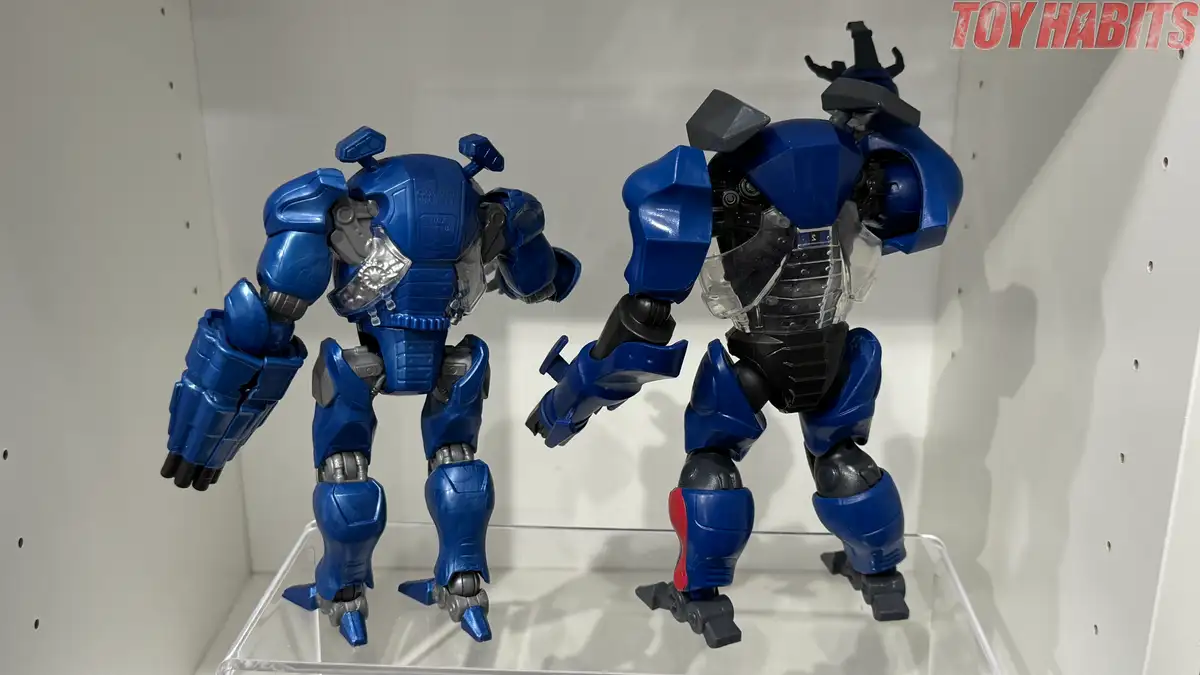
The rear comparison gives a much better look at how differently these two Roboto figures are engineered, especially through the back panels and torso construction. The MOTU Origins movie version uses layered translucent panels wrapping around the torso to show off more internal tubing and mechanical detailing underneath the armor shell. The larger figure also carries much heavier shoulder armor, segmented back plating, and a more complex leg design with thicker joints and larger clawed feet. I really like how the movie version feels almost exo-suit inspired from behind, while the smaller Core figure leans harder into the classic toy gimmick look.
Complete Your MOTU Collection
Be sure to check out our Masters of the Universe shop pages where we’ve curated figures from MOTU Origins, Masterverse, Classics, Vintage and more so you can find the figures you need easier!