Transformers Missing Link Rumor Roundup: Soundwave, Ironhide, and Ratchet
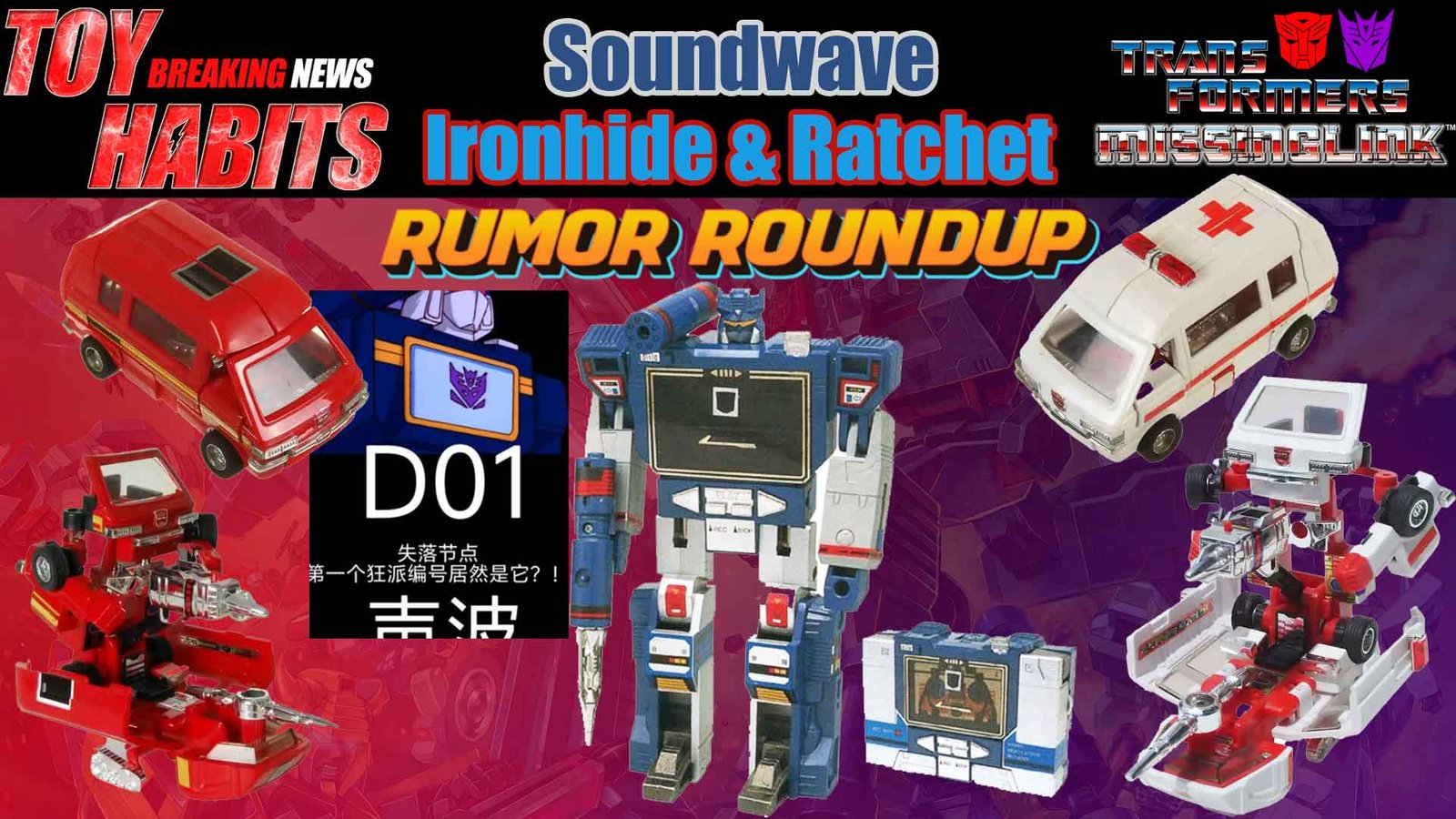
Rumors are swirling and I couldn’t be more excited! The Transformers Missing Link line has been delivering nostalgia-packed reimaginings of classic G1 figures with articulation. Originally surfaced in the TFW2005 forum back in June 2025, the rumors pointed to Ironhide, Ratchet, and the tease of thier first Decepticon as possible upcoming releases. Flash forward to today, the T-Spark live has reported that the first Decepitcon, possibly designated D-01, is Soundwave. If true, this would mark a huge milestone for the line as Soundwave could become the very first Decepticon to enter the Missing Link ranks, breaking up the all-Autobot lineup we’ve seen so far. Ironhide and Ratchet are also interesting names being tossed around since both have unique alt modes and could benefit from the articulation and modern engineering that have made the Missing Link figures such a blast for fans. Given the Missing Link line’s heavy reuse of parts and the Optimus Prime figure, Ironhide and Ratchet make a great pair as they were essentially the same figure with the small differences. While none of this is officially confirmed, it’s always fun to track what might be coming down the pipeline, and you know I’ll be watching this one closely. Huge thanks to Toy Habits Crew member Rob2023 for sharing the tip that’s keeping this conversation alive among collectors! For now, let’s take a G1 trip down memory lane and revisit these iconic Transformers!
Soundwave
The original Transformers G1 Soundwave figure, released in 1984, is shown here with his classic packaging, transforming from a microcassette recorder into robot mode with a chest compartment designed to hold his cassette companion Buzzsaw. Adapted from Takara’s Micro Change line where he was known as Cassette Man, Soundwave became a fan favorite for his role in the cartoon as Megatron’s loyal communications officer, voiced in a deep monotone by Frank Welker.

The figure stood out in the 1980s for its innovative cassette gimmick, allowing mini-Transformers like Laserbeak, Ravage, and Rumble to be stored inside his chest.


Ironhide
In the first series of Generation 1 in 1984, Ironhide was one of the key Autobot Cars, originally a red Nissan Cherry Vanette SGL Coach. Designed by Koujin Ohno for Takara’s Diaclone line as Car Robot No. 2 Onebox Cherry Vanette, the toy featured a small driver figure that could sit in the cab or the combat deck. The Diaclone version was all black with yellow stripe stickers, and unlike the Transformers release, it did not include the face sticker that became part of Ironhide’s signature look.
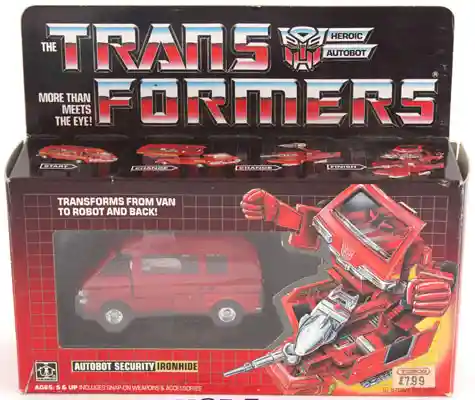
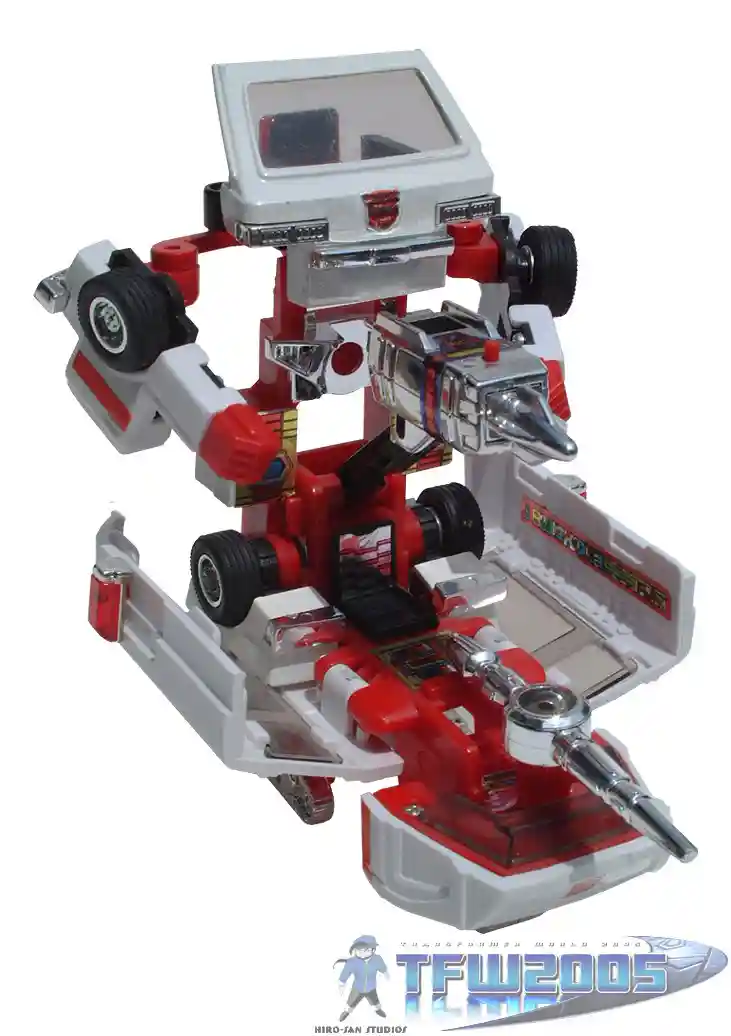
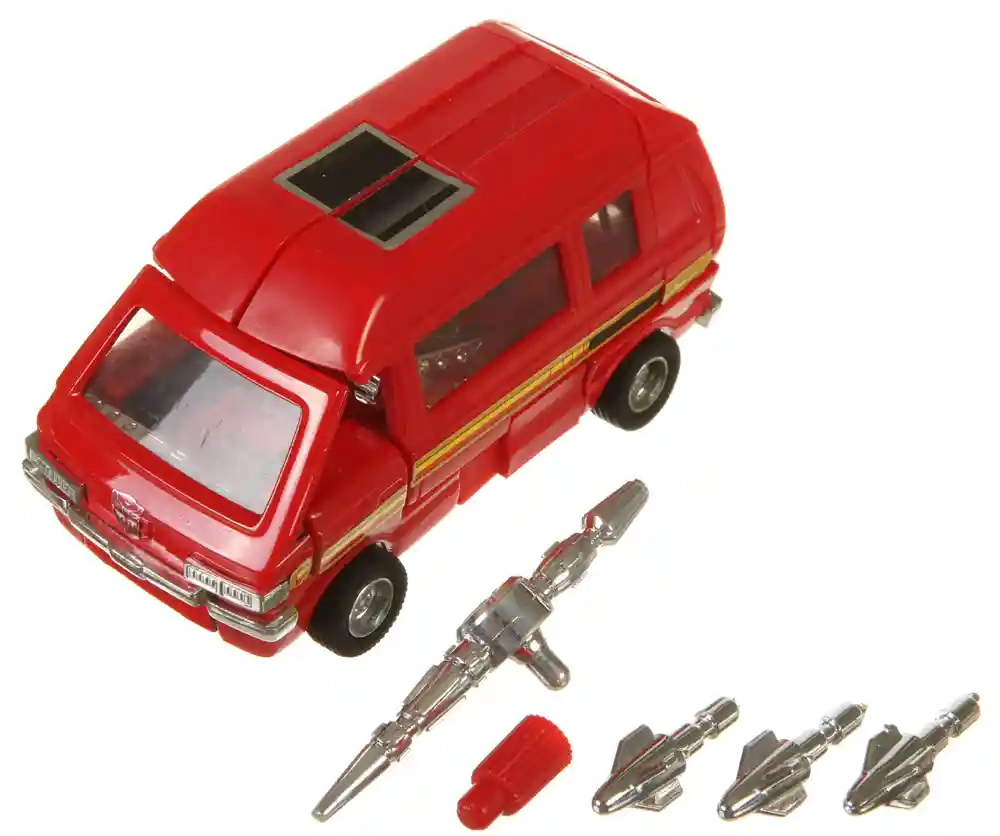
Ironhide’s alternate mode captures a striking level of realism for a toy from 1984. His van form features vacuum-metalized chrome wheels with ridged rubber tires, clear plastic windows and windshield revealing a chrome dashboard, and black-and-yellow stripe stickers down his sides. Chrome bumpers, headlights, and a stickered sunroof add to the detail, making the van look sharp and authentic. The transformation is unique, splitting the van into two distinct components: the cab and chassis convert into the robot, while the van’s roof splits open to become a combat deck. Supported by chrome treads, the deck houses a missile launcher mounted on a black arm and a chrome cannon pegged at the front. The cannon and its post can even be stored inside the van’s chassis, though this sometimes prevents the wheels from resting flush on the ground, highlighting just how ambitious and complex Ironhide’s engineering was for the era.
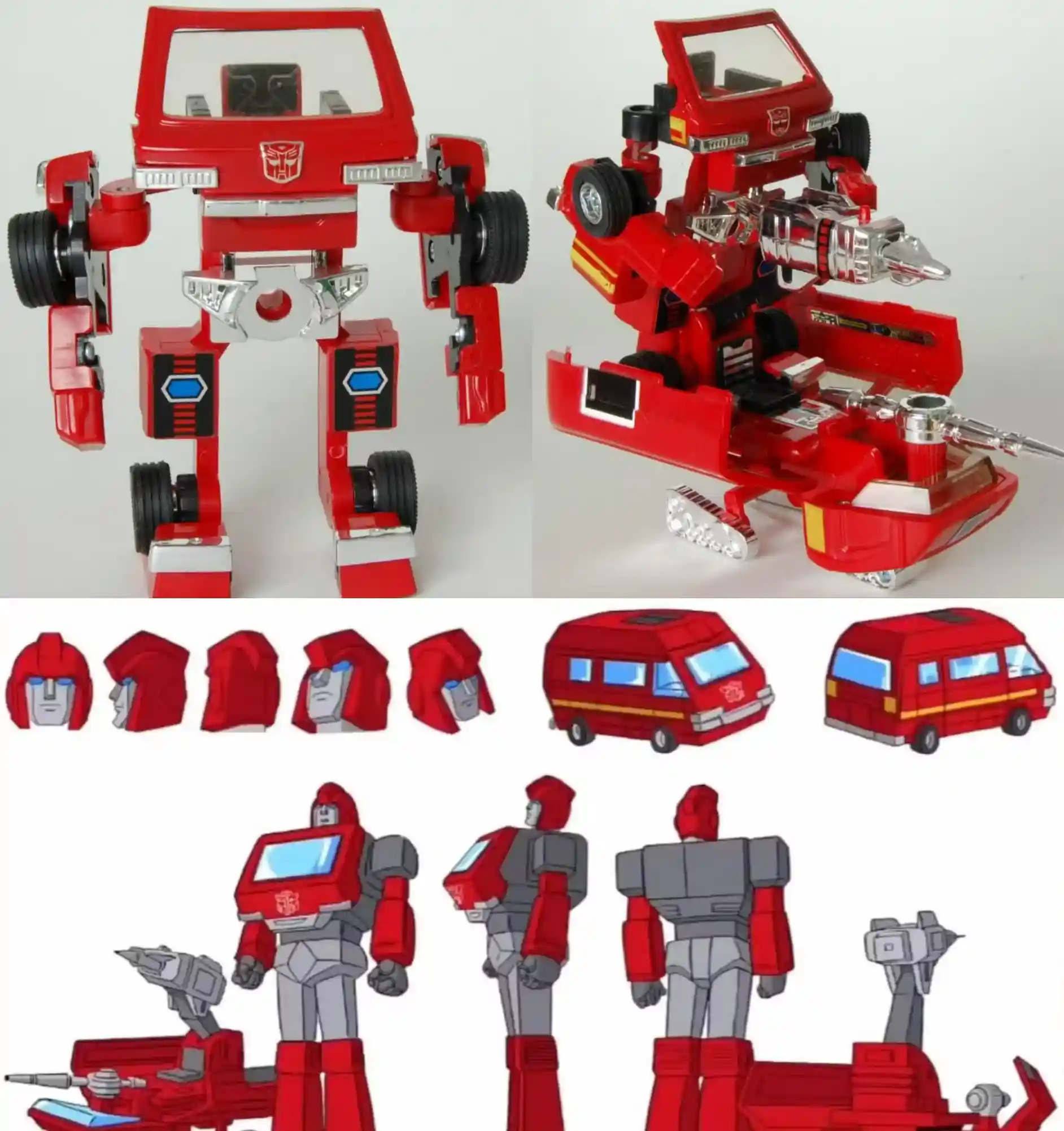
In robot mode, Ironhide has one of the most unusual designs among the early Autobots. His legs are formed from a combination of die-cast feet, chrome, and stickers, topped only by the windshield and front bumper of the van. The driver’s seat sits behind the windshield and bears a black face sticker, which can be seen through the glass. Rather than a traditional robotic visage, the sticker features silver linework depicting a wide-nostril nose, smile lines, curly eyebrows, and simple eyes and mouth, giving it more of a Kabuki mask appearance than a mechanical one. His thin arms pivot outward on die-cast rods, and while the look may not be conventionally heroic, the design allows him to interact with his combat deck, clipping his feet onto the base of the missile launcher to operate the array of weapons.
Ratchet
Ratchet was one of the main Autobot Cars introduced in the first Generation 1 wave in 1984, transforming into a white ambulance based on the Nissan Cherry Vanette SGL Coach. Originally designed by Koujin Ohno for Takara’s Diaclone line as Car Robot No. 4 Onebox Ambulance Type, the toy came with a small driver figure that could sit in the cab or the combat deck. Unlike the Transformers release, this earlier Diaclone version did not include the face sticker that later became part of Ratchet’s design.
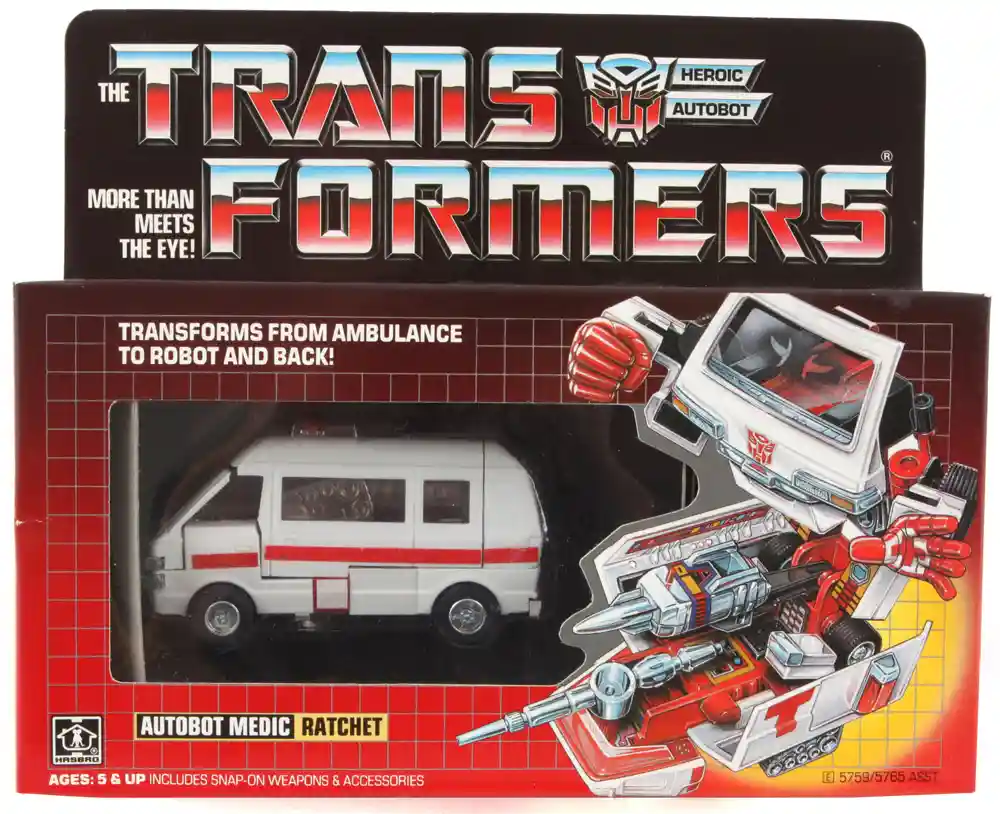
Ratchet’s alternate mode captures strong realism for the time, transforming into a highly detailed ambulance. He features chrome wheels with ridged rubber tires, a red and chrome light bar, and clear windows that expose a chrome dashboard inside. His sides are decorated with broad red stripes, and some versions include a red Swiss cross on the roof. Chrome bumpers and headlights add to the polished look of the vehicle.
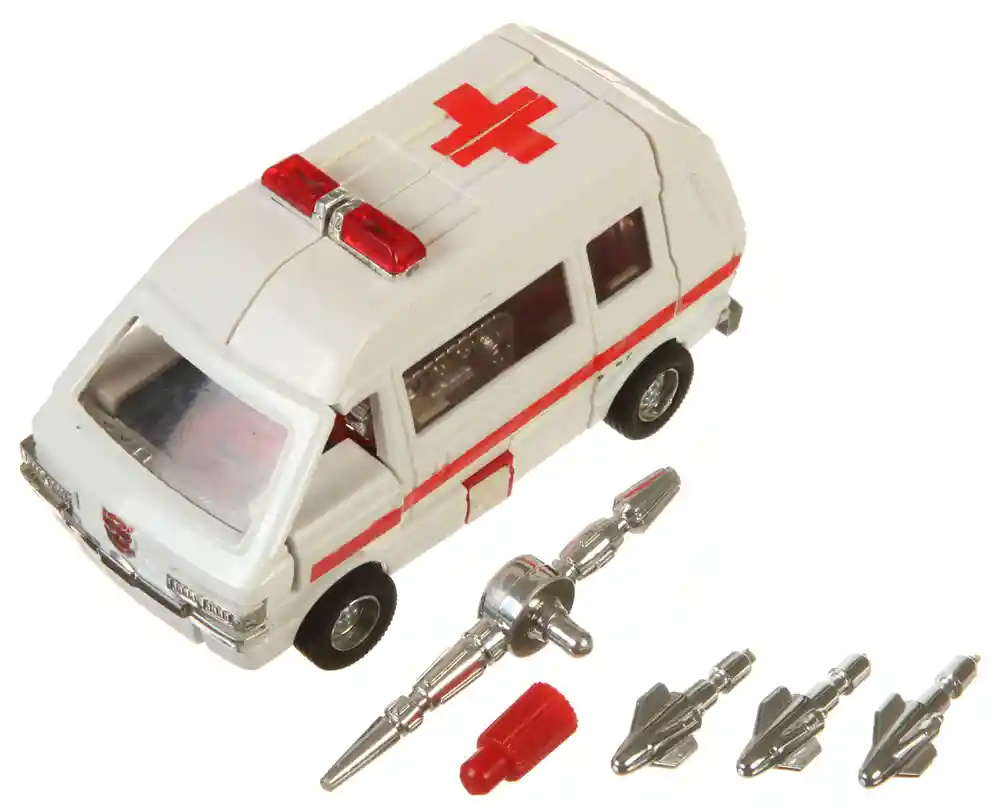
Ratchet’s robot mode takes a very unorthodox approach compared to the more standard Autobot designs of 1984. Instead of a distinct head sculpt, his windshield doubles as his upper body, with the driver’s seat positioned behind it and carrying a printed face sticker. The face artwork, seen through the glass, is made up of stylized silver linework suggesting human features rather than robotic ones, giving him a mask-like appearance. His arms are slender and swing out from sturdy die-cast rods, while his lower body is built from a mix of chrome, stickers, and die-cast metal, giving him a solid base. Though unusual in form, the design allows him to work in tandem with his combat deck, locking his feet onto the launcher platform so he can “man” the weapons and use the setup as an extension of his own firepower. This deck rests on three chrome treads and includes a chrome missile launcher mounted on a long black arm, along with a chrome cannon pegged to the front.