Masterverse Vintage Collection Box Art Inspired by Errol McCarthy
The new Masterverse Vintage Collection Box Art pays homage to the classic works of Errol McCarthy, a classic MOTU illustrator.
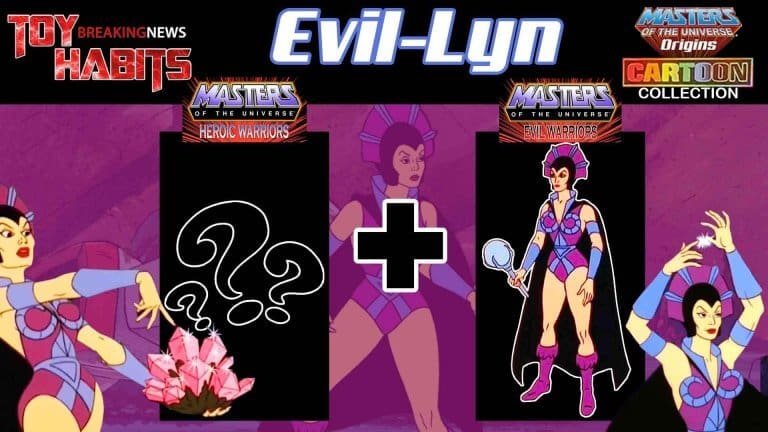
With the reveal of the Masterverse Vintage Collection Skeletor, the new Masters of the Universe subline is getting a breath of fresh air! Not only are we getting Masterverse figures that resemble MOTU Classics figures, we are getting new box art illustrations that pay homage to Errol McCarthy. His work on the Masters Of The Universe is legendary. He is known for his cardback art for the vintage 1980s MOTU toy line. Errol is one of jut a few artists that helped define the amazing imagery of the MOTU brand and it’s amazing to see new illustrations pay tribute to this legend! In this article, we explore Errol’s work and also provide some inspiration drawing upon the MOTU Classics figure designs for what the new Masterverse vintage collection could look like! We know that a yellow-skinned Evil-Lyn is in the works as well, which leans very heavily into her MOTU Classics design.
Skeletor
The twilight glow in this illustration creates a striking and atmospheric effect, setting the stage for Skeletor’s ominous approach toward Castle Grayskull. His presence, imbued with a sense of malevolent intent, contrasts sharply with the fortress, which is strategically positioned atop a barren outcrop. This placement not only emphasizes the isolation and strategic importance of Castle Grayskull but also enhances the overall sense of foreboding that permeates the scene. The use of light and landscape highlights the tension between good and evil central to the narrative.
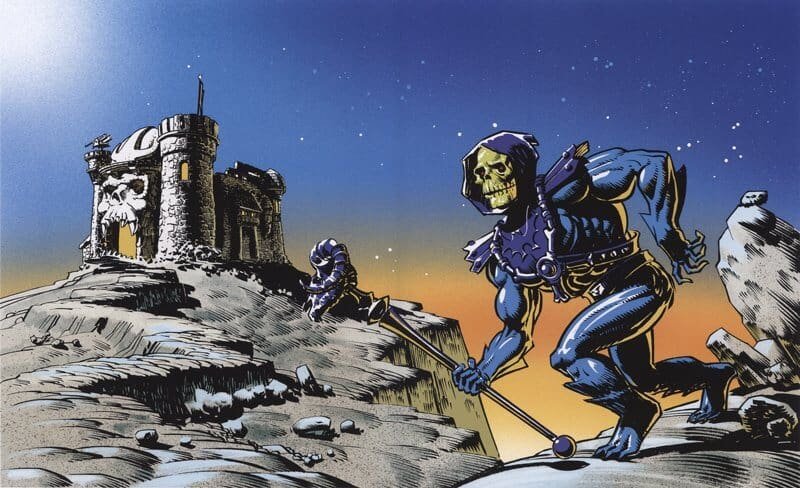
Here is the official hi-res box art for the Vintage Collection Skeletor Masterverse figure showing off the mad skills of @natebaertschart! You can see how the original McCarthy illustration influenced the new art but Nate made it all his own with captivating visuals and giving Skeletor more of a dominant sense of power.

Not know what the Masterverse Vintage Collection will bring aside of the images we’ve seen of Skeletor, we feel like this line could reignite the Masterverse line by going back to more of a Masters of the Universe Classics look and feel of the figures. It could also be the case where the vintage collection leans heavily on the box illustrations while providing smaller updates to the figures. Only time will tell but this in an exciting subline for Masterverse.
Skeletor Vintage Collection Official Images
He comes with his classic Havoc Staff, Power Sword, and extra hands!
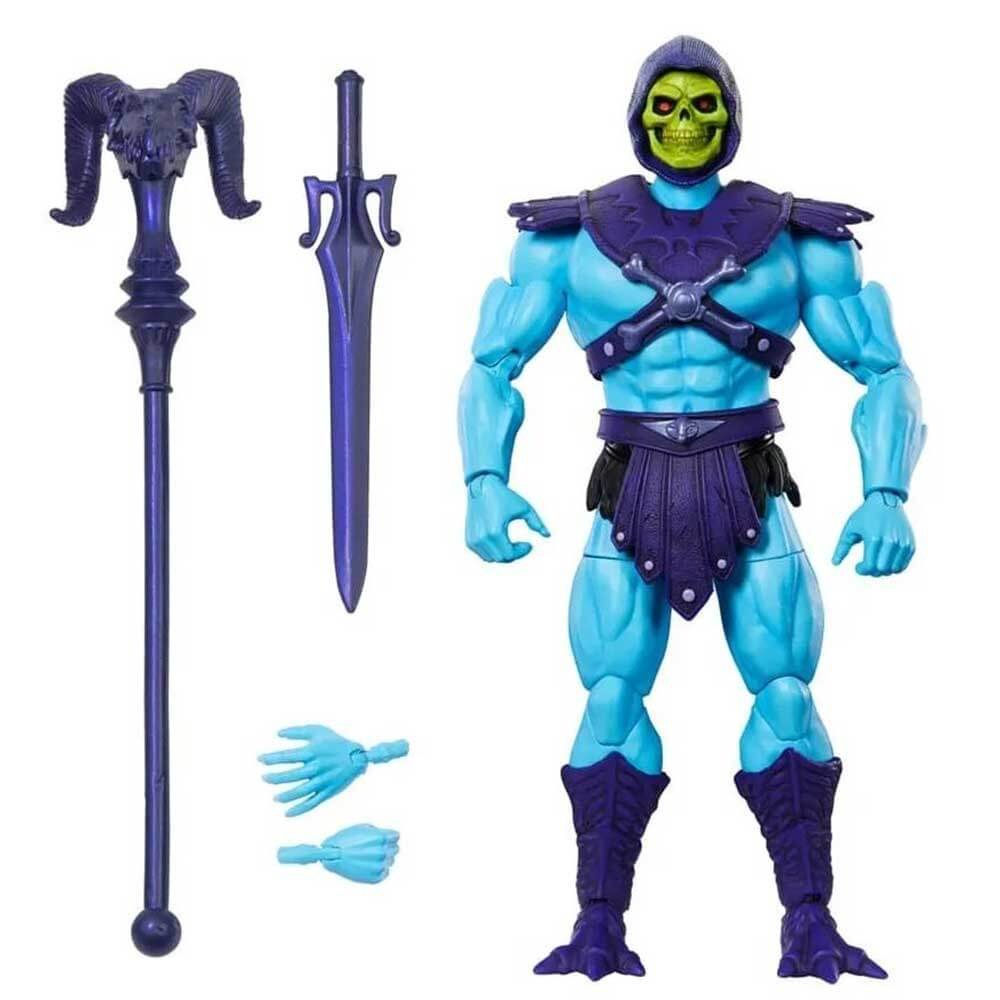
This Vintage Collection Skelly is really going back to his roots with a MOTU Classics’esque figure design and overall look and feel!


The paint apps on the armor and the weapons look like they are more premium than standard Masterverse figures so it will be interesting to see how this line shapes up and who is slotted for further releases so stay tuned!


MOTU Classics Skeletor
MOTUC Skeletor is a thrilling tribute to the classic 1980s figure, capturing all the iconic details that made him legendary—from his menacing spiked forearms and shorter groin guard to his monstrous three-toed feet and the eerie, bright green-and-yellow skull face! But the real excitement comes in the upgrades from the master sculptors, The Four Horsemen. They’ve added a leathery texture to the groin guard and epaulets, giving them a rugged, battle-worn look. The hood has been reimagined to resemble real cloth, and the skull face? It’s more detailed and terrifying than ever before, making this Skeletor a standout in any collection!


He-Man
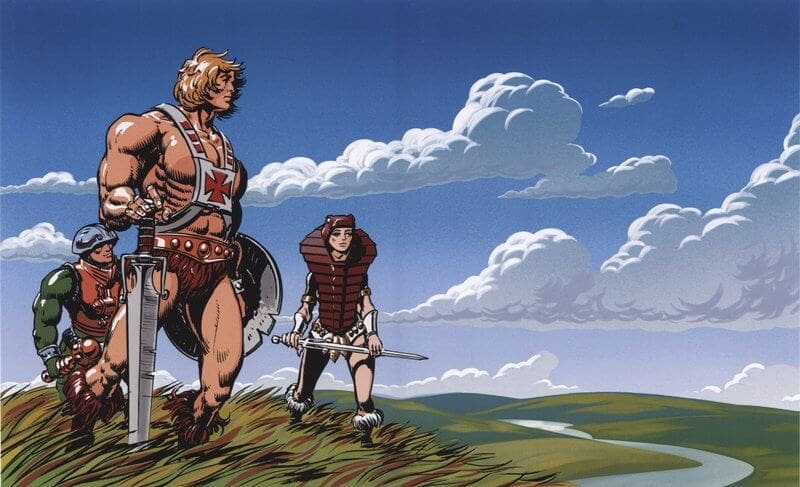
He-Man stands on watch alongside Teela and Man-At-Arms, an iconic scene that illustrates the distinctive approach of McCarthy in his depiction of landscapes. The rendering of the grasses, clouds, and hills demonstrates a stylized simplicity, reminiscent of the sharp, bold lines found in traditional linocut printmaking. This technique gives the natural elements a textured, almost handcrafted appearance, underscoring McCarthy’s artistic interpretation of the environment within the fantastical world of Eternia.
MOTU Classics He-Man
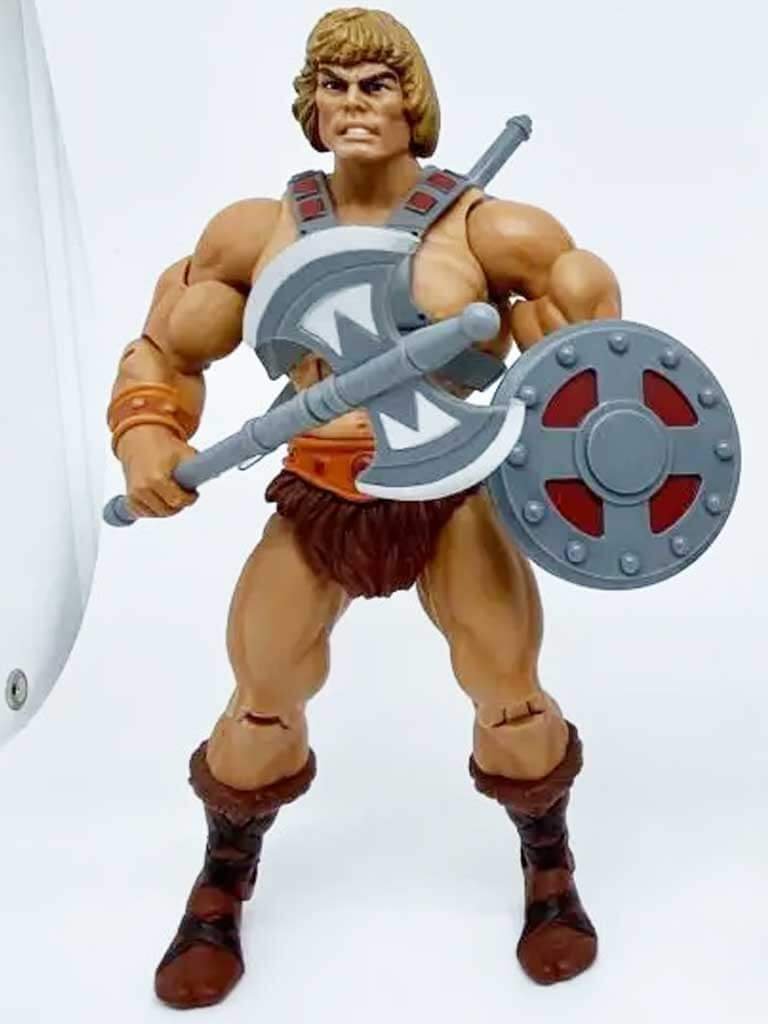
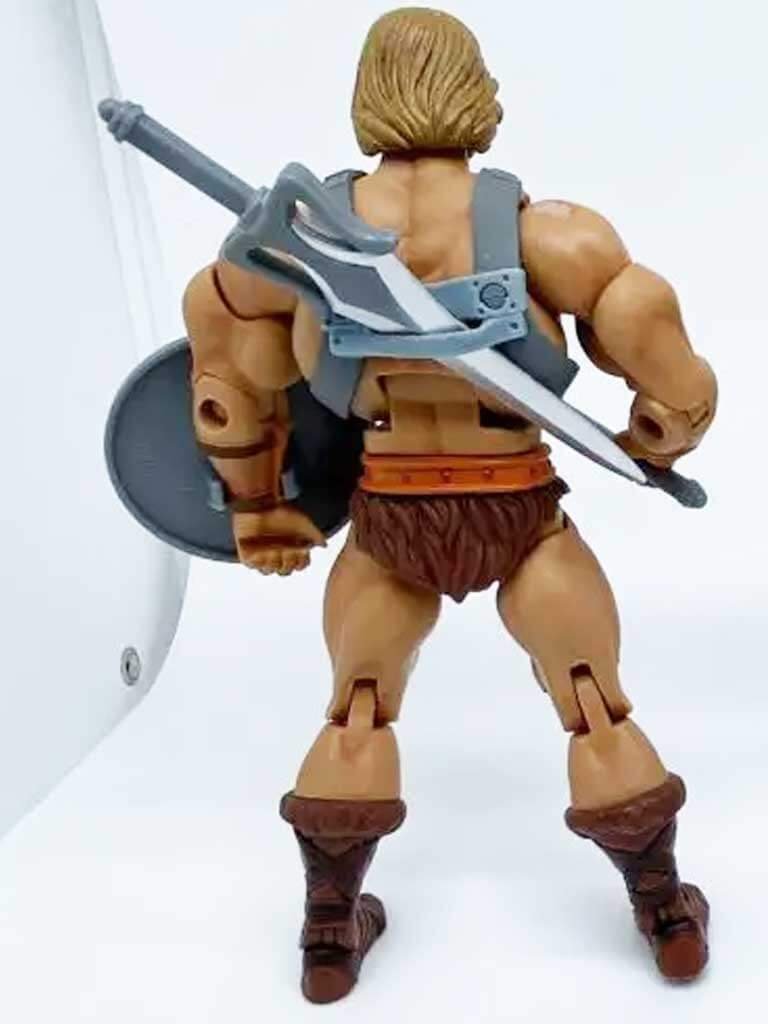
Super7 did an amazing job on this figure! The sculpting is incredibly clean and detailed, seamlessly blending the joints into the design so that every line and gap flows smoothly. For a character who’s mostly bare except for some furry underwear, that’s no small feat! He-Man feels solid in your hands, with just the right weight to him. The paintwork on his body is subtle yet effective, with light orange and tan hues that add depth and shading to his muscular frame. The attention to detail extends to his clothing and weapons, each piece carefully painted to enhance the figure’s overall quality. This He-Man truly looks and feels like a premium figure!
Teela
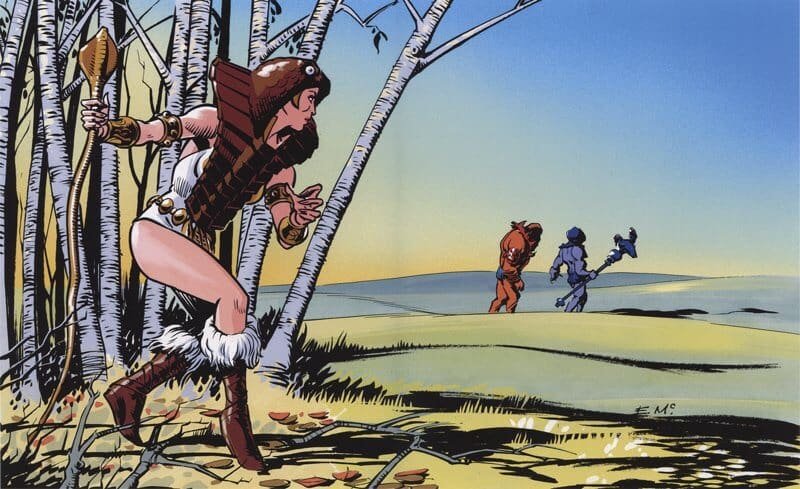
This illustration offers another example of McCarthy’s distinctive approach to landscape design. In this scene, Teela discreetly observes Skeletor and Beast Man, contemplating their nefarious activities from a concealed vantage point. The copse of trees in the background is particularly notable for its thoughtful design, blending stylized natural elements with the overarching tension of the moment. McCarthy’s clever arrangement of these trees adds depth and atmosphere to the composition, while subtly framing the narrative conflict between the characters.
MOTU Classics Teela
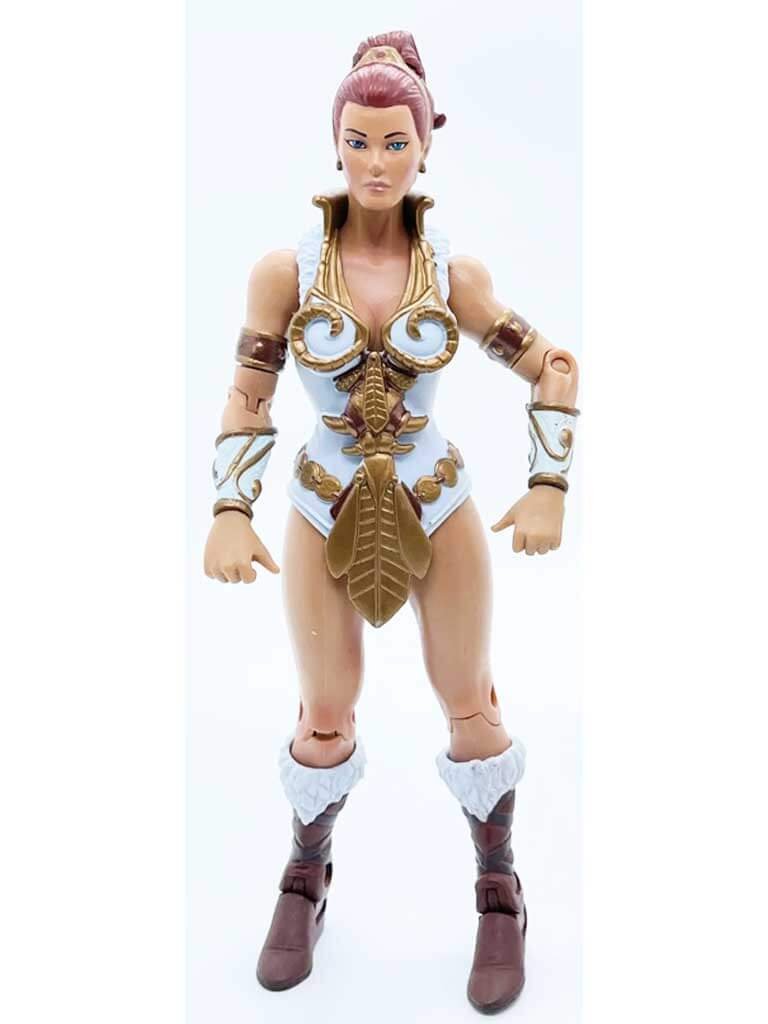
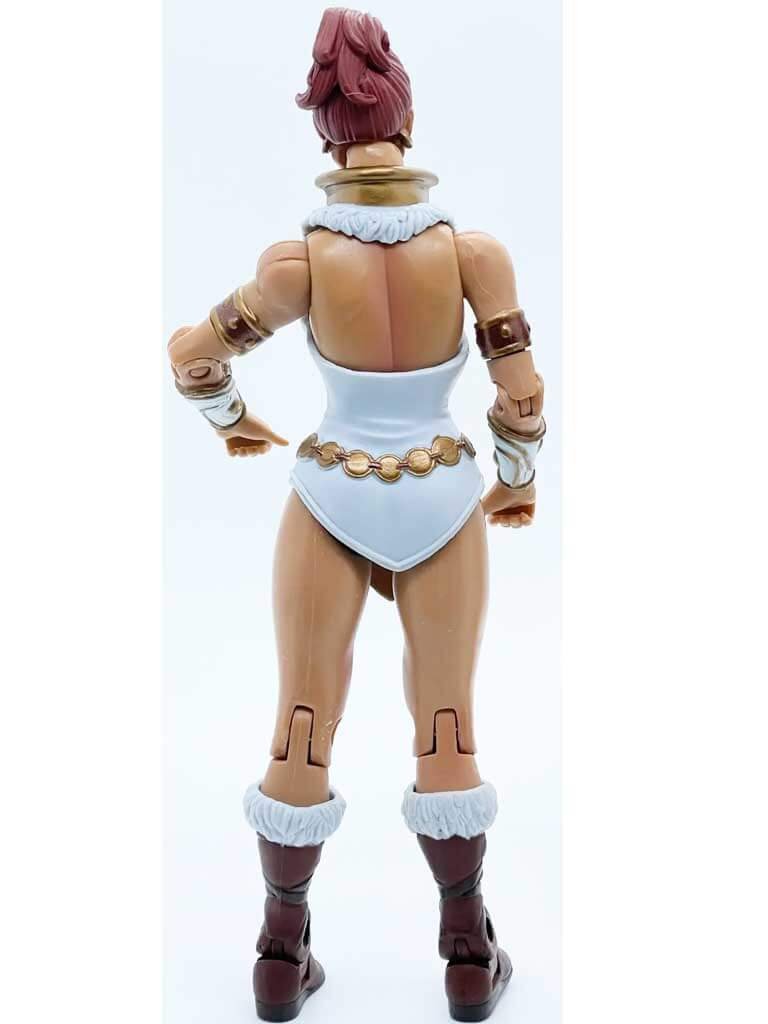
From the fur-lined shoulders to the intricate leaf details on the leotard, the sculpting is on point. Teela’s sculpted arm bands, gauntlets, and signature boots give her even more personality. While some of these parts might be reused on future figures, they’ll never look as sharp and iconic as they do on Teela. Speaking of iconic—Teela’s regular head sculpt is a showstopper! It’s hands down one of the best female faces the Four Horsemen have ever created. I’ve followed their work for years, and while their sculpts are always impressive, this Teela has a face that’s simply stunning, something you rarely see in mass production.
Man-At-Arms
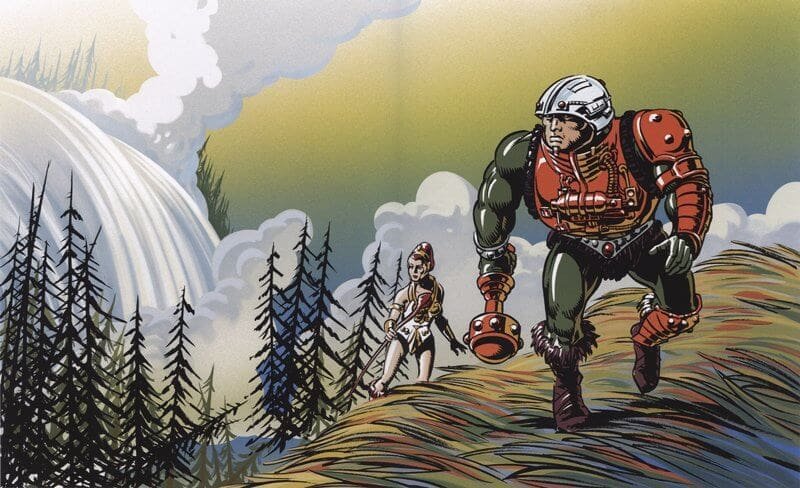
This illustration invites the viewer to engage their imagination, as it captures Man-At-Arms and Teela high in the hills, near the roaring cascade of a waterfall. Their posture suggests a vigilant search for impending danger. The surrounding pine trees, while rendered in a deceptively simple manner, contribute to the scene’s sense of isolation and wilderness. The simplicity of their forms belies the careful composition that enhances the tension of the characters’ quest, highlighting McCarthy’s ability to convey mood and atmosphere with minimal yet effective detail.
MOTU Classics Man-At-Arms
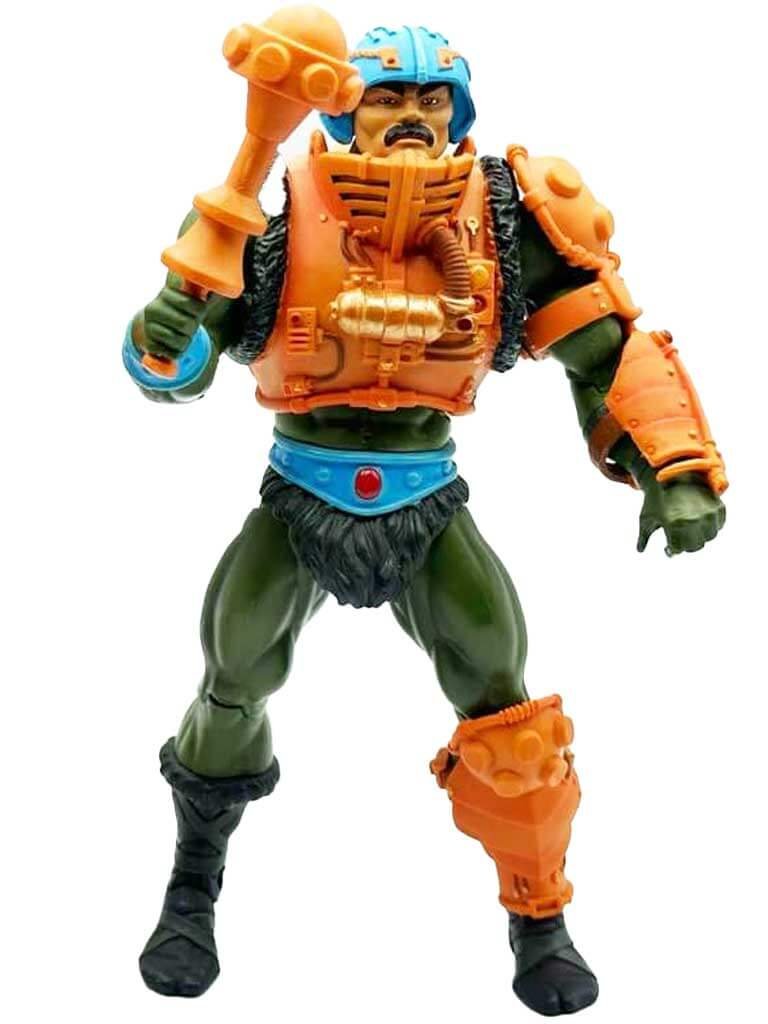
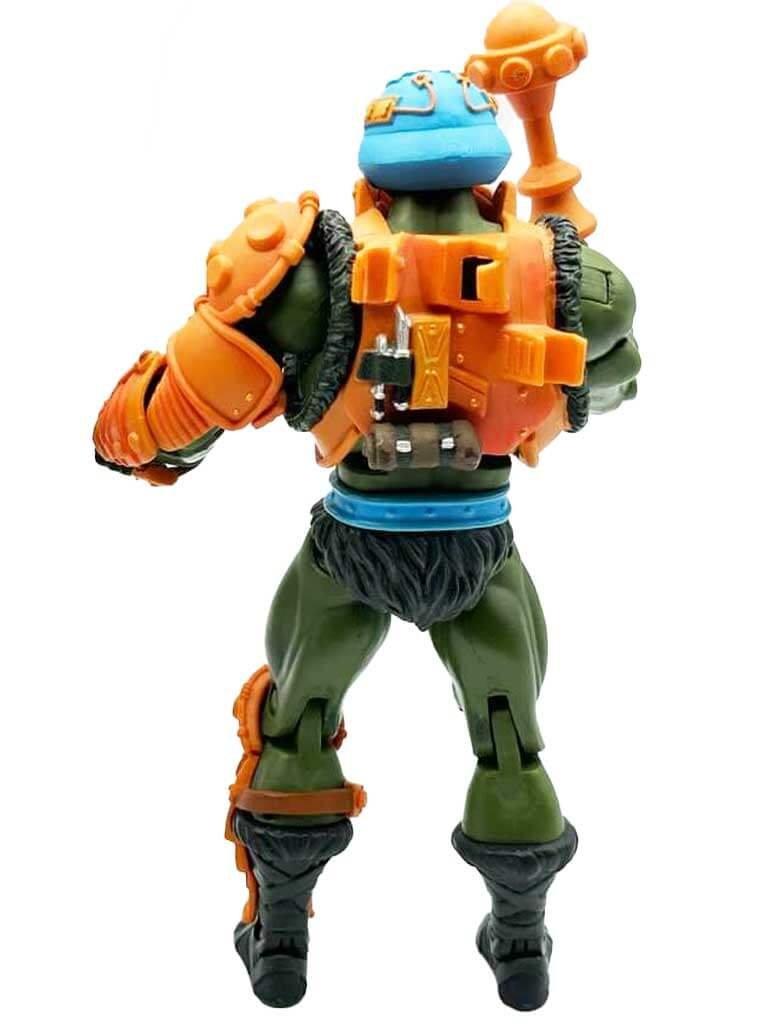
MAA reuses He-Man’s body, but with a vibrant green paint job and blue belt and wrist bracers. However, once you add his signature orange armor, he instantly becomes a standout, feeling like a completely unique character! The armor consists of four key pieces: a vest, a left shin guard, and two plates for his left arm. The chest and back piece is where the real magic happens—it’s an incredible sculpt featuring intricate hoses, wires, and impressive paint applications on the front. The back takes it up a notch with a molded rolled-up rucksack and clips to hold most of his weapons, which is one of the many things that make this figure so exciting! Another fantastic touch is how Mattel made his arm guard into two pieces, ensuring it doesn’t hinder his elbow articulation. It’s the little details like this that truly elevate the figure!
Stratos
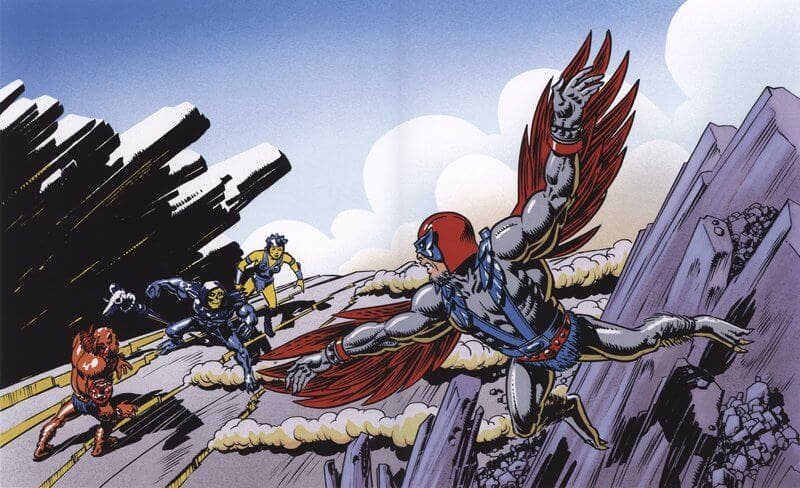
The winged warrior Stratos takes the evil forces by surprise in this dynamic scene. Notably, Skeletor is so startled by the sudden appearance of his adversary that he drops his Havoc Staff, a rare moment of vulnerability. The dramatic geological formations of the mountaintop provide a striking backdrop, enhancing the tension of the encounter. McCarthy’s clever use of shadow plays a key role in this composition, not only adding depth to the landscape but also emphasizing the looming threat of Stratos’ attack. This strategic use of light and shadow further elevates the visual impact of the piece.
MOTU Classics Stratos
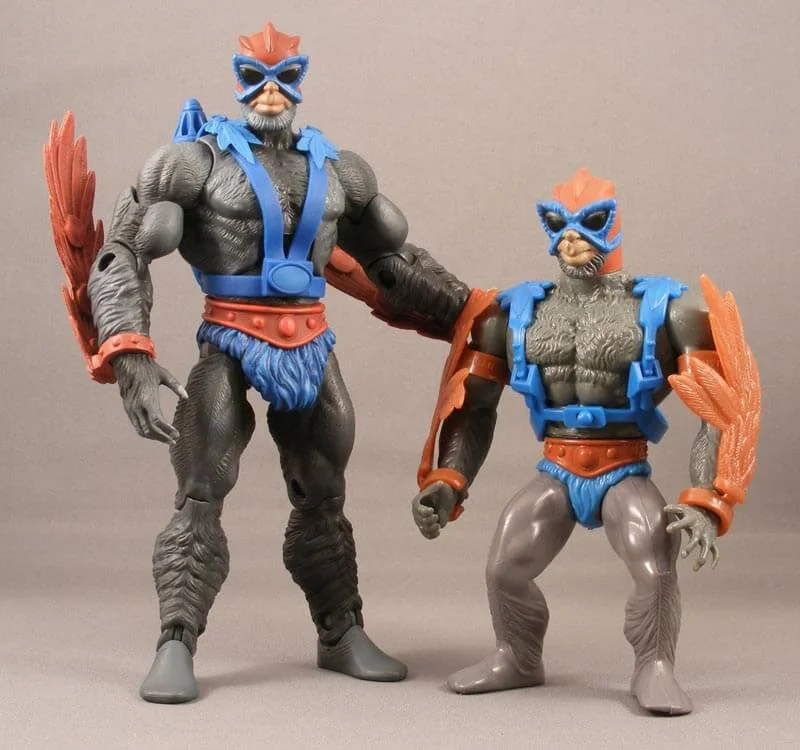
Just like the rest of the MOTU Classics lineup, Stratos is a brilliant homage to the original artwork found on the back of the 1980s packaging! While the sculpt stays true to the classic figure, it also includes some awesome new details that make it stand out. One of the coolest updates is his jetpack harness. It features a small oval buckle that’s more than just a design touch—it’s a nod to the original package art. On the 1980s figure, the buckle was an actual clasp holding the jetpack in place, but the Horsemen chose to follow the artwork and sculpted it as a buckle, adding a nostalgic twist. Don’t worry though, the jetpack is still removable via some cleverly hidden tabs on the back! While Stratos’s body mostly reuses parts from Beast Man, there’s a neat difference—he’s got unique feet without the clawed toes, giving him a more streamlined look. These subtle changes help elevate Stratos while keeping his roots firmly in the vintage vibe.
Zodac
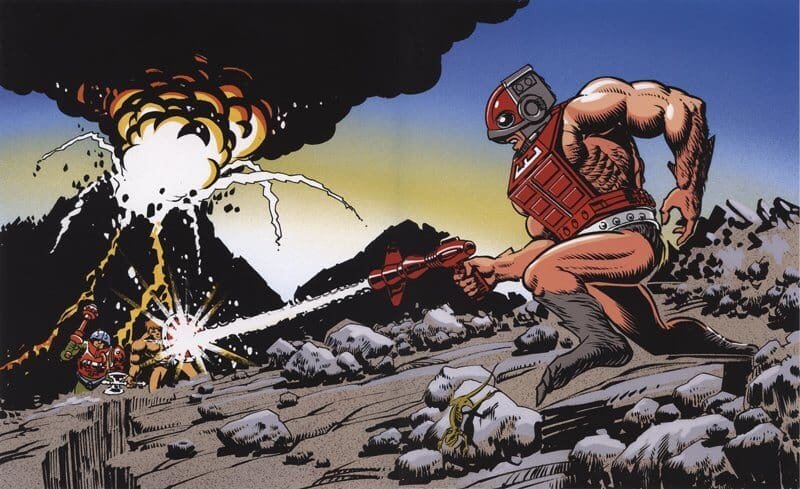
This image is central to one of the enduring controversies within the Masters of the Universe lore! Is Zodac an evil warrior, heroic warrior, or a neutral figure? In this particular illustration, Zodac is unmistakably depicted as attacking the heroic warriors, leaving little room for ambiguity regarding his allegiance. The accompanying caption on the card back further reinforces this portrayal, aligning Zodac with the forces of evil in this context. This representation sparked debate among fans and collectors, highlighting the fluid nature of character alignment in the MOTU narrative.
MOTU Classics Zodac
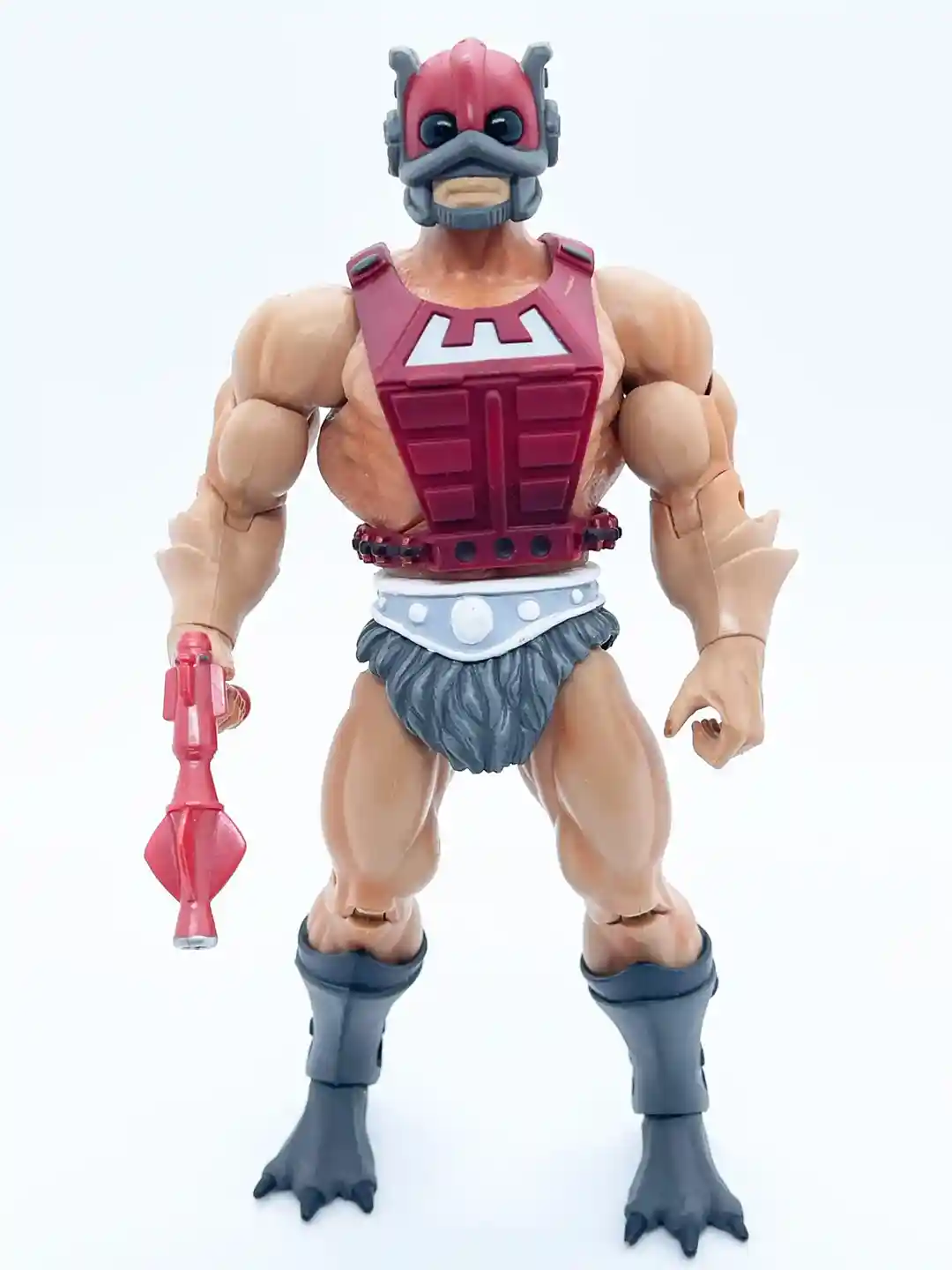
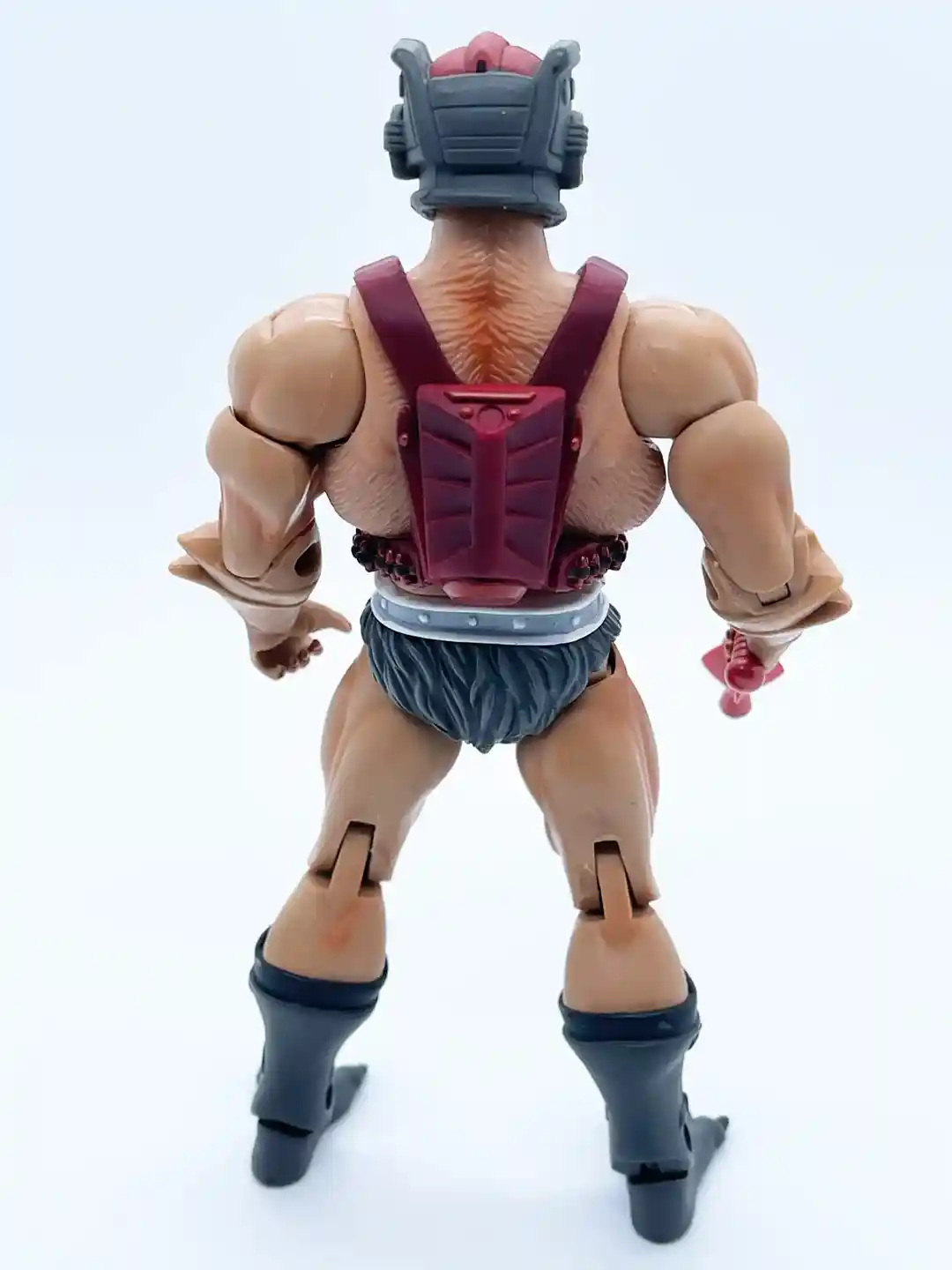
Zodac is a true mix-and-match masterpiece, just like in the original line! He’s built using parts from nearly every other figure early in the series, with Skeletor’s arms and legs, He-Man’s loincloth, and Beast Man’s hairy chest. But what really makes Zodac stand out are his new pieces—his head, along with his armor and pistol. The armor and pistol are faithful updates to the originals, but with a few fantastic improvements. The gun is like a prop replica of the classic version, while the front of the armor is also true to the vintage look. The back, however, features some slick new details! The straps now have bullets for his pistol, and the back of the armor is redesigned to give off a cool jetpack vibe. What really elevates it is the seamless integration of the straps and back, a detail that shows just how much precision and care went into crafting this figure. Zodac may be pieced together from familiar parts, but with these upgrades, he’s absolutely a standout!
Mer-Man
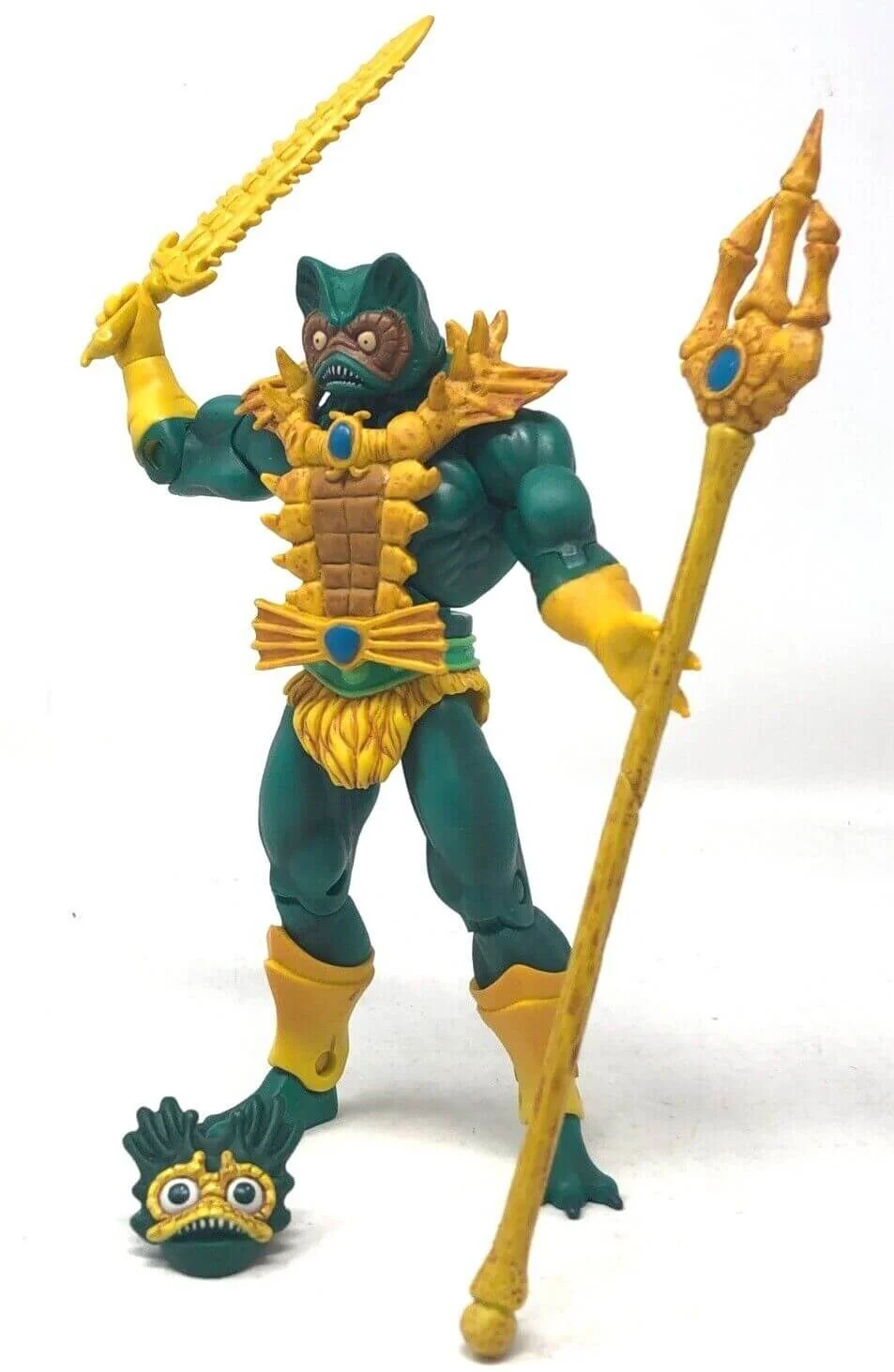
Mer-Man is depicted here in his natural element, a powerful and commanding figure. Though the character has occasionally been portrayed as somewhat simplistic, this illustration rejects such interpretations, instead presenting Mer-Man as a master of his aquatic domain. The detailed rendering emphasizes his control over the environment, showcasing his inherent strength and intelligence. This portrayal aligns with McCarthy’s broader artistic vision, offering a nuanced and dignified representation of a character often reduced to less complex roles in other depictions.

MOTU Classics Mer-Man
What makes Mer-Man truly stand out is all in the details of his armor and head sculpt—because, let’s face it, his base figure is pretty standard! He shares the familiar He-Man pelvis, rocking the green belt and iconic yellow furry “diaper.” His arms and legs? Straight from Skeletor, but with a twist—his bracers and greaves are painted in eye-catching yellow. But the real magic is in his skin! His body is covered in a striking blue-green tint with a subtle metallic sheen, giving him a sleek, fish-like appearance that makes him look ready to rule the seas! Another notable feature was Mer-Man’s weapon, often referred to as the “corn-sword.” Although this weapon was intended to resemble an aquatic blade fashioned from the rostrum of a sawfish, its design ended up resembling a common utensil used to hold corn on the cob.
Faker
The atmospheric glow behind Faker is executed with subtlety, effectively distinguishing him from the surrounding background. He-Man, in stark contrast, is depicted with an unusually intense, even murderous, expression, adding tension to the scene. While McCarthy’s illustrations are typically restrained in their portrayal of physical conflict, this image suggests an underlying threat of violence. The implied aggression, rather than overt brutality, reflects McCarthy’s ability to evoke a powerful emotional response while maintaining the aesthetic balance and composure characteristic of his work.

MOTU Classics Faker
The basic sculpt here is identical to the classic He-Man figure, from his boots to his gauntlets—and honestly, that’s exactly how it should be! This is who the character is, and changing anything beyond a straight repaint would’ve been a mistake. Sure, I have some gripes about paying premium prices for a repaint, but altering the core figure would’ve been the wrong move. Now, what does stand out is the addition of Skeletor’s armor! The piece that covers his shoulders and torso is a direct reuse from the Skeletor figure, just like the original. Does it make a lot of sense? Not really—it didn’t back then, and it still doesn’t now. But that’s what makes it faithful to the original, and the Classics line is all about staying true to that retro charm.

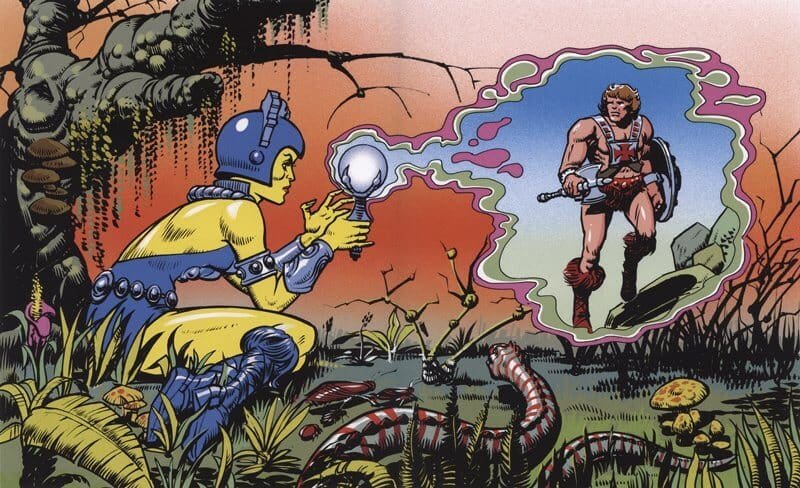
Evil-Lyn
This scene presents a complex interplay of elements, centered around Evil-Lyn’s magical prowess, which is subtly conveyed through her act of spying. However, the most intriguing aspect of the illustration is her concealment within the swamp. The artwork emphasizes her complete ease and comfort in this hostile environment, surrounded by insects and serpents. This detail reinforces her alignment with darker, more mysterious forces, and underscores her mastery not only of magic but also of the natural dangers that inhabit Eternia’s more perilous regions. McCarthy’s attention to these details adds depth to Evil-Lyn’s character, highlighting her adaptability and fearlessness.
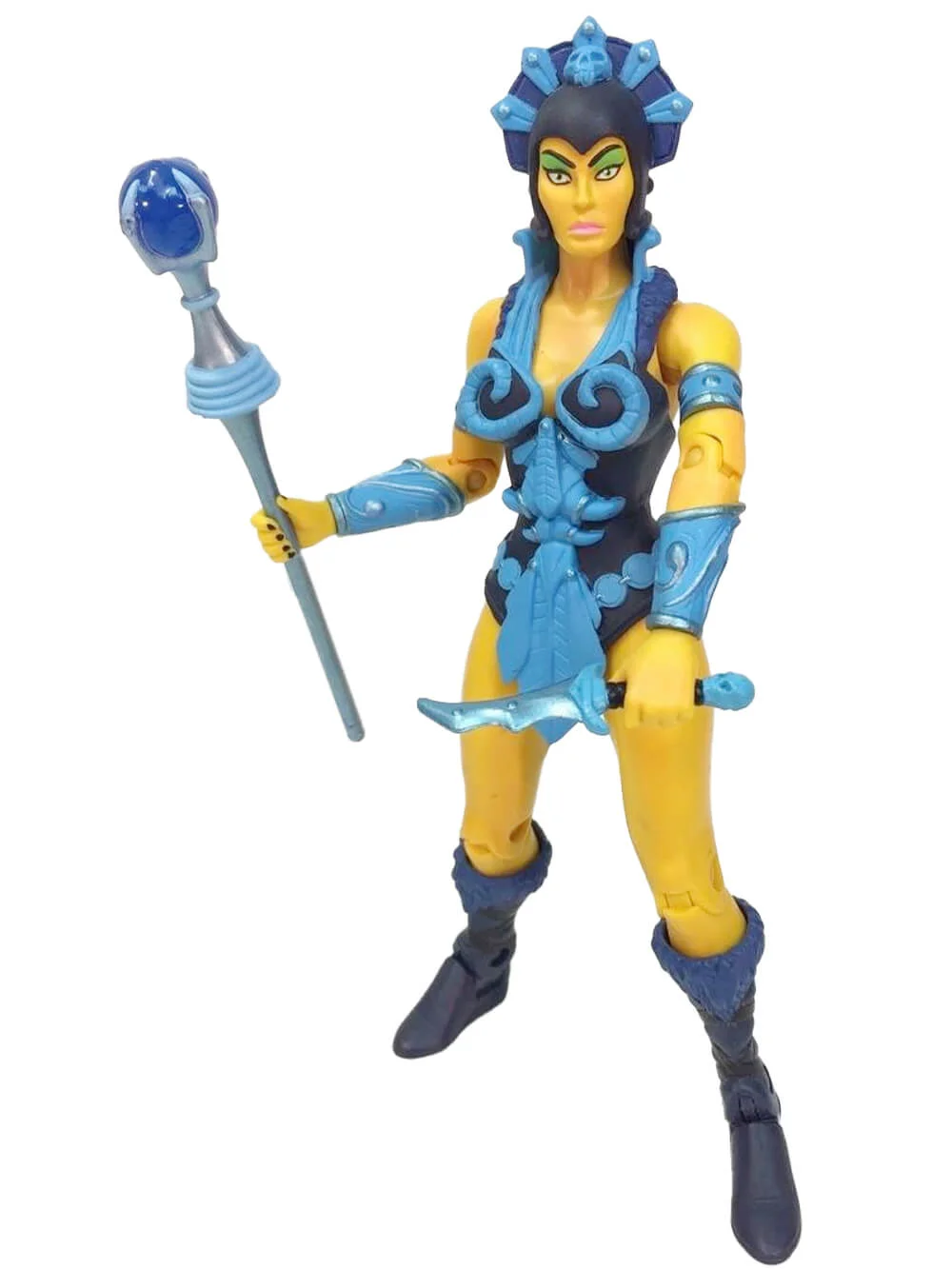
MOTU Classics Evil-Lyn
The body and bodysuit are exactly the same as Teela’s, right down to the reversed gauntlets—even though the vintage artwork clearly shows them the other way around! Her body is molded in yellow, which can look a little too toy-like. It stays true to the line’s playful charm, making it a fun addition to any collection.
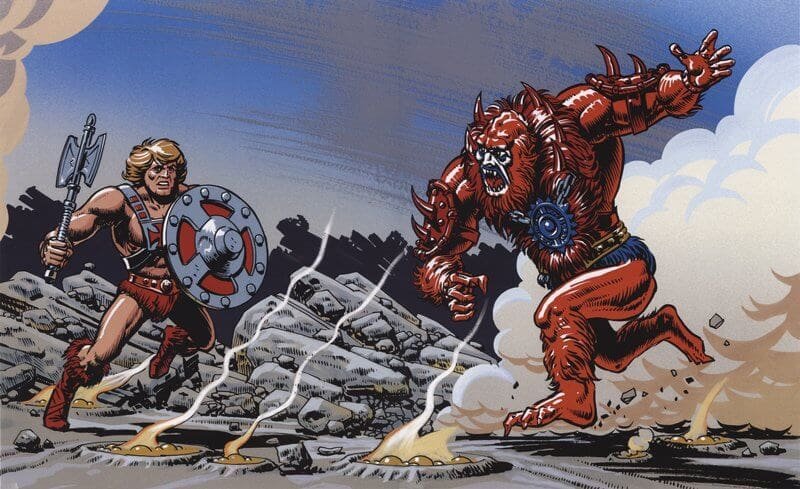
Beast Man
This battle scene, set in a volcanic region of Eternia, captures a moment of tension and uncertainty. He-Man’s expression appears to reflect a degree of surprise at the sudden emergence of Beast Man, though it remains unclear whether the villain is advancing for battle or retreating from the confrontation. The swirling, brushed clouds in the background add a sense of movement and urgency, amplifying the drama of the encounter. The dynamic interplay between the figures and their surroundings highlights McCarthy’s ability to infuse even static images with a palpable sense of action.
MOTU Classics Beast Man
Beast Man introduced the now-iconic furry body to the MOTUC line, and it allowed the Four Horsemen (4H) to unleash some incredible detailing! The fur is rich with texture, yet it perfectly blends in with the overall aesthetic of the line. The head sculpt is outstanding, bursting with detail and showcasing an expression of pure, untamed rage—capturing the essence of Beast Man’s wild, dangerous persona. His chest armor, also packed with intricate sculpting, is a flawless update of the vintage design. It’s bulky, which is fantastic, because it adds heft to his otherwise lean furry body, giving Beast Man the imposing stature he deserves. The bicep armor sports a weathered, metallic texture, covered in battle scars, making him look like he’s seen countless fights.